
Recipe: Pasta with Ricotta, Sage, and Walnut Pesto
This post may contain affiliate links.
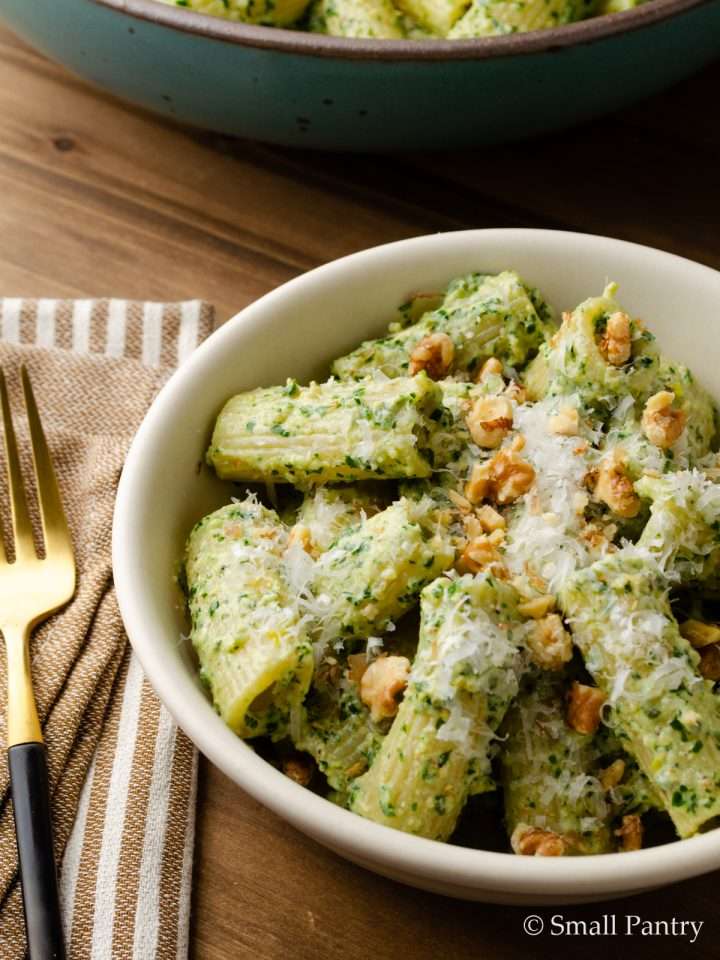
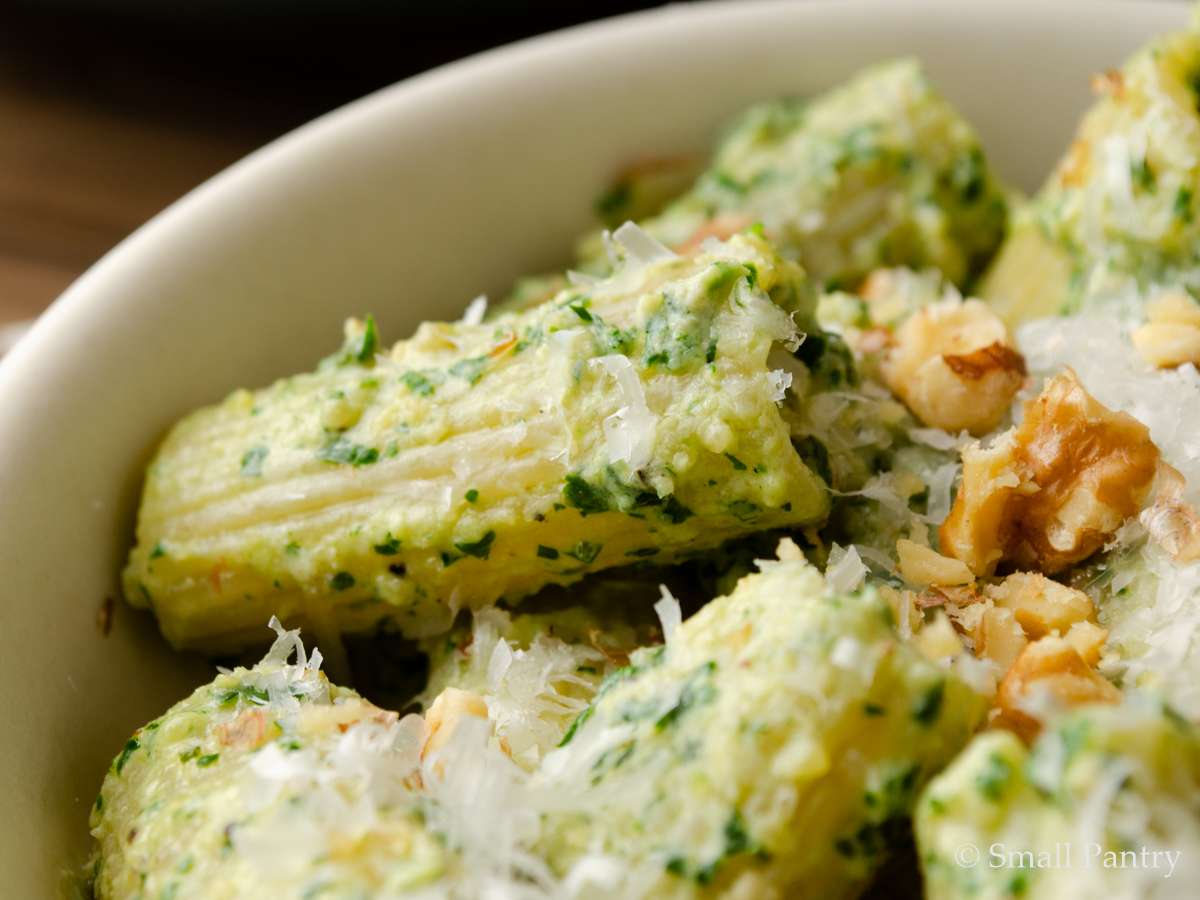
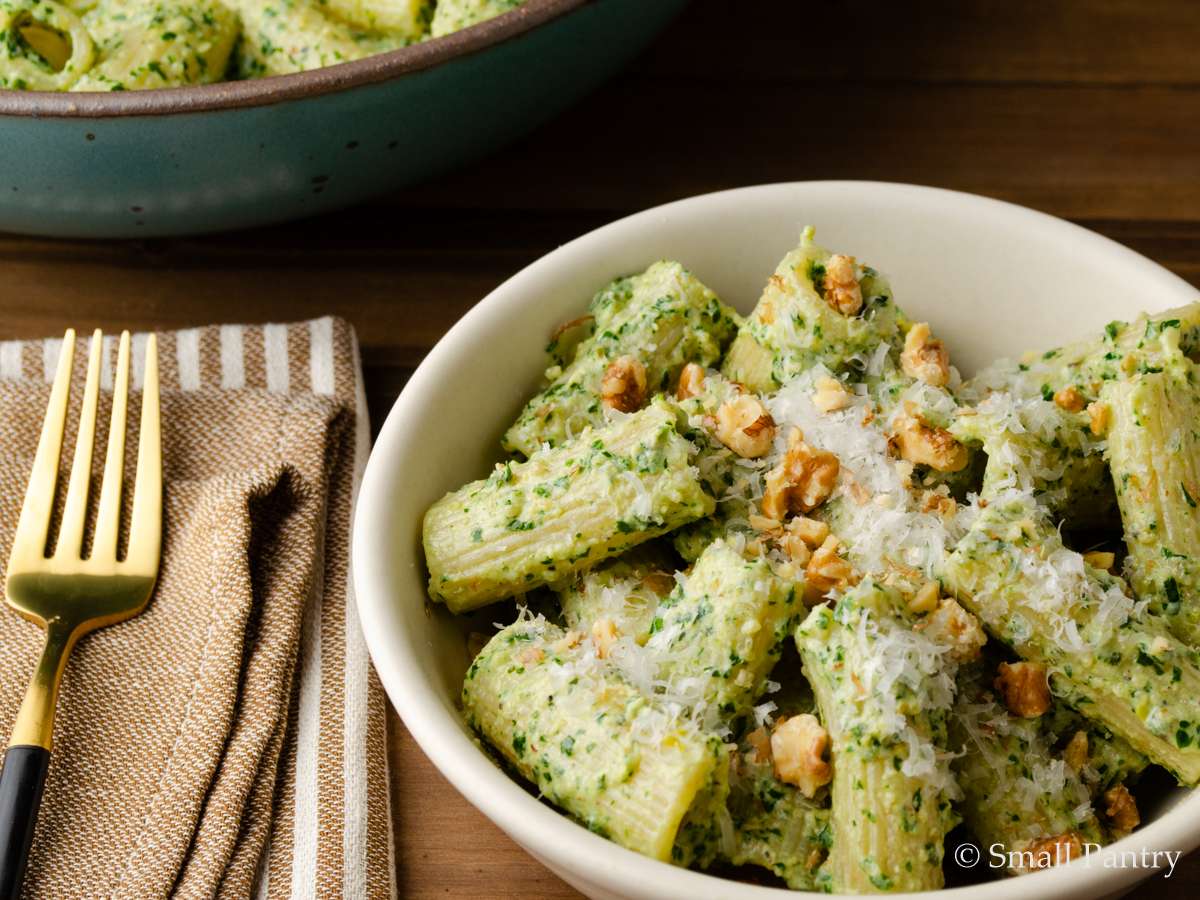
Perfect for a crisp Fall day, this easy pesto combines the cozy heartiness of sage and toasted walnuts with the light, cheery flavors of fresh ricotta and lemon zest. The secret to success for this pasta with ricotta, sage and walnut pesto recipe is a quick microwave infusion of walnut oil with chopped sage. Using walnut oil not only amps up the walnut flavor, it keeps the overall flavor profile clean and uncluttered.
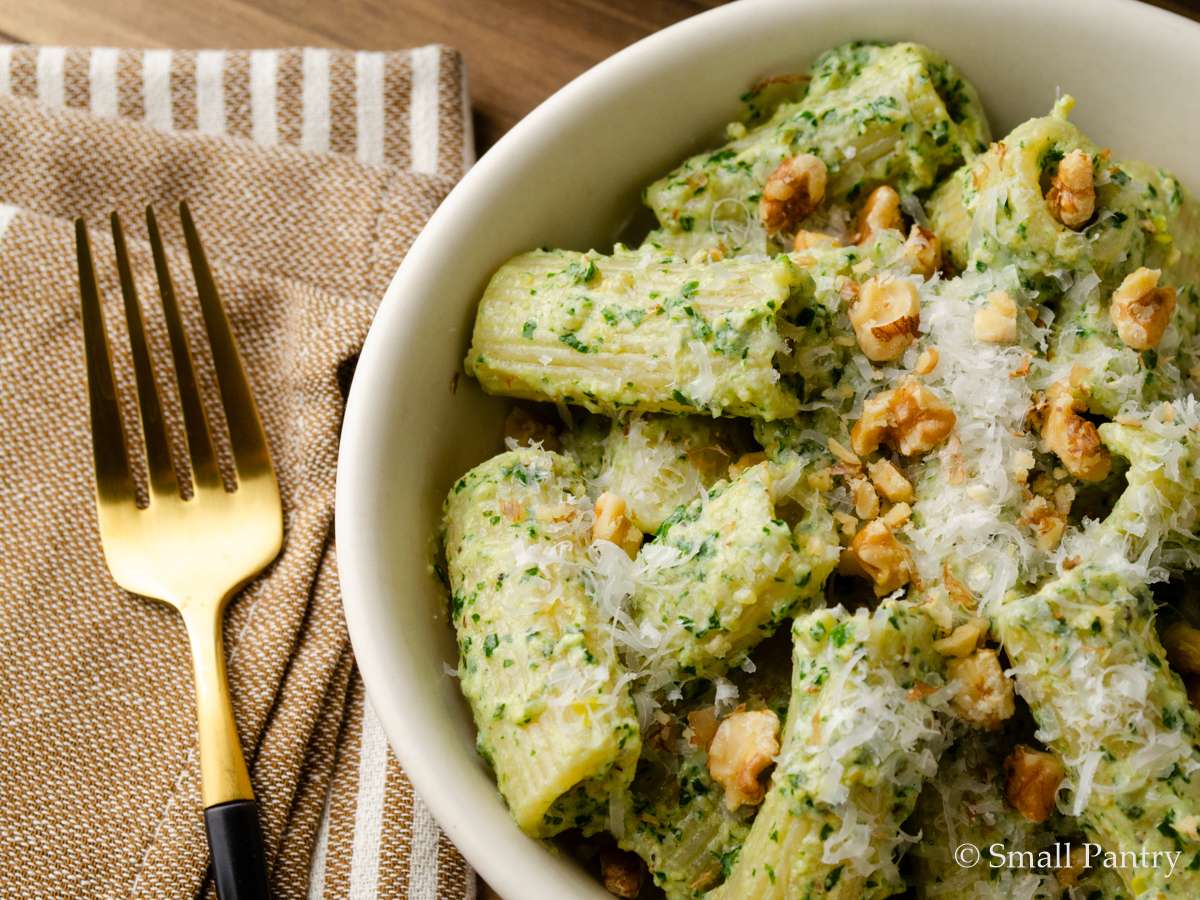
This is the correct version of this ricotta, sage, and walnut pesto. What do I mean by "correct?" Well, many years ago I developed this recipe for a New England-based food media company. It went through all the standard tests and taste critiques, it passed through the copy editor, and it popped out the other side as a delicious, easy Fall recipe! Until somebody decided that walnut oil was "too difficult to find," and changed the ingredients from walnut oil to extra-virgin olive oil.
That version was pushed through and printed, without any follow-up tests or consultation with the recipe author (me). Sadly, when olive oil is infused with the sage it turns into a ghastly, bitter and medicinal thing. Don't make that version. Make this version instead--the original and correct recipe for ricotta, sage, and walnut pesto.
This recipe fits in nicely with my other quick and easy pesto recipes, like my recipe for blistered tomato pesto with toasted almonds and anchovies and my pasta with artichoke pesto recipe. Give them a try, too!
Table of Contents
Ingredients
While this recipe predominantly relies on fresh ingredients (fresh herbs, fresh cheese, citrus, etc), every ingredient is a fairly common refrigerator staple. You might even have everything on hand already!
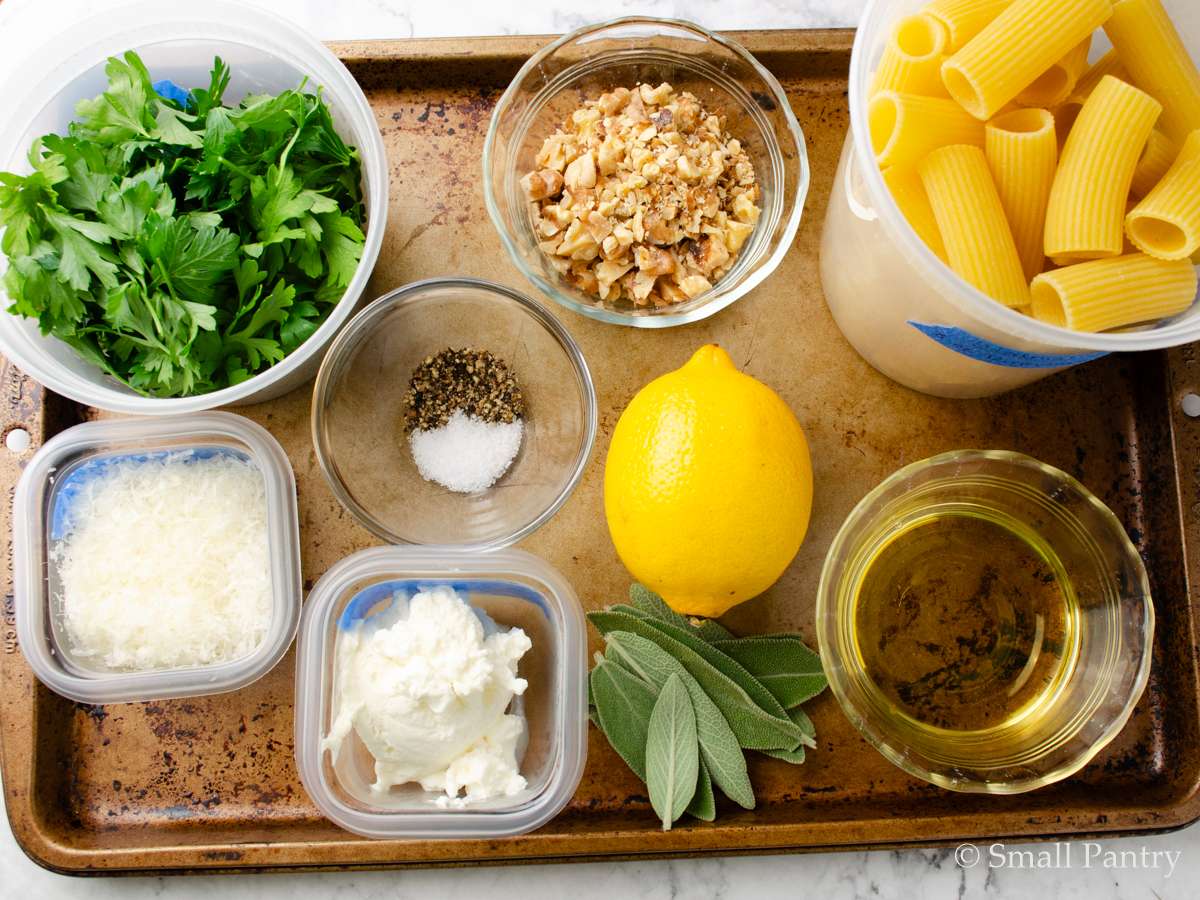
- Walnuts
- Walnuts have a punchy, slightly bitter flavor that mellows out with toasting. They are heartier than other nuts, making them perfect to pair with cozy fresh sage.
- Walnut Oil
- Using walnut oil in this walnut sage pesto enhances the nuttiness of the ground walnuts. It also keeps the pesto from becoming confused--adding an extra virgin olive oil or toasted sesame oil, for example, would be introducing an extra flavor note that detracts from the overall flavors of the pesto.
- Fresh Sage Leaves
- Fresh sage is much more pungent than dried sage. It has a cozy, rich aroma that positively screams "Autumn weather!"
- Ricotta
- Fresh ricotta adds creaminess to the pesto without needing actual cream.
- Parmesan
- Finely grated Parmesan cheese adds some subtle saltiness to the pesto. It also adds a wonderful nutty umami flavor that enhances the flavor of the nuts as well as the ricotta.
- Lemon
- Lemon zest adds a bright note that balances and lifts the denser flavors of the sage and walnuts. For an even brighter pesto add lemon juice to taste.
(See recipe card for quantities.)
Basic Method
The trick to this recipe is the quick infusion of sage into nutty walnut oil. Not only does infusing the oil help to distribute the sage flavor throughout the whole dish, it also tones down the assertiveness of the sage.
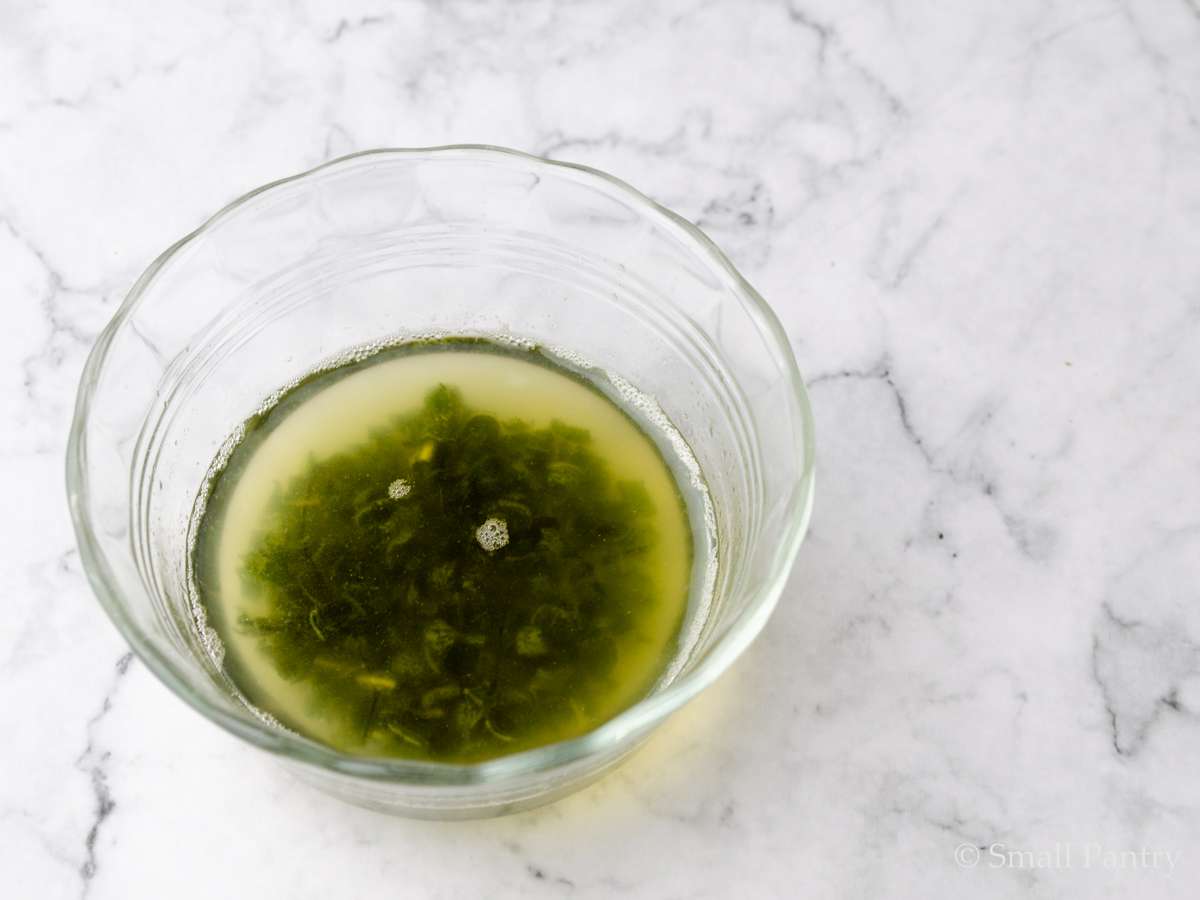
Microwave the sage and oil for 30 seconds, stir, and microwave another 30 seconds. The oil should be hot and the sage aromatic.
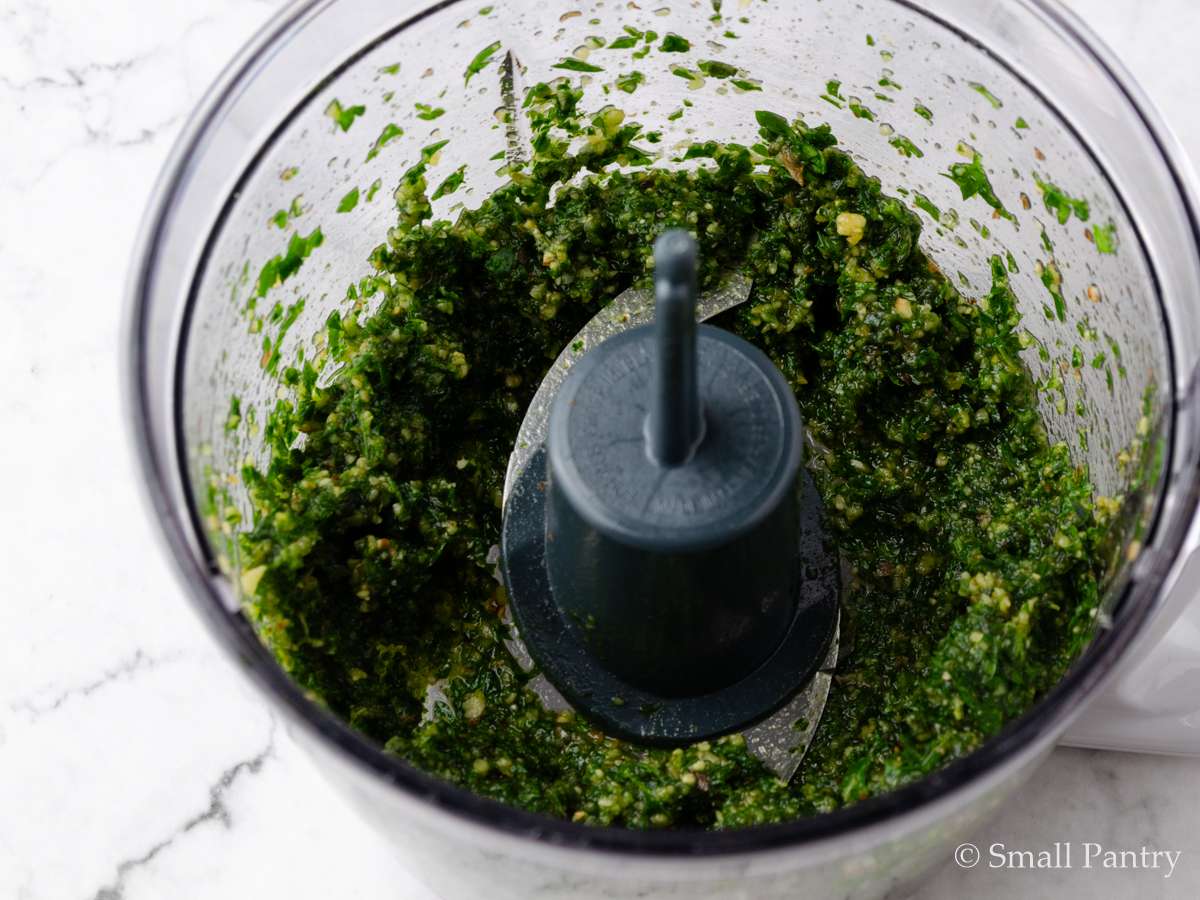
Puree the cooled oil and sage mixture with the parsley and walnuts until nearly smooth.
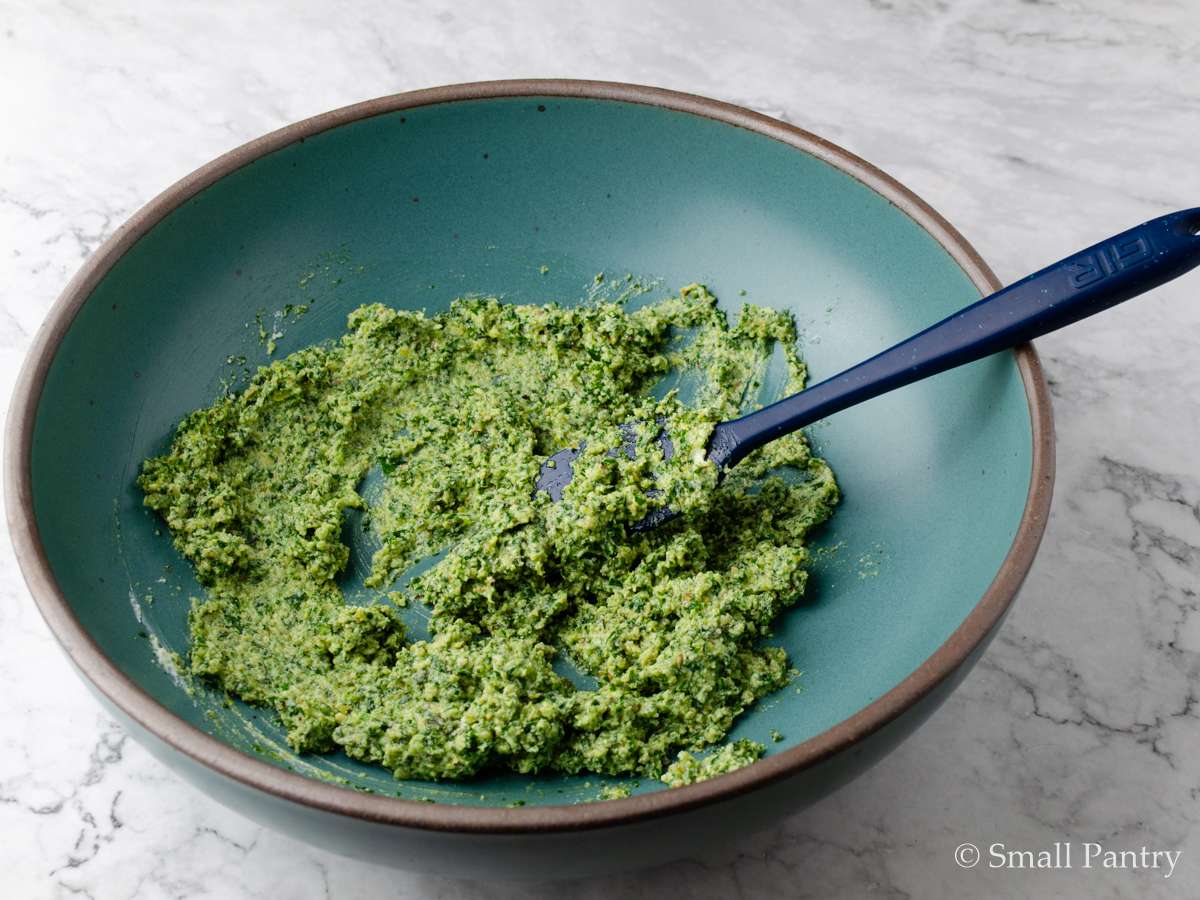
Stir in the ricotta, then taste and adjust seasoning.
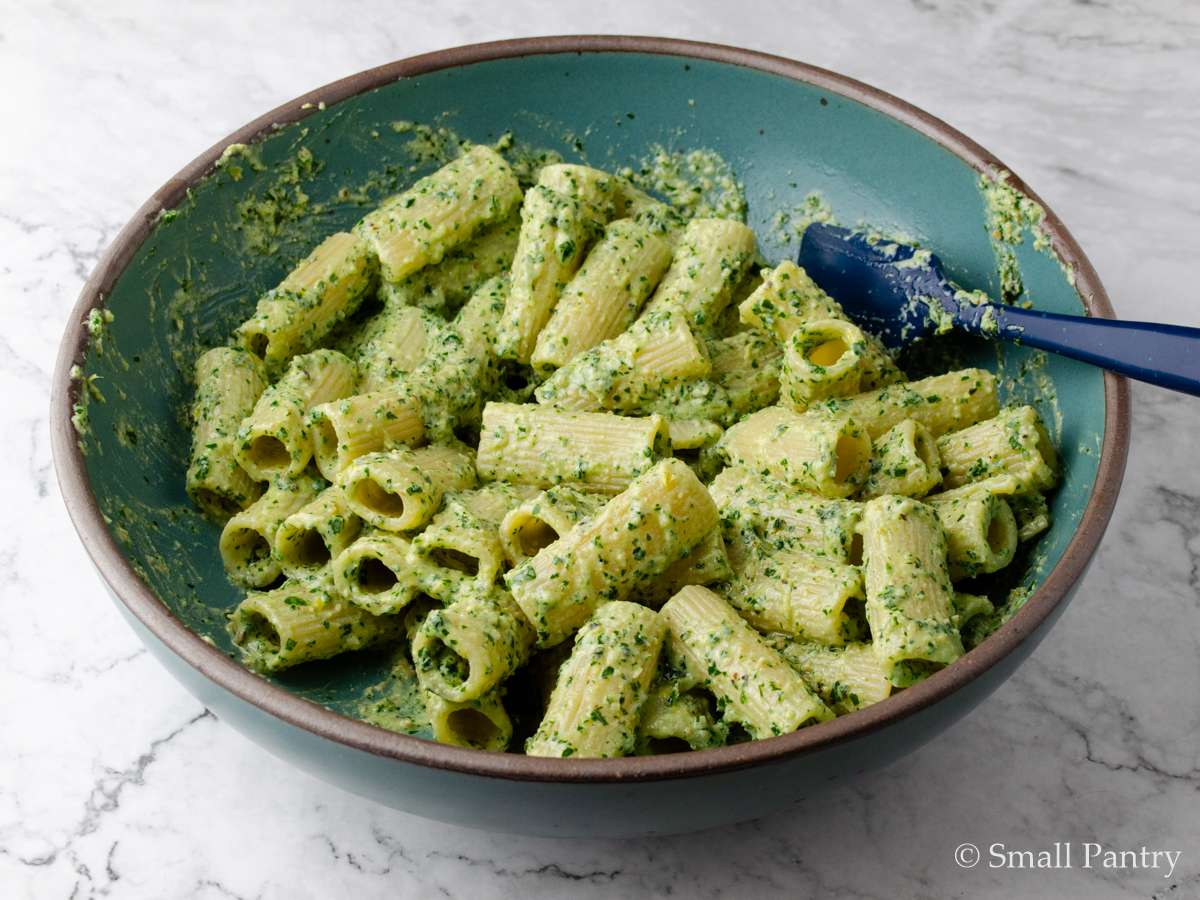
Toss the cooked pasta plus some of the pasta water together with the pesto to create a creamy textured sauce.
(See recipe card for full instructions.)
Substitutions
This is one of those wonderful recipes that is fun to tweak and play with based on the ingredients you have on hand. Below are some basic suggestions for how to adjust the recipe, but don't be afraid to get creative!
- Sage - instead of sage, try other hearty herbs like rosemary, thyme, or marjoram. Be wary of tender herbs like cilantro or tarragon, as they don't stand up well to the microwave infusion.
- Walnut Oil - instead of walnut oil, try another nut oil or just use a neutral oil. Do NOT use extra-virgin olive oil with the sage, it will become bitter and astringent.
- Walnuts - instead of walnuts, try another fatty nut like pecans, pistachios, or cashews. To avoid tree nuts, try toasted pumpkin seeds (pepitas), which will taste wonderful with the sage!
Equipment
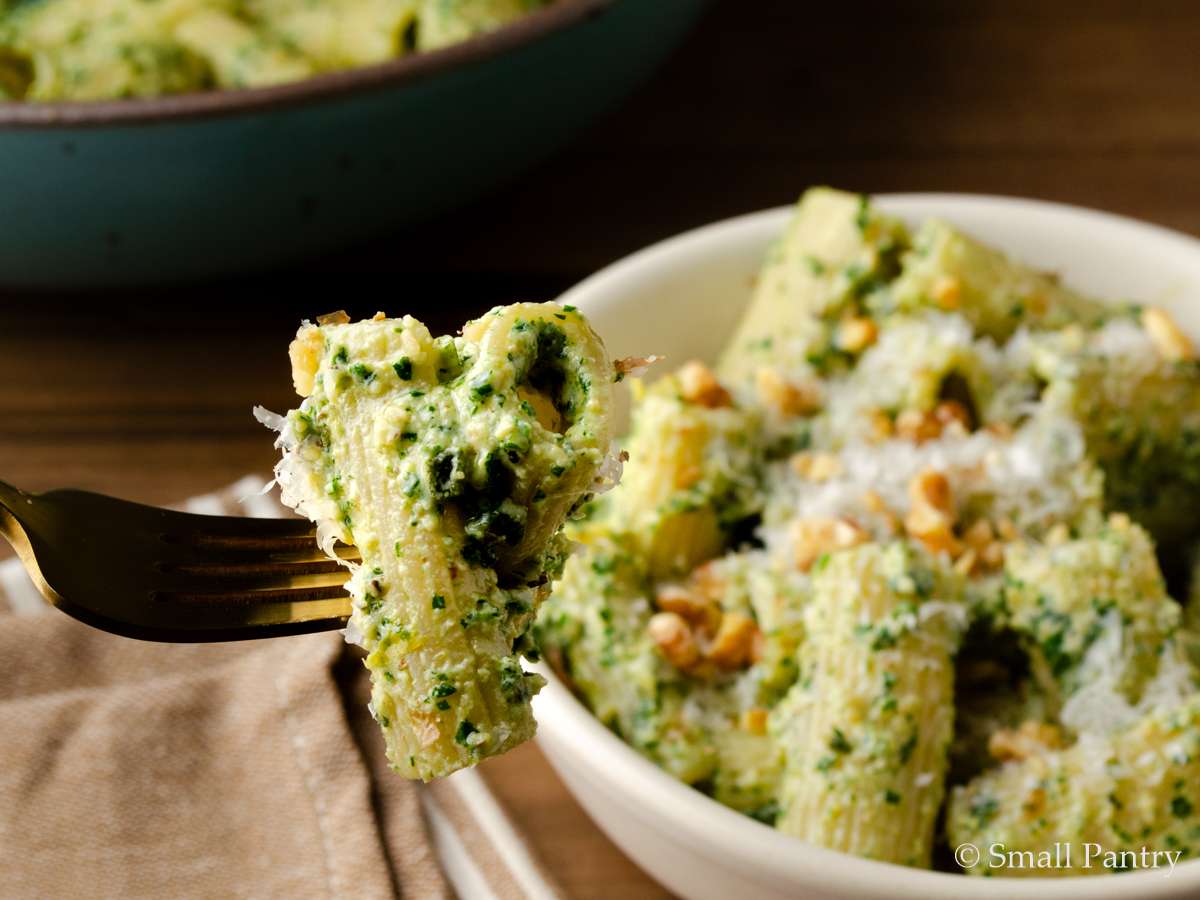
I prefer to use my mini food processor for this recipe, but you can also use an immersion blender with fairly good results.
I have always liked the Cuisinart Mini Choppers that I've owned. This 3-cup mini food processor is just like the first one I owned, but mine was a sunny yellow!
Storage
The cooked pasta will get overly soft in the refrigerator, but if you don't mind the softer noodle texture this ricotta, walnut, sage pesto recipe makes tasty leftovers.
If you'd like to freeze this pesto, I recommend omitting the ricotta. Fresh cheeses like ricotta have too high of a water content to freeze well. Freeze the pesto as you would any other pesto recipe (in an airtight container, or portioned into ice cube trays). Add the ricotta after thawing.
Expert tips & tricks
This walnut sage pesto recipe can be used just like a classic basil pesto. Swirl it into brothy beans, smear it in a sandwich, or dollop it on baked sweet potato wedges. Depending on the final texture you have in mind, you may wish to leave out the ricotta and instead use the sage pesto for thinner applications like a grain salad dressing.
FAQ
Walnut pesto might be bitter due to the natural bitterness that walnuts can have. To lessen the bitterness, try toasting your nuts before using them. You can also try rubbing the nuts to remove some of the papery skins, since much of the bitterness comes from molecules called tannins, which are found in the papery skins of the walnut. You also might try adding other ingredients to balance the bitterness. Sweet, salty, and sour can all lessen our perception of bitterness.
Yes, you can use walnuts in pesto instead of pine nuts. Walnuts have a more assertive flavor than pine nuts and can sometimes be a touch bitter. When swapping out pine nuts in favor of walnuts just keep in mind that you might have to adjust the seasoning of the recipe to account for the heartier walnut character.
Yes, you can make pesto with sage. I recommend using a milder complementary herb such as parsley to balance out the sage. Too much sage can be off-putting to some palates, and using a base of another more neutral herb is the perfect way to prevent the sage from becoming overpowering.
I always recommend toasting walnuts for pesto, or for any recipe that does not otherwise cook the walnuts. Toasting activates flavorful oils in the nut, giving them a more robust, nutty aroma. It also helps to lessen some of the more bitter flavor notes. And finally, it improves the texture, giving them a tender snap.
You can absolutely make a pesto sauce using a different main herb than basil. In fact, pesto just refers to the act of mashing something to a paste--from the Italian word pestare, to beat or pound. You can use all types of nuts, oils, herbs, or other ingredients to make a pesto. For example, this pasta with ricotta, sage and walnut pesto recipe uses a combination of parsley, sage, and walnuts.
Related Pesto Recipes
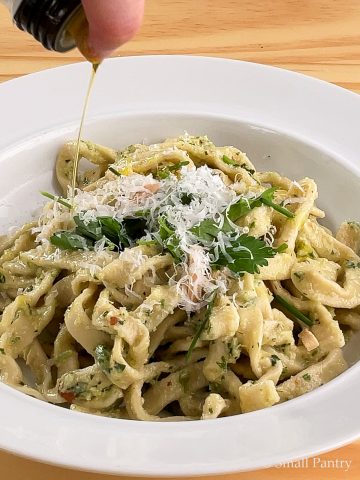
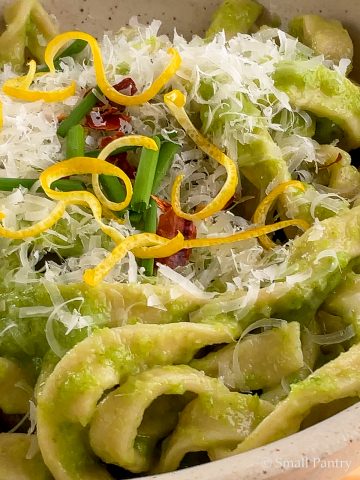
Looking for more pesto recipes? Try these:


More Recipe Suggestions
Looking for more than just pesto recipes? Take a look at what's new on my new recipes page:
- Cilantro Lime Oven Shrimp Skewers
- Oven Charred Coconut Corn and Shrimp Salad
- Shrimp in Jalapeño Dressing
- Silky Doenjang Chocolate Pudding


Recipe: Pasta with Ricotta, Sage, and Walnut Pesto
Ingredients
- 3 tablespoons walnut oil
- 10 large fresh sage leaves, or about 20 small, chopped
- 1½ cups fresh parsley, leaves and tender stems, lightly packed (¾ ounce)
- ⅓ cup walnuts, toasted and coarsely chopped (about 1 ounce), plus more for garnish
- 1 teaspoon finely grated lemon zest
- ¼ cup Parmesan, finely grated, plus more for serving
- ¼ cup whole milk ricotta
- Kosher salt and black pepper
- 8 ounces dried pasta, preferably short chunky pasta like rigatoni
Preparation
- Step 1Bring a large pot of well-salted water to a boil. While the water comes to a boil: In a small microwave safe bowl, stir together the walnut oil and chopped sage. Make sure to fully coat the sage with the oil. Microwave for 30 seconds, stir, and microwave another 30 seconds. The oil should be hot and the sage aromatic. Let cool to room temperature.*Be careful, the bowl and oil will be hot!
- Step 2Using a food processor, blender, or immersion blender, puree the cooled oil and sage mixture with the parsley and walnuts until nearly smooth. Add the lemon zest and Parmesan and quickly pulse a few times until incorporated. Transfer the mixture to a bowl large enough to hold the pesto and the pasta (once cooked). Stir in the ricotta, ½ teaspoon pepper, and ¼ teaspoon salt.
- Step 3Boil your pasta in well-salted water according to the package instructions. Reserve 1 cup of pasta water, then drain the pasta and add the pasta to the bowl with the ricotta pesto. Add ¼ cup of the pasta water and toss everything together to create a creamy textured sauce that coats the pasta. Add more pasta water as needed. Serve topped with walnuts and extra Parmesan.



Leave a Reply