
Easy Mushroom Sage Risotto with Chives

This post may contain affiliate links.
Mushrooms sauteed with garlicky butter and cozy, soft sage are some of my favorite fall and winter flavors. They make an appearance in stuffings, soups, and now in this easy, absolutely scrumptious mushroom sage risotto. With minimal prep and the same fast and simple method as my other risotto recipes you can have a cozy meal on the table as soon as 15 minutes after you add your first splash of stock!
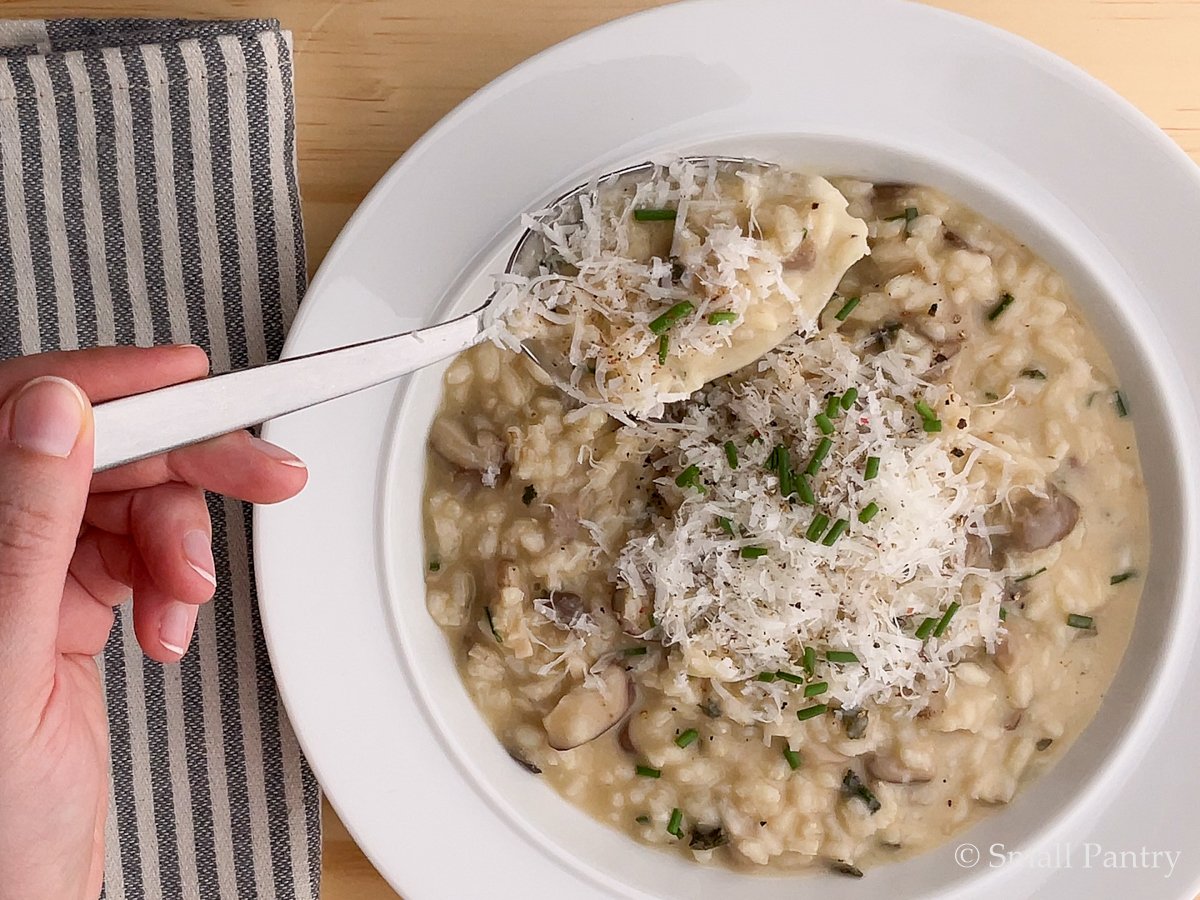
Regardless of whether you're serving this as a side or as the main course, this mushroom risotto with sage is peak cozy comfort. The flavors are simple, yet balanced. Earthy-savory mushrooms nestle among perfectly tender grains of rice suspended in a creamy, cheesy blanket perfumed with fresh sage. A judicious splash of acidity gives all the ingredients a burst of life, balancing the cozy, rich flavors of Autumn.
This was inspired by my saffron risotto recipe, which is based on my simple classic base recipe, but infuses saffron in warm broth in order to ensure the aromas permeate the whole pot. I use the same approach for the fresh sage in this mushroom risotto. I find it pairs well with a fried eggs and a simple side salad, like this kale salad with roasted sweet potatoes. If you eat meat, it's also a wonderful side for simple roasted chicken or some seared sausages.
Table of Contents
Ingredients
This creamy mushroom risotto with sage is an excellent example of simplicity and balance. A few basic ingredients come together to create a final dish that is cozy and satisfying.
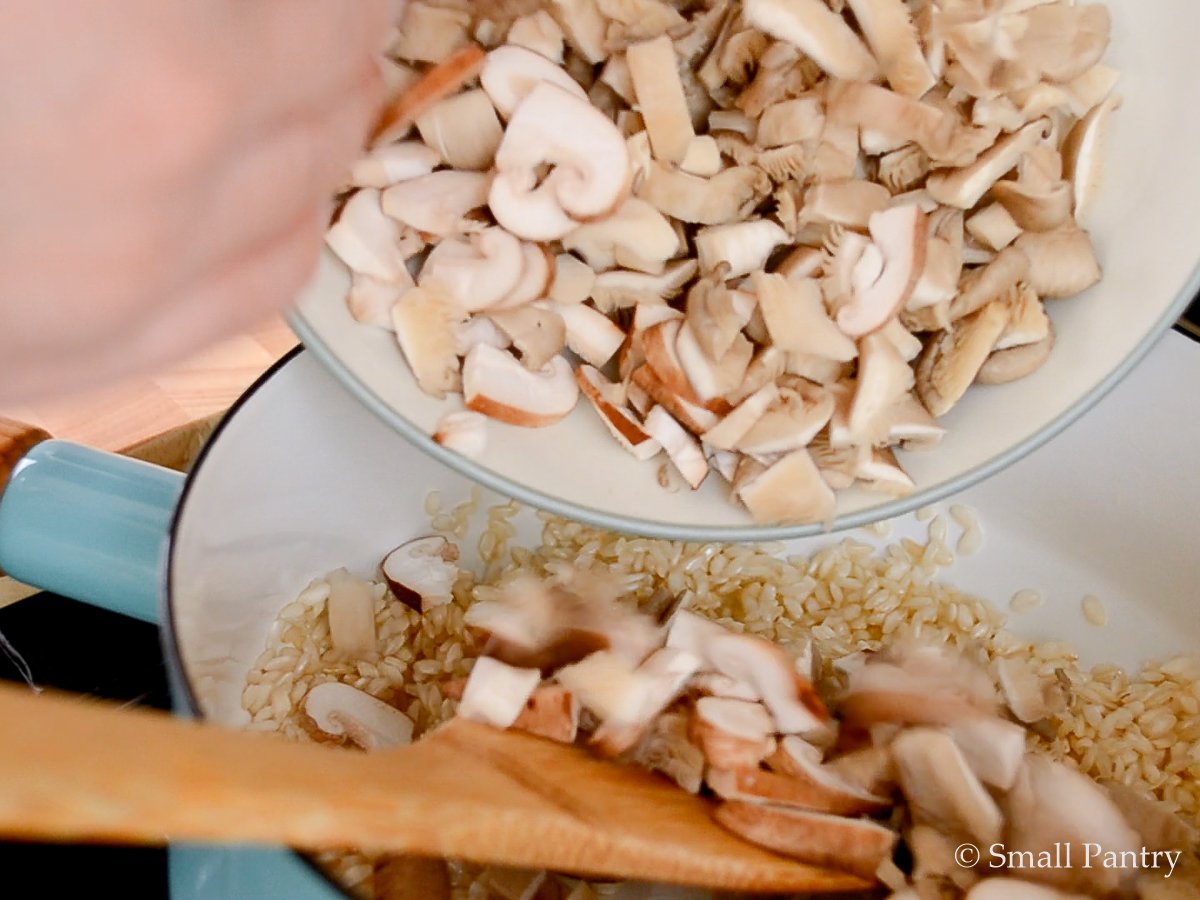
- Mushrooms
- I prefer a blend of mushrooms, particularly shiitake and oyster mushrooms. Button, baby bella, cremini, portobello, etc will all also work.
- Fresh Sage and Chives
- Sage has such a distinctly cozy aroma. It infuses into the whole dish, and will make your kitchen smell wonderful. Adding chives right before serving keeps them bright and flavorful.
- Parmesan Cheese
- Freshly grated Parmesan cheese melts into the brothy rice to help turn it creamy and silky. Use freshly grated, good quality cheese--it will have a significant impact on the final flavor, so using the cheap stuff will be noticeable.
- Carnaroli or Arborio Rice
- These are both medium grain rice. Carnaroli is my preference--after the hundreds of batches I've made in test kitchens (and at home!) I find that it retains its texture better than Arborio, which is more prone to turning mushy. If it's your first time making risotto, it's nice to have Carnaroli as a helpful safety net.
- Mushroom Stock or Broth
- I highly recommend homemade broth because boxed mushroom broths tend to be cloying, almost murky in flavor. As a result, they completely flatten out and overpower the main flavors of the risotto. If you're using boxed broth, see Substitutions for my suggestions on how to adjust it.
- White Balsamic Vinegar
- White balsamic is slightly less acidic than white wine vinegar, with a touch of sweetness. Adding a splash at the end of cooking wakes up the whole pot and balances the richness beautifully. Don't be afraid of it! It's one of the key elements that separates good risotto from heavy, stodgy risotto.
(See recipe card for quantities.)
Basic Method: Video
The process for my super easy mushroom-sage risotto is essentially the same as my other risotto recipes. Below is a video showing the basics of how to make it, with jump-to links marking each of the key steps for easier navigation.
- 0:00 Intro
- 0:14 Steep fresh sage in broth
- 0:32 Toast rice and mushrooms in butter, then add broth
- 0:58 Stir often, until rice is nearly tender
- You want it to be about 75% of the way done, and overall still look a bit soupy.
- 1:08 Stir in the steeped sage and its broth
- 1:22 Remove from heat and add butter, cheese, and vinegar
- 2:04 The ideal risotto texture
- If you prefer a looser texture, add a splash more broth. If you prefer a stiffer texture, cook longer before adding the butter and cheese.
- 2:25 Check your seasoning, then stir in chives
- Adjust with salt and more vinegar as needed.
- 2:52 Ready to eat!
Basic Method: Photos
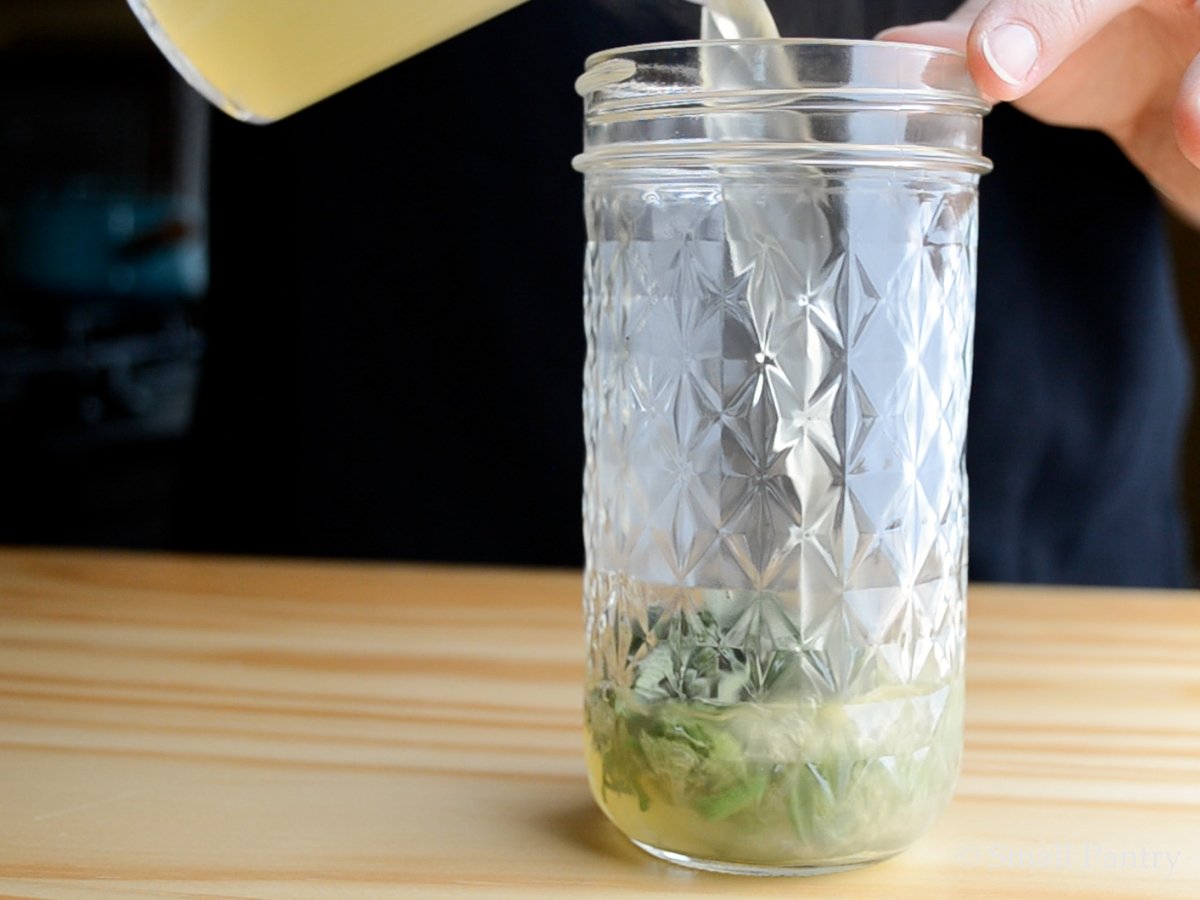
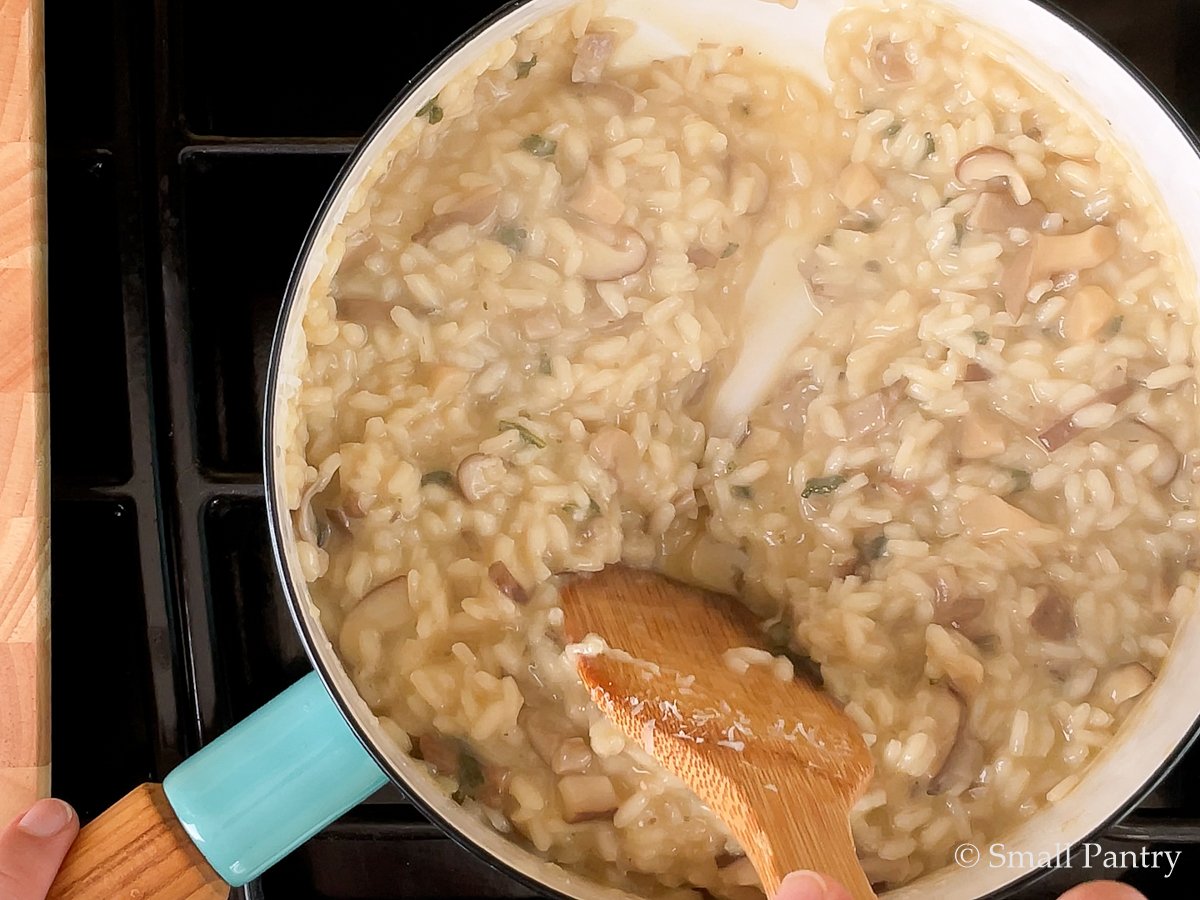
Steep fresh sage in hot broth.
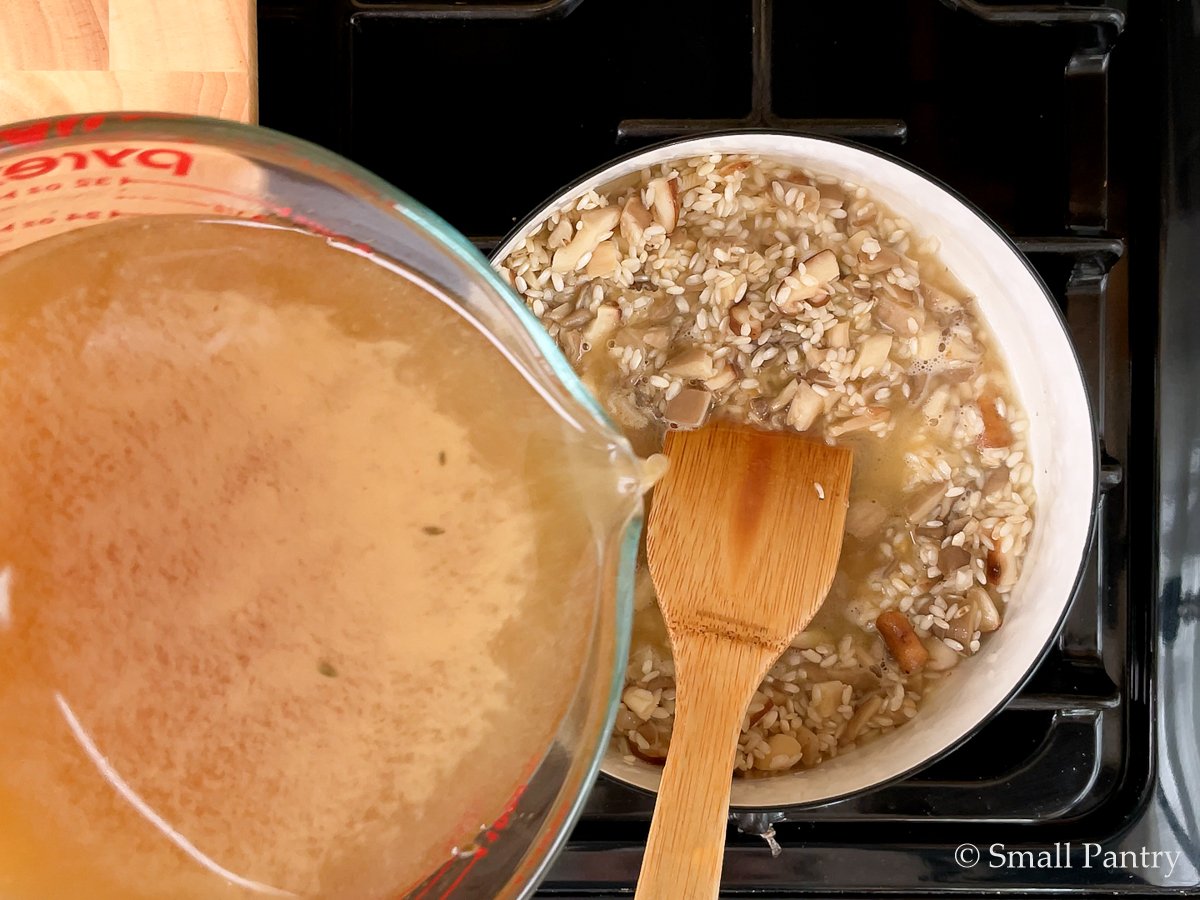
Toast the rice and mushrooms in butter, then add broth.
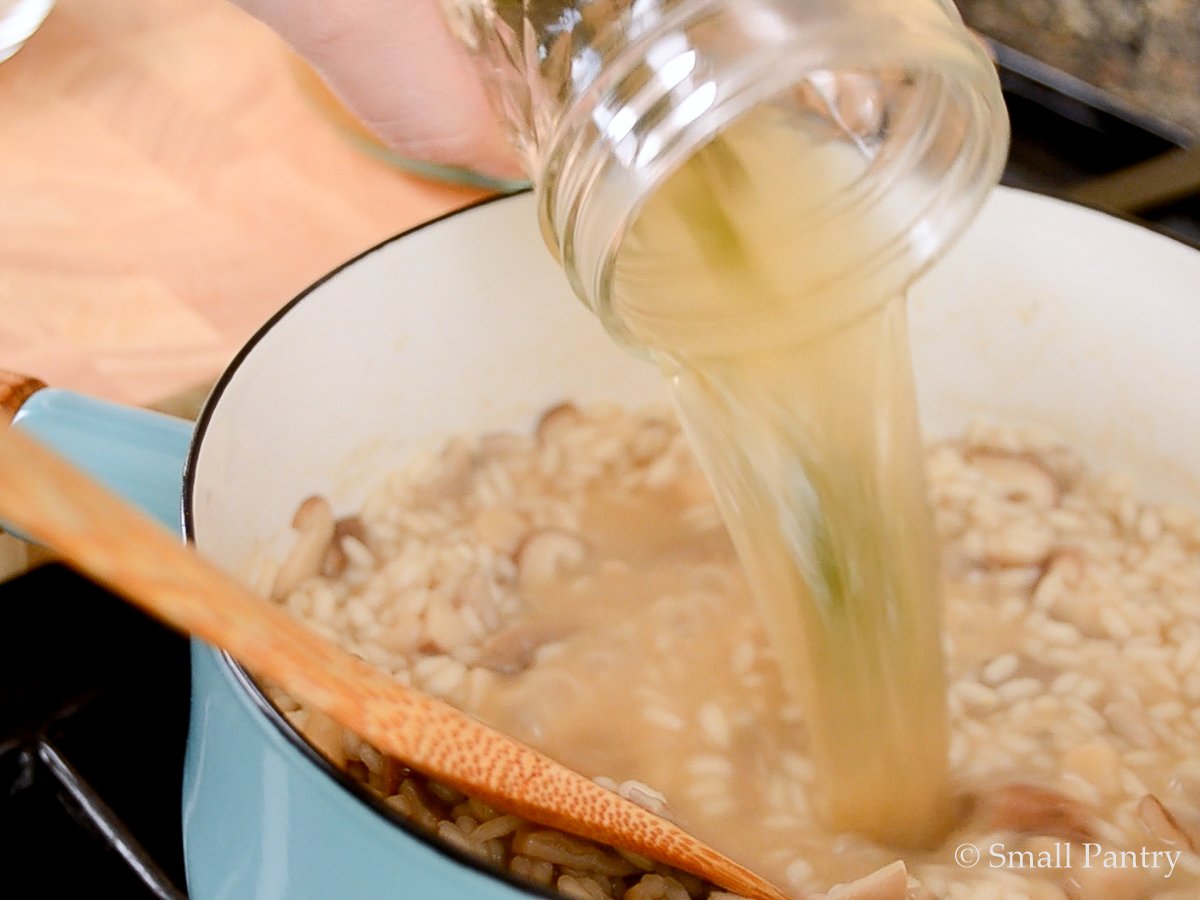
Cook, stirring often and briskly, until rice is nearly tender, then add the sage-broth mixture.
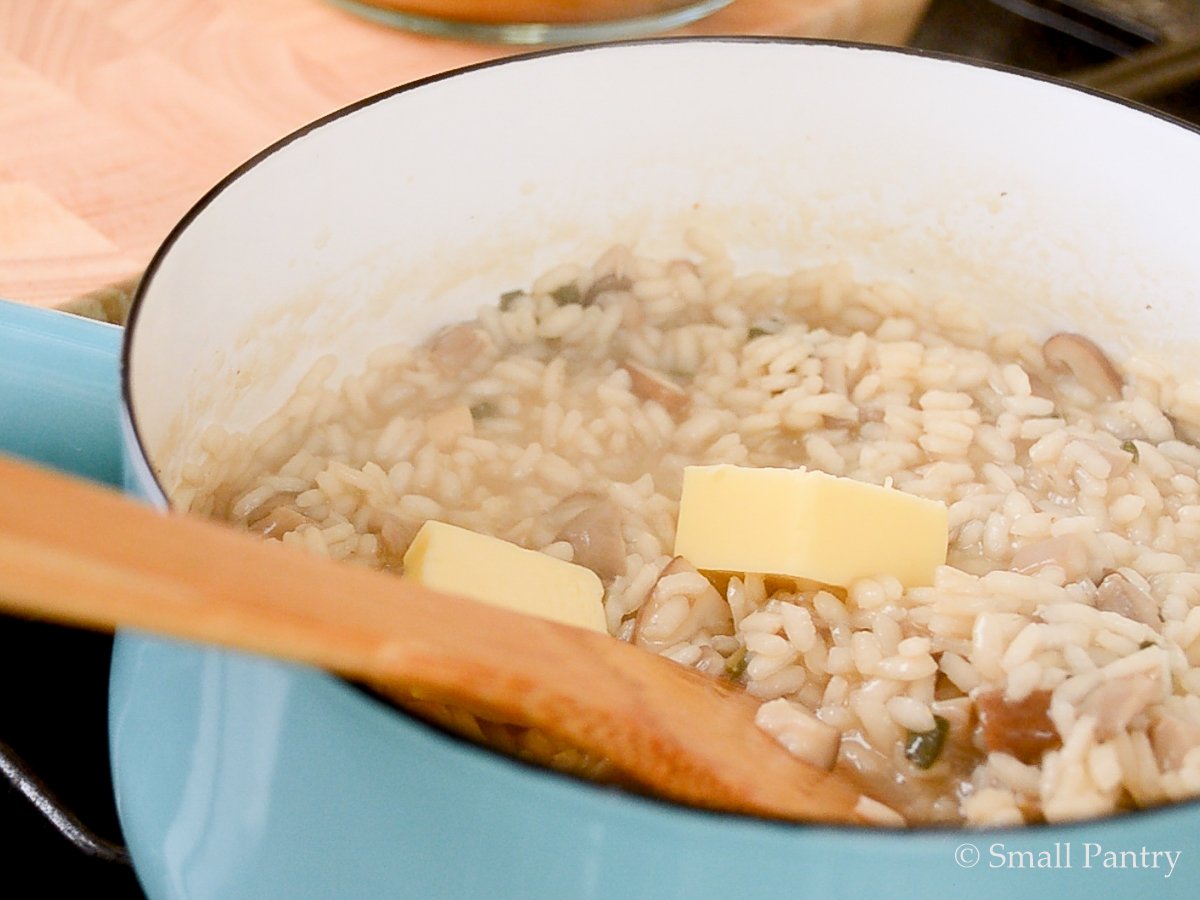
Remove from heat and add butter, cheese, and vinegar.
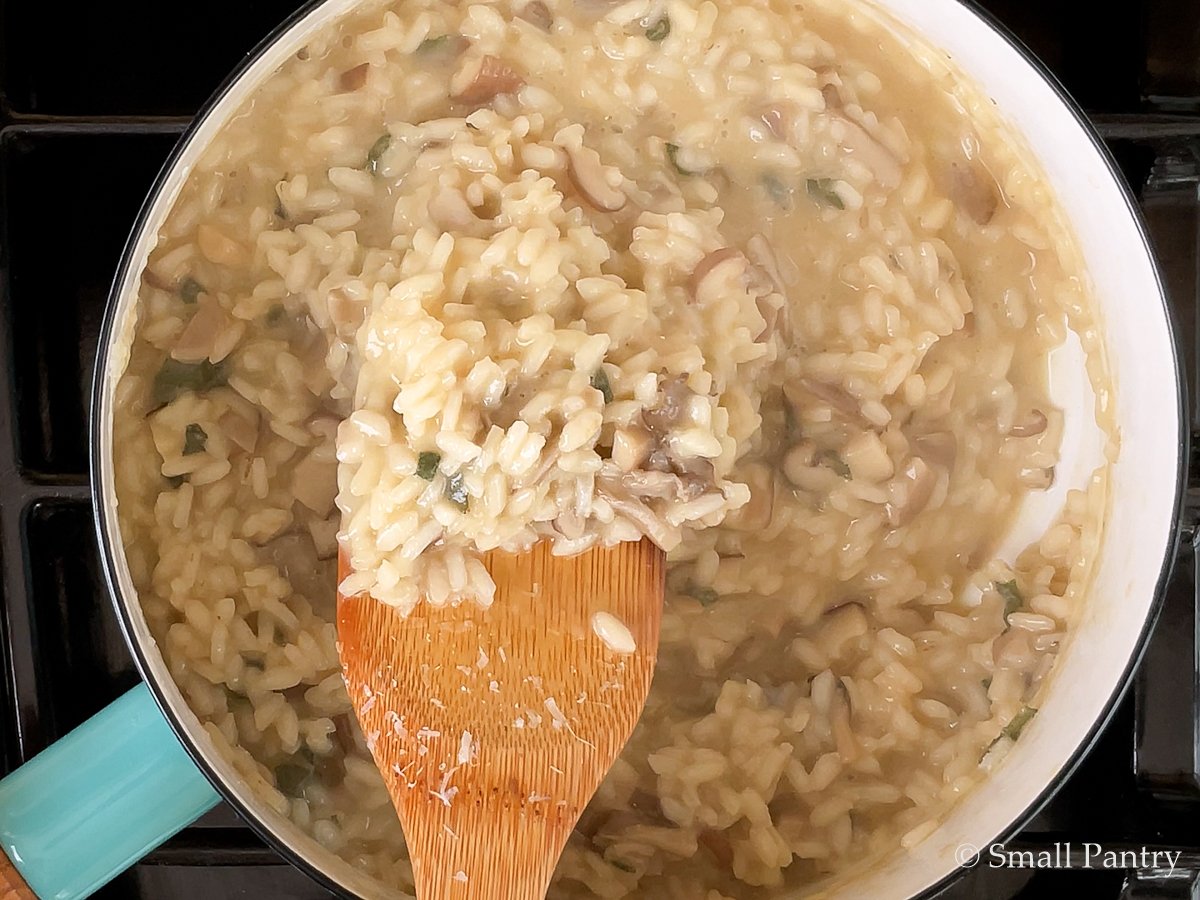
Your rice should be just shy of al dente and your overall texture should be creamy but still a little bit loose.
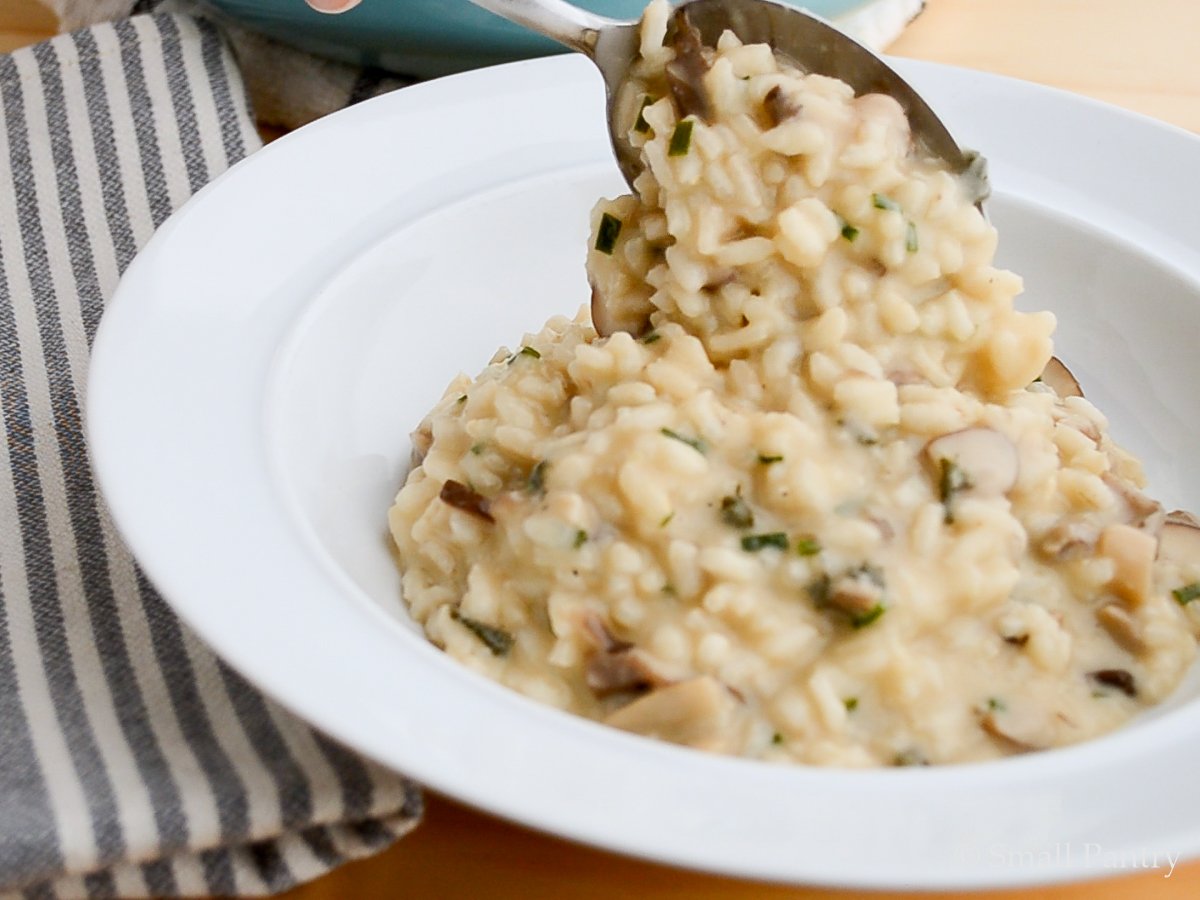
Serve immediately, ideally in warmed bowls.
Hint: for added visual drama, slice some of the mushrooms instead of chopping them. You can also slice some extra mushrooms and give them a good sear in a separate pan, to use as garnish.
Substitutions/Pantry Swaps
The nice thing about this recipe is that it mostly relies on basic, easy-to-find ingredients. That being said, here are some suggestions that will hopefully help eliminate any barriers to you giving this mushroom sage risotto a try!
- Risotto Rice - you can use any medium-grain rice, or even short grain rice, regardless of where it's from. It doesn't have to be Italian "risotto rice." The important thing is size, so if you already have a lovely medium grain Japanese rice in your pantry, use that! All types of rice will vary slightly in cook times and how much liquid they need, so just keep that in mind.
- Homemade Mushroom Broth - If you prefer to use store-bought, I highly recommend diluting it with water. Because most store-bought broths are much more concentrated than homemade, they end up overpowering the rest of the ingredients. I find this to be especially true for vegetable broths, but also for mushroom, chicken, and beef broths.
- To use store-bought for this recipe start with roughly 3 cups broth diluted with 1 cup water. If using a salty bouillon paste, dilute it even further. I have liked the Better than Bouillon Roasted Vegetable paste reconstituted with 1 teaspoon paste to 4 cups water--that's a mere 25% of the label's recommendation.
- Fresh Mushrooms - you can swap in rehydrated dried mushrooms for the fresh. The texture will be slightly chewier but the flavor will still be lovely. They won't shrink down as much as fresh do while they simmer with the rice, so use less. I would aim for about ½ cup chopped rehydrated mushrooms but more won't hurt!
- White Balsamic Vinegar - if you can't find white balsamic, or don't want to buy it just for this recipe, use unseasoned rice vinegar or a good quality white wine vinegar. Keep in mind, both of these lack the natural sweetness of balsamic, which softens and balances the acidity. Because of this, you should start with a bit less and then add more to taste. (Do not sub regular balsamic!)
Variations
The simplicity of this risotto recipe means it's easy to incorporate into your regular meal rotation. It also means that it's easy to make small changes to fit your preferences or mood! Here are some examples:
- Texture - this recipe has been carefully written to give you "perfect" all'ondo risotto, the way you would find it in Italy. That means al dente grains of rice suspended in a silky, thick sauce that flows like lava when spooned onto a plate. However, "perfect" is subjective! If you prefer your rice firmer/softer or if you prefer the risotto to be looser/stickier, hop over to my notes on customizing texture.
- Make it Deluxe - truffles! Fold in or garnish with some shaved fresh truffle just before serving. You can also finish with a sprinkle of truffle salt or truffle oil.
- Different Herbs - if you're not a fan of sage or don't happen to have any, try fresh thyme, fresh rosemary, or fresh oregano. I do not recommend substituting dried herbs for this recipe.
Equipment
Equipment can have a big impact on how a recipe turns out. Your stove and oven will function differently, even if they are the exact same model as mine. Differences in pan size and material will also affect things like cooking time, temperature, and moisture loss.
- For this recipe, I recommend using a 2-quart saucepan and a flat-edged wooden spoon. The flat edge of the spoon helps to make sure there are no rogue grains of rice sticking to the bottom of your pot.
- If your pan is smaller than 2 quarts, you risk splatters and spills that can burn you (and make a mess).
- If your pan is larger and wider (like a Dutch oven), the broth will evaporate faster due to increased surface area. You will likely need to add more broth in step 3 to get the correct balance of creaminess and rice tenderness.
- If your pan is larger and taller, the broth may evaporate more slowly. This is because the higher sides of a taller pan trap more moisture, slowing overall evaporation. You may not need to adjust liquid amounts, or you may need to use a bit less in step 3.
Storage and Make-Ahead
Make Ahead - You can prep and measure all ingredients several hours in advance. Keep perishable ingredients covered and in the refrigerator. For the tastiest plate of risotto, aim to start cooking about 20 minutes before you would like to eat.
To make risotto far in advance for a crowd, see my restaurant-style make ahead instructions.
Storage - Risotto does not reheat well, but it's still tasty the next day. If warming gently on the stove, add a splash of water or broth to loosen. You can creep close to its original silkiness, but it will be a shadow of its former self. However, if you have leftover risotto, I recommend you make it into arancini! (Recipe to come!)
Expert tips & tricks
Keep this seasonal by making use of wild mushrooms! Mushrooms all have different flavors and textures, and a lightly creamy mushroom risotto like this one is a terrific way to showcase the variations!
If you want to add a bit of restaurant flair to your dish, try quickly frying some whole sage leaves in butter or oil. Sizzle them in a puddle of fat over medium heat until just beginning to darken, then quickly transfer them to a paper towel-lined plate. Sprinkle with salt and let cool. They will crisp as they cool. Garnish with the whole leaves or coarsely crumble them.
FAQ
The best risottos have a subtle acidic ingredient added at the end. A touch of good quality vinegar or a squeeze of lemon brightens and enhances all the flavors, while also helping to cut through and balance the richer ingredients like cheese and butter. If you skip the acidity when adjusting your seasoning, you are likely to end up with heavy tasting, stodgy risotto.
The secret to your very best risotto has nothing to do with slowly stirring or adding stock bit by bit. The way to get the best risotto is to properly season at the and and to monitor the doneness of the rice as you cook.
There are many known benefits to eating more mushrooms! You can learn more from this UCLA Health article. Mushrooms risotto is a great way to incorporate more mushrooms into your diet.
Related Recipes
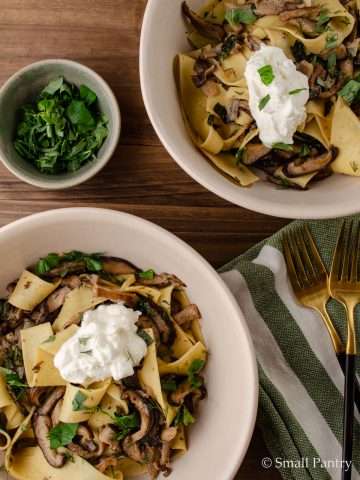
Looking for other yummy mushroom recipes like this one? Try these:


Pairing Suggestions
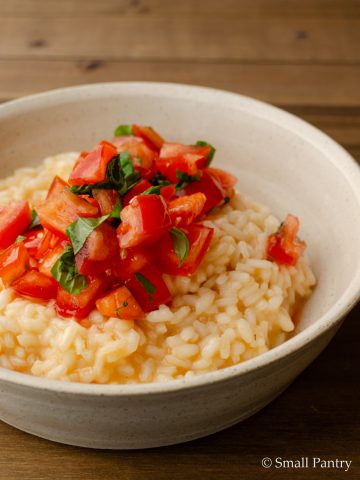
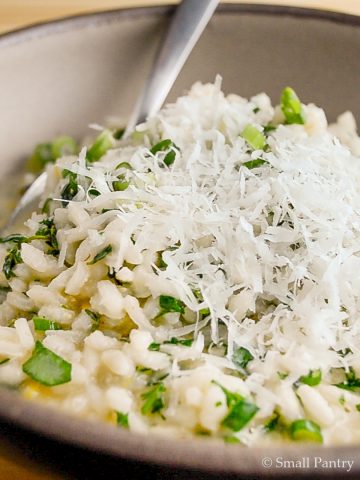
I love a fresh salad with a bowl of this savory-cozy mushroom-sage risotto:


Easy Mushroom Sage Risotto with Chives
Ingredients
- 4 cups mushroom broth, preferably homemade (See Notes)
- 6 medium fresh sage leaves, minced (1 tablespoon)
- 6 tablespoons butter, cut into 1-tablespoon pieces, divided
- 1 cup carnaroli or arborio rice
- 4 ounces shiitake mushrooms, finely chopped (See Extra Notes)
- 1 ounce Parmesan, finely grated on a microplane (scant 1 cup)
- kosher salt
- 2 to 4 teaspoons white balsamic vinegar, or other light vinegar (See Notes)
- 2 tablespoons fresh chives, finely chopped
Preparation
Step 1: Warm the broth
- In a small covered saucepan over medium, bring the broth to a simmer. Reduce to low and keep warm. In a small bowl or measuring cup, combine the sage with ½ cup of the hot broth. Set aside to steep.
Step 2: Main cook
- In a large saucepan or high-sided skillet over medium-high, melt 2 tablespoons of butter. Add the rice and mushrooms and cook, stirring constantly, until the rice is translucent at the edges, 1 to 2 minutes. Add 2½ cups of the warm broth and a pinch of salt and bring to a boil. Reduce to medium heat and cook, stirring frequently and briskly, until the rice grains are noticeably more tender but still have quite a firm core, 8 to 10 minutes. The risotto will still look quite loose and soupy. Adjust the heat as-needed to maintain a vigorous simmer.
Step 3: Adjust texture
- Add the reserved ½ cup broth and sage and continue cooking, stirring frequently and briskly, until the rice is just shy of perfect al dente, 3 to 5 minutes. It should still be quite soupy and loose. Remove from heat.The grains of rice will continue to soften in the next step and the texture will stiffen up, so you want the rice just shy of al dente and the overall texture just a bit loose.
- If the rice is still very crunchy but the risotto is already looking thick and sticky, add ¼ cup more of the broth and continue simmering and stirring. Repeat, as needed, adding broth ¼ cup at a time, until the rice is just shy of perfectly cooked.
Step 4: Add cheese, butter, and chives
- Off heat, stir in the Parmesan, ½ teaspoon salt, and the remaining 4 tablespoons butter, 1 piece at a time. Stir in 2 teaspoons of vinegar, then taste and adjust seasoning with salt and vinegar. Stir in the chives then serve immediately.


Leave a Reply