
Pasta all' Amatriciana
This post may contain affiliate links.
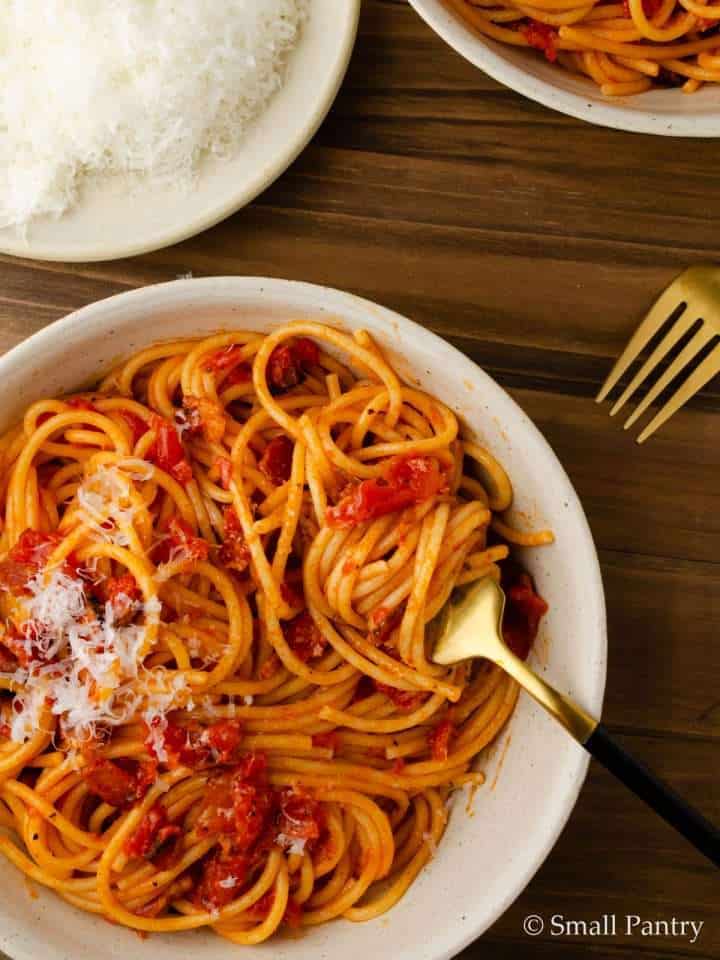
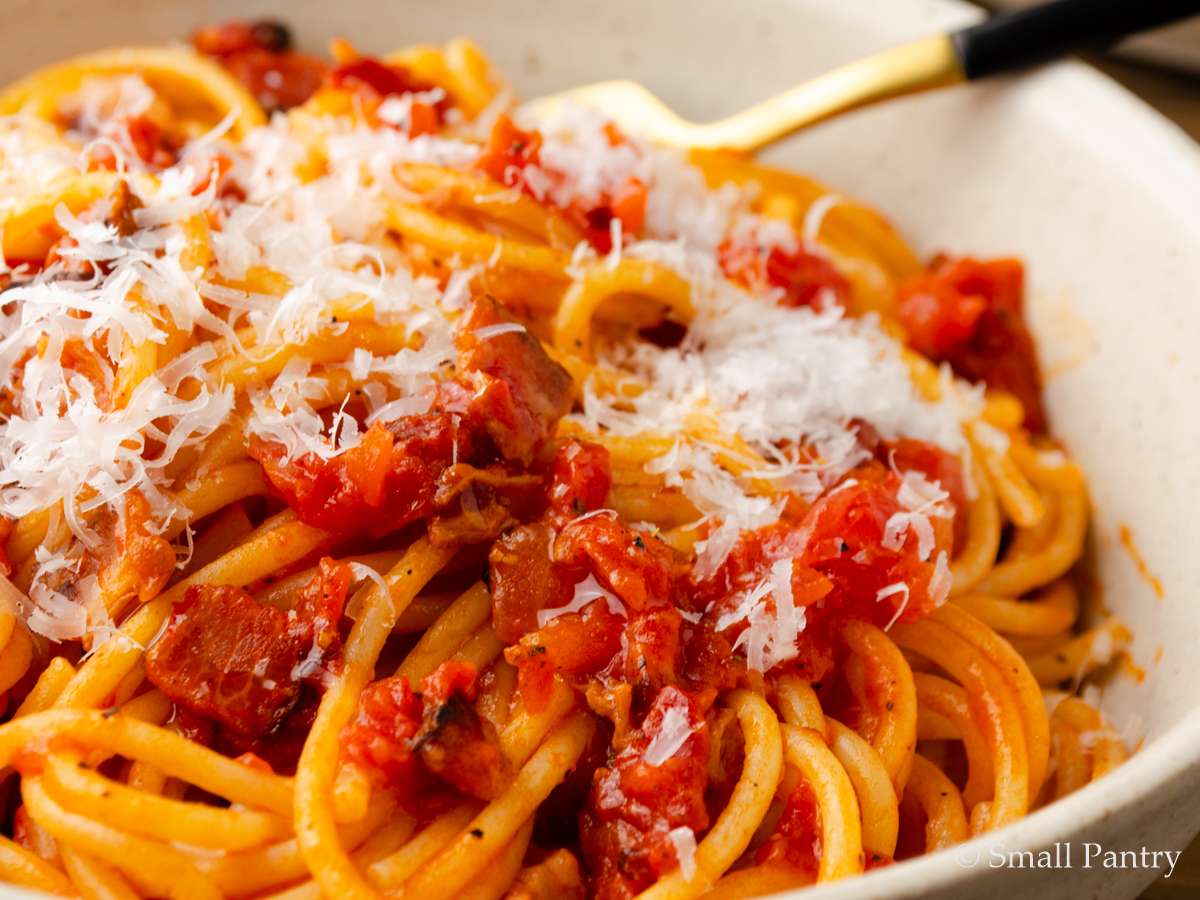
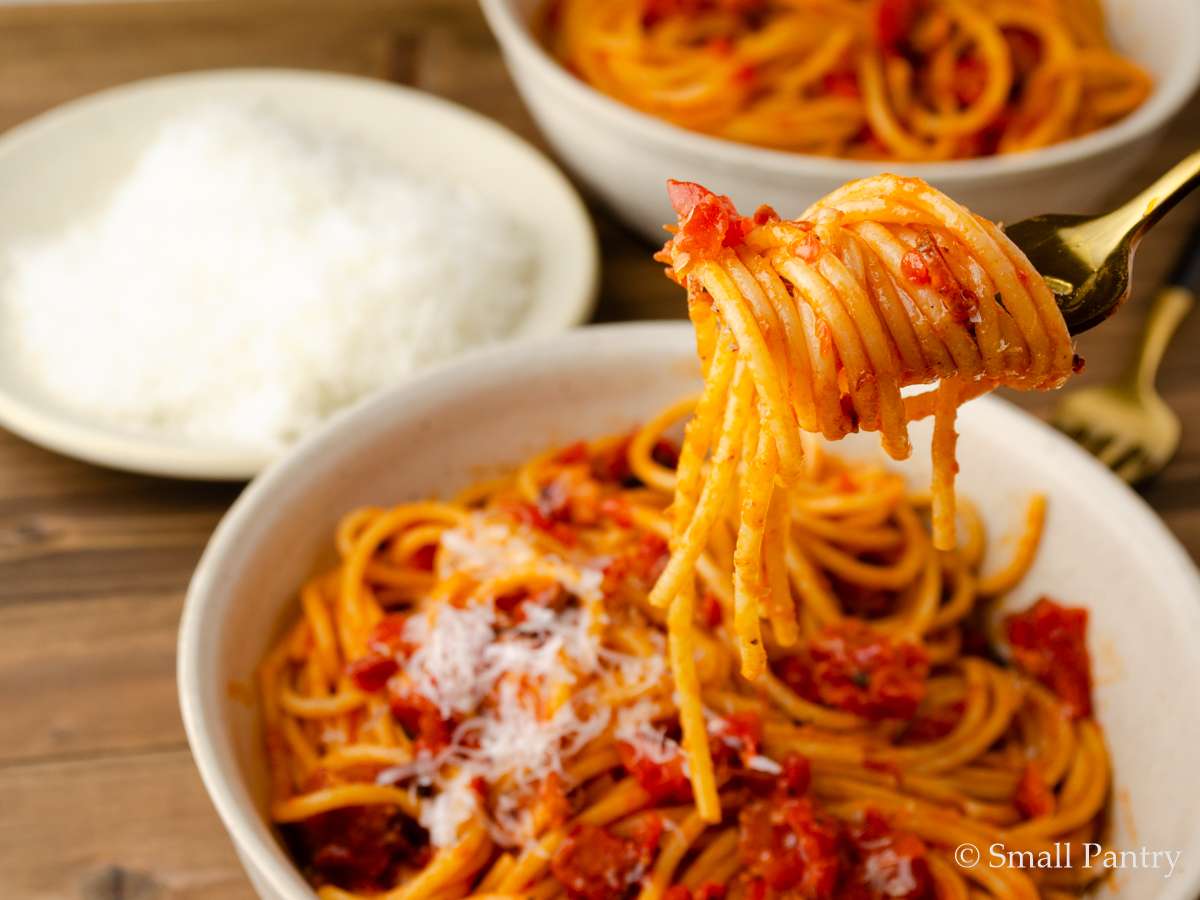
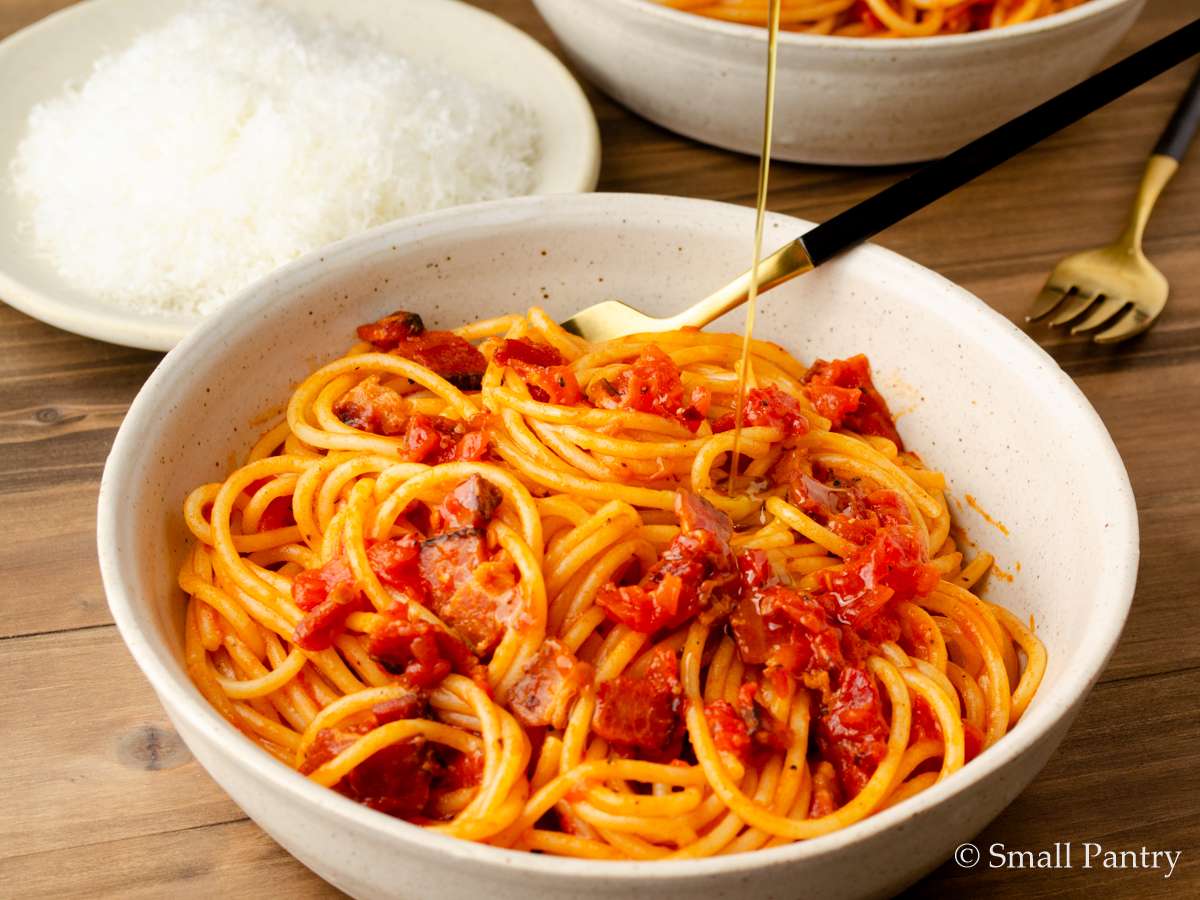
Hailing from the small town of Amatrice in the Lazio region of Italy, sugo all' amatriciana is a sauce made from tomatoes, guanciale, pecorino cheese, and freshly ground black pepper. It's a quick and simple dish, making it excellent for beginners and for quick weeknight dinners. Guanciale (cured pork cheek) and other typical Italian cured pork products (like pancetta) can be tricky to track down in the US. My pasta all' amatriciana recipe is as true to the original as possible, but I call for bacon instead--my college Italian professor, born and raised in Rome, gave me permission! The resulting dish is absolutely delicious and deserves a spot in your everyday repertoire.
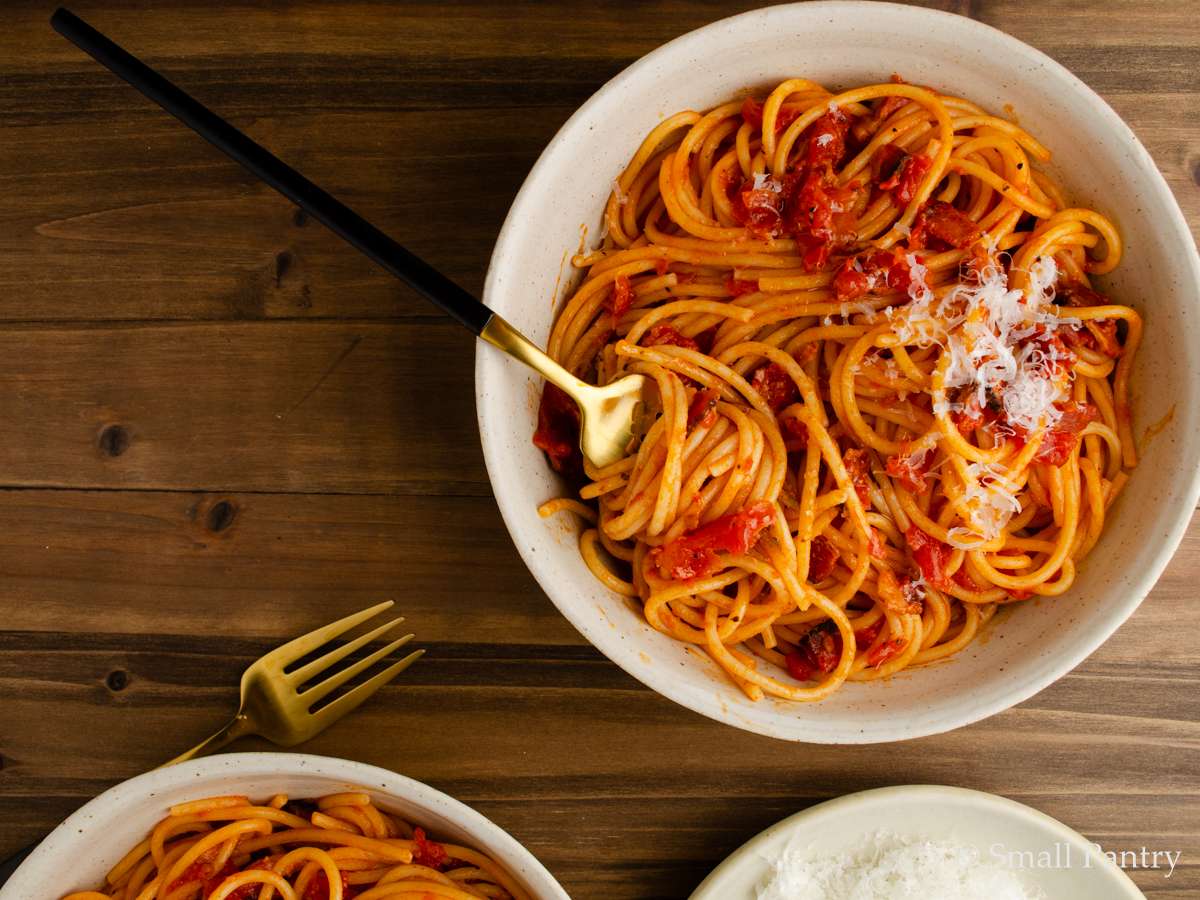
Pasta all' amatriciana is an Italian classic that is delicious any time of year. I tend to gravitate towards it most at the end of summer and into fall and early winter. The extra heartiness from the bacon and white wine warms a body up in a way that's cozier than a simpler tomato pasta.
At its heart, pasta all'amatriciana is a variation on its iconic cousin, pasta al pomodoro. If you're looking for another simple, Italian-style pasta in tomato sauce, you might like my pasta al pomodoro fresco recipe, which is another variation that specifically uses fresh tomatoes instead of canned--perfect for warmer weather.
Table of Contents
Ingredients
The ingredients for pasta all' amatriciana are simple, so it pays to use the best you can find!
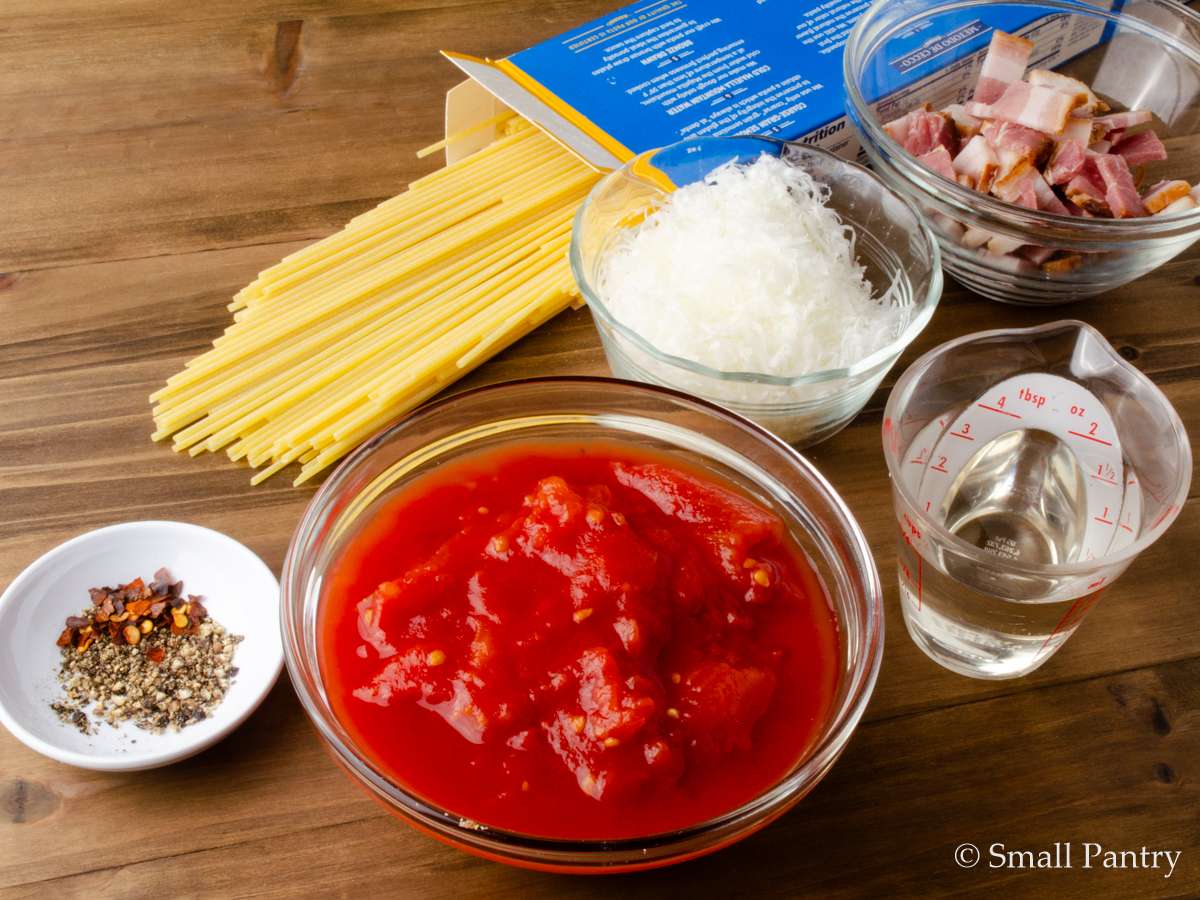
- Whole Peeled Tomatoes
- Good quality canned tomatoes will always taste better than out of season winter tomatoes. Choosing whole peeled tomatoes and crushing them by hand gives you a richer sauce. Diced tomatoes or canned crushed tomatoes are generally too watery. San marzano tomatoes are ideal, thanks to their overall texture and flavor, but any canned whole peeled tomato will do.
- Dried Pasta
- Long pastas like spaghetti are traditional for lighter sauces like amatriciana. Look for dried pasta that has a powdery looking, slightly textured surface, which helps the sauce cling. When it comes to big name brands available in the US, I usually reach for DeCecco. It's fairly good for "cheap" pastas!
- Pecorino Romano Cheese
- Pecorino Romano has a grassy flavor as well as a strong saltiness. It balances out the sweet acidity of the canned tomatoes.
- Bacon
- Guanciale (cured pork jowl) is more traditional in amatriciana, but it can be hard to find in the US. Regardless of which ingredient you use, the salty-savory cured pork is what sets this simple tomato sauce apart from its cousin, pasta al' pomodoro.
- White Wine
- A splash of white wine helps to deglaze the pan after crisping your bacon. It also adds a gentle acidity and subtle complexity that deepens and enriches the sauce.
- Freshly Ground Black Pepper and Crushed Red Pepper Flakes
- Black pepper is a common ingredient in Roman pastas and from its surrounding region of Lazio. It makes a key appearance in other recipes from the area, such as carbonara, pasta alla gricia, and cacio e pepe. Both pepper and chili flakes will add a gentle blooming heat, but amatriciana sauce is not typically spicy.
(See recipe card for quantities.)
Basic Method
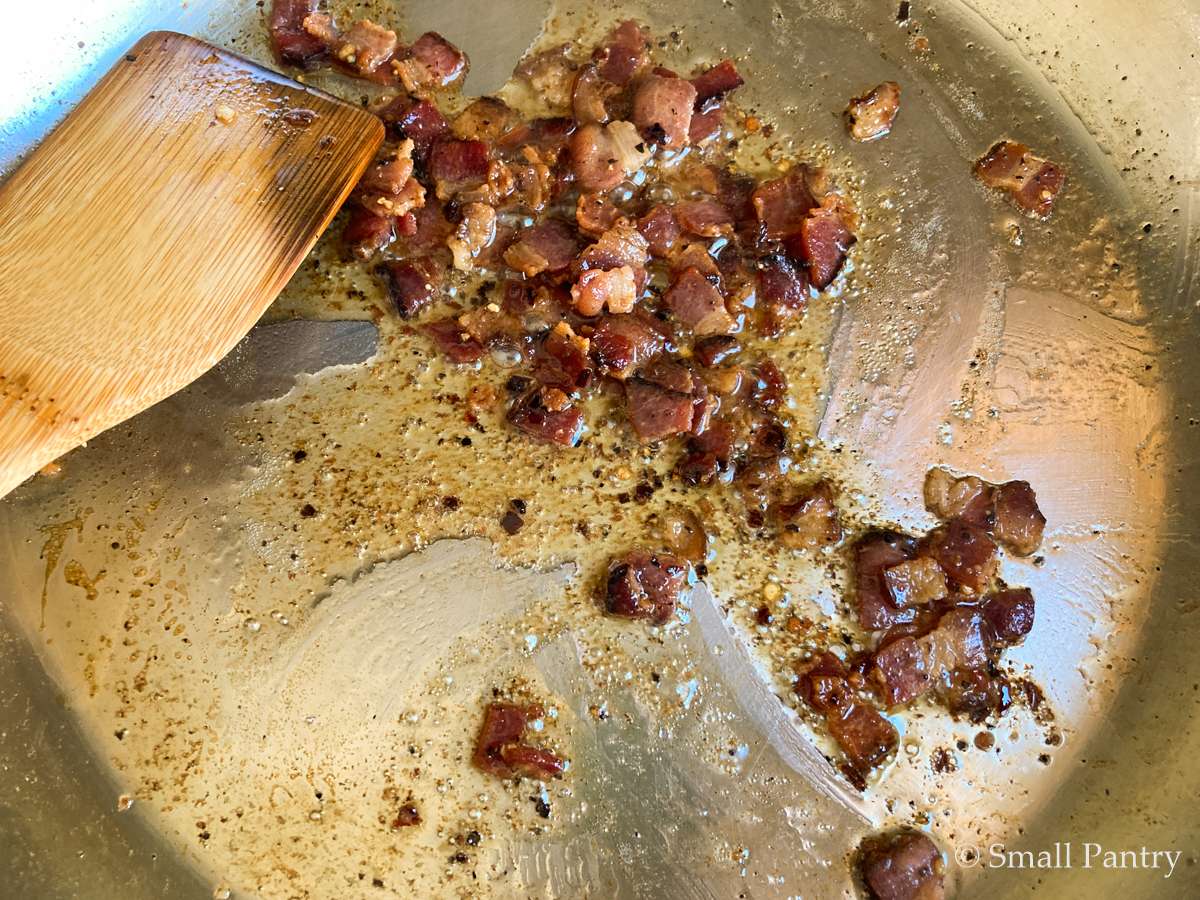
Cook the bacon over medium heat until lightly browned and a good amount of fat has rendered out.
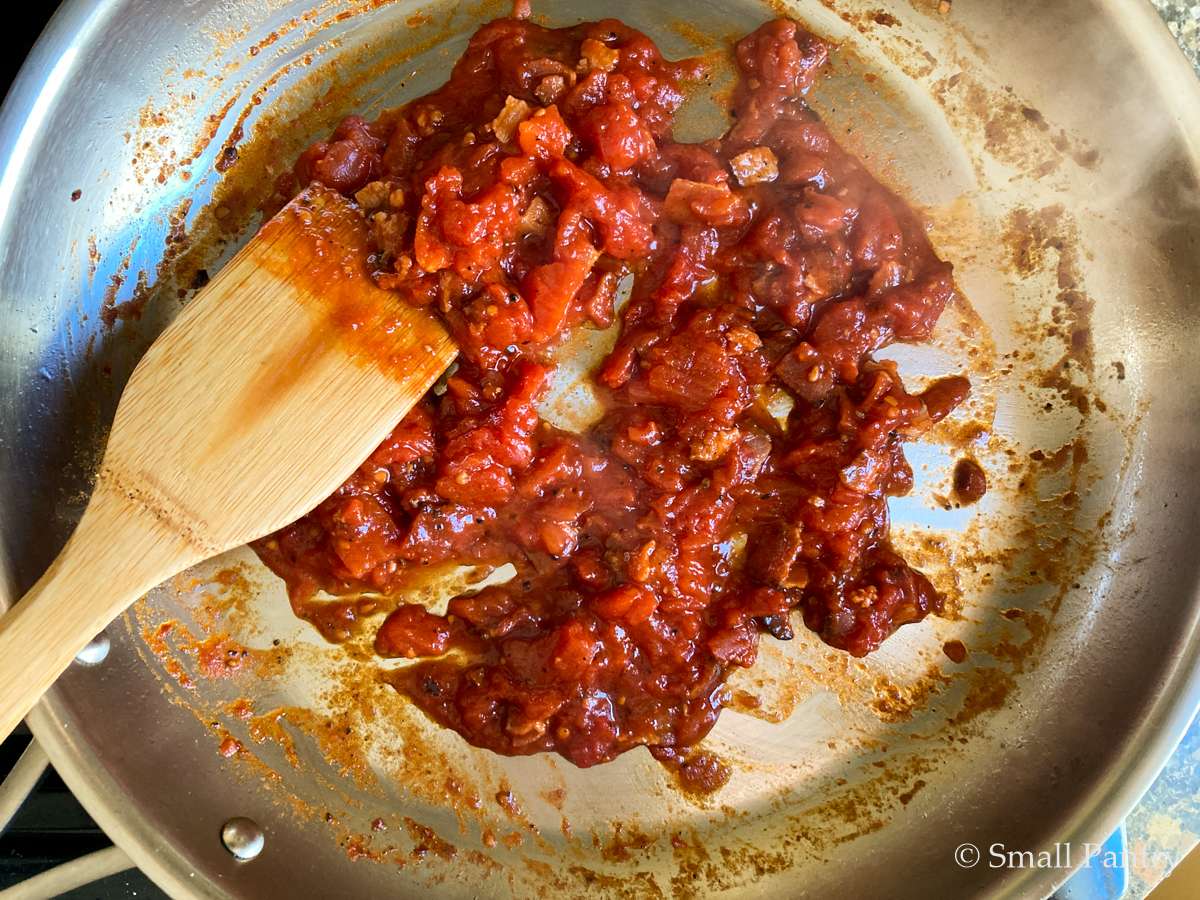
Add the tomatoes and let them simmer, stirring occasionally, until the sauce has thickened to look like a chunky paste
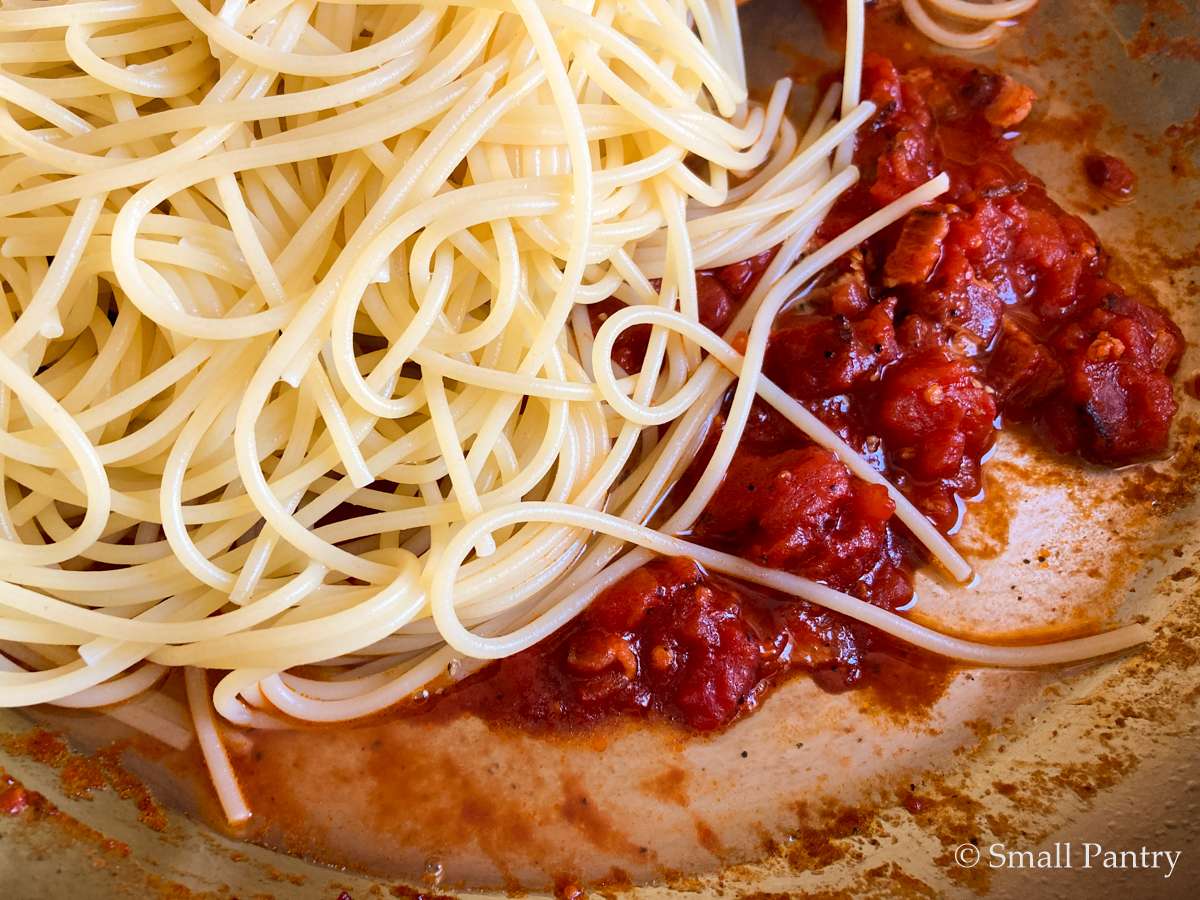
Once the pasta is cooked, add it to the skillet with the tomatoes, along with a splash of pasta cooking water.
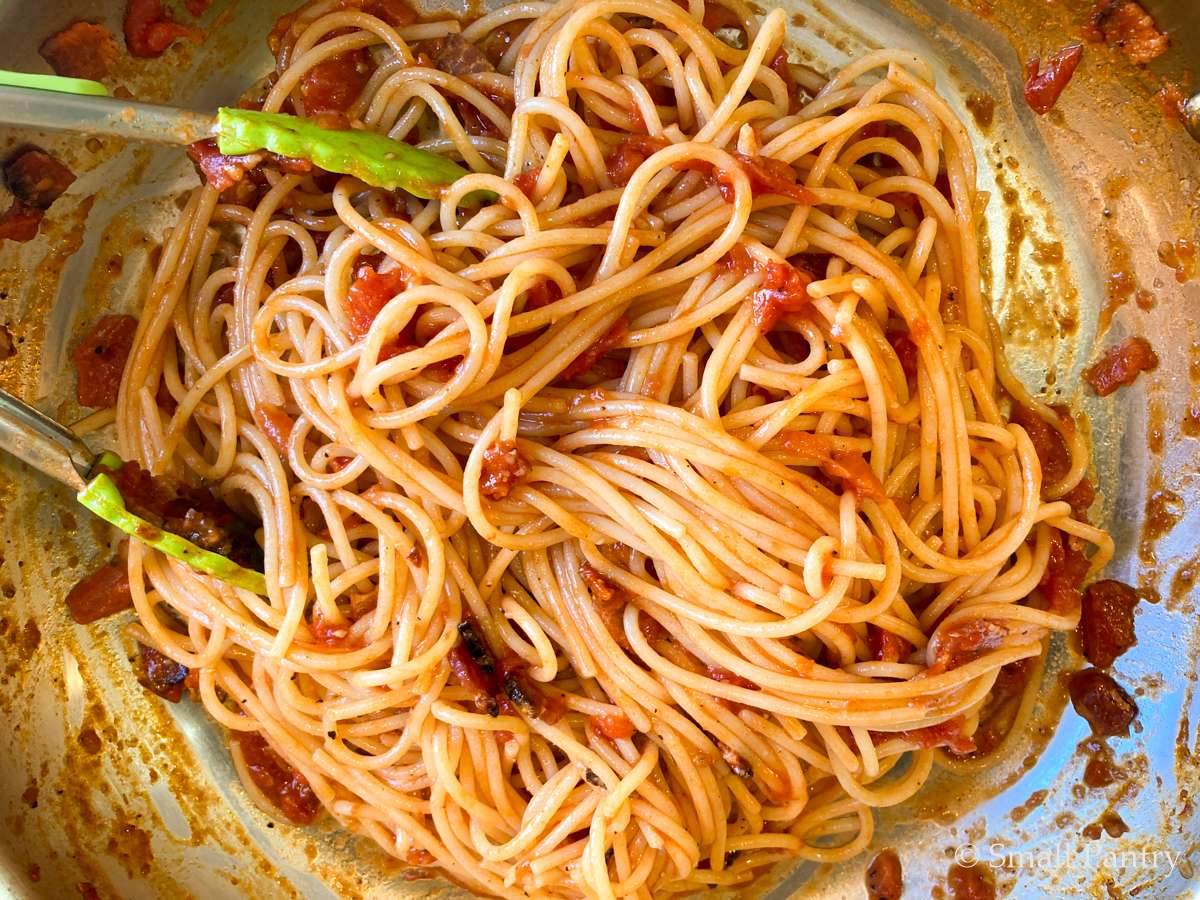
Cook over high heat, stirring constantly, until the pasta has finished cooking to al dente and the sauce has thickened enough to lightly coat the noodles.
(See recipe card for full details.)
Hint: If you use guanciale or pancetta, you might not render out enough fat in the first step. It depends a lot on the way the pork is cut and trimmed before packaging. If your pan doesn't have a nice slick of fat by the time the pork crisps, add a splash of olive oil before proceeding.
Substitutions
This recipe is simple enough that most alterations will dramatically change its character. That being said, here are a couple of tweaks that can help you maximize what you might already have in your pantry:
- Pecorino - instead of finely grated Pecorino Romano, you can use other types of aged pecorinos (which are often less salty) or a good quality Parmesan.
- Canned Tomatoes - use chopped fresh tomatoes for an amatriciana fresca. See this recipe for more instructions using fresh tomatoes.
- Vegetarian - Try swapping the chopped bacon out for chopped mushrooms. For the most robust flavor, use something like dried porcini (rehydrated). (Full disclosure, I have not actually tried this!) You can also try vegan "bacon," but you won't get the same fat rendering.
Equipment
The only equipment needed to make pasta all' amatriciana is a large pot for boiling pasta and a large skillet for cooking the bacon and tomatoes. Ideally your skillet should be big enough to toss the cooked pasta together with the sauce.
If your skillet is too small, you can cook the sauce as instructed then drain the pasta and return it to the large pot. Add the cooked tomato mixture to the pot with the cooked pasta and continue to finish the recipe as-written. This is particularly useful if you're scaling the recipe up to feed a crowd.
Storage
As with most pasta dishes, pasta all' amatriciana doesn't reheat very well. Leftovers can be stored in an airtight container in the refrigerator for about 5 to 7 days before spoiling, but the texture will dry out and the pasta will turn pasty.
Expert tips & tricks
Cooking your pasta in rapidly boiling water helps to make sure your noodles cook evenly and don't stick together. However, you don't have to use as much water as many recipes claim! If you use less water you'll end up with water that has a higher starch concentration, which helps emulsify your sauce. An emulsified sauce is a silky sauce!
Give your pasta a few good stirs right when you add it to the pot and you shouldn't have much issue with clumping. For long, flat noodles like linguini or fettuccine, make sure to give them a few extra stirs. Their flat surfaces like to stick to each other more than round shapes like spaghetti or bucatini.
FAQ
Amatriciana is a descriptor that means "from Amatrice," a town in the Lazio region of Italy. In English, you might use Bostonian in the same way, as a descriptor of someone or something that is from Boston. In food, when a dish is described as all'amatriciana, it means "in the style of Amatrice." Pasta all'amatriciana can be translated to "pasta amatrician-style." It is a pasta cooked in a simple tomato sauce with guanciale or other types cured pork (plus small variations, like adding onion or garlic, that depend on family recipe).
Pasta amatriciana is made with tomatoes, guanciale or other types of cured pork, and pecorino romano cheese. There are often small variations, like adding onion or garlic, that depend on personal family recipes.
Arrabbiata in Italian indicates that a dish is spicy. Pasta all'arrabbiata is therefore pasta cooked in a spicy sauce. Pasta all' amatriciana is a tomato sauce cooked with some type of cured pork, usually guanciale but sometimes bacon or pancetta when guanciale is difficult to find. While it can include a pinch or two of chili flakes, it is not a particularly spicy sauce.
Carbonara and amatriciana are very different pasta dishes. Carbonara sauce is made by emulsifying egg yolk, grated cheese (Pecorino Romano, Parmesan, or a blend of both), black pepper, and starchy pasta cooking water. The resulting pale, creamy sauce is tossed with cooked pasta and crisped cured pork (guanciale, pancetta, bacon, etc). Amatriciana is a tomato-based sauce. Tomatoes are cooked down with cured pork and tossed with cooked pasta and Pecorino Romano.
Related Recipes
Looking for other quick and easy dinner ideas? Try these:


More Pasta Suggestions
If you like this classic pasta recipe, you might also like these recipes:


Recipe: Pasta all' Amatriciana
Ingredients
- 2 ounces bacon, chopped (about 2 thick-cut strips; See Notes Below)
- ¼ cup dry white wine, or dry vermouth
- ¼ teaspoon black pepper, freshly ground
- Pinch red pepper flakes
- One 14-ounce can whole peeled tomatoes, crushed by hand (discard the canning sauce, but keep the juices released by crushing) (See Notes Below)
- Kosher salt
- 8 ounces dried pasta
- ½ ounce grated Pecorino Romano cheese, plus more for serving
- Extra virgin olive oil, for serving (Use the good stuff!)
Preparation
- Step 1Bring a large pot of well-salted water to a boil.While the water comes to a boil: Place a large skillet over medium. Add the pancetta and cook, stirring often, until lightly browned and a good amount of fat has rendered out, 5 to 7 minutes. Add the wine, black pepper, and chili flakes, scraping up any browned bits on bottom of pan. Cook until the wine is nearly evaporated, about 3 minutes. Add the tomatoes and bring to a simmer. Let simmer, stirring occasionally, until the sauce has thickened to look like a chunky paste, about 7 to 10 minutes.
- Step 2Cook your pasta until slightly firmer than al dente, about 2 minutes less than indicated on the package. Reserve 1 cup of pasta water before draining your pasta.
- Step 3Add the drained pasta and ¼ cup of the reserved pasta water to the skillet with the tomatoes. Cook over high heat, stirring constantly, until the pasta has finished cooking to al dente and the sauce has thickened enough to lightly coat the noodles, about 2 minutes. Remove from heat, then gradually sprinkle in the cheese. Stir vigorously to help the cheese melt into the sauce smoothly. Taste and adjust seasoning with salt and pepper. Serve immediately, with more cheese and a drizzle of olive oil to garnish.
Leave a Reply