
Pasta al Pomodoro Fresco

This post may contain affiliate links.
One of the most simple and wonderful Italian pasta dishes is an easy, breezy, pasta al pomodoro fresco. Unlike a slow-simmered ragu or full-bodied marinara sauce, pasta al pomodoro is quite simple, allowing the individual ingredients to work their magic with minimal fuss. While a pomodoro sauce can be made with canned tomato, pomodoro fresco specifically starts with fresh tomatoes. It's just as simple but livelier than its canned cousin, and the perfect way to make the most of late summer, when fresh tomatoes are at their best!
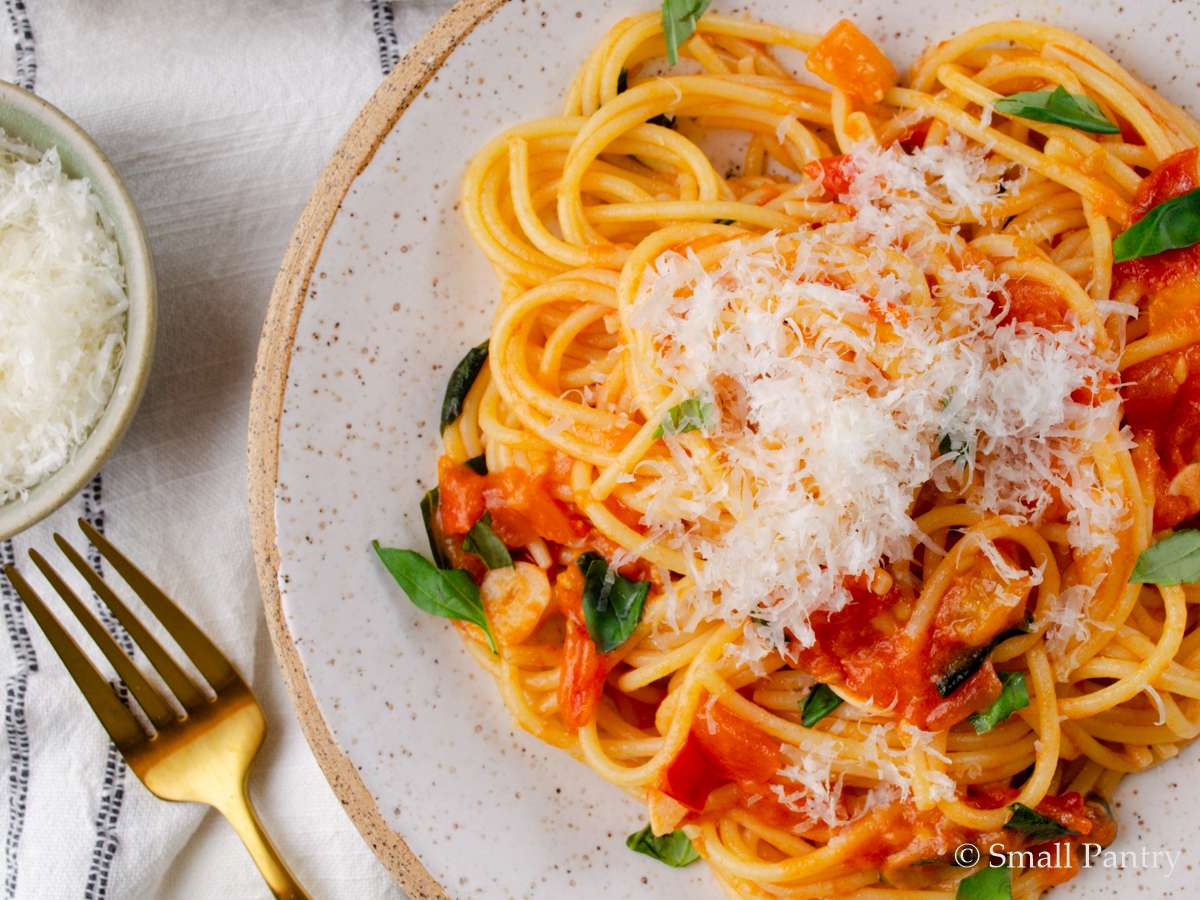
If you're ever craving pasta in tomato sauce, but find yourself wishing for something lighter and better suited to warm weather, you're likely yearning for a bowl full of pasta al pomodoro fresco. This classic fresh tomato sauce is delicious even with winter tomatoes (sacrilegious, I know) but this dish is best when tomatoes are in their prime. In my area, that's generally August and early September.
I have always loved the way simple, classic pastas can be so elegant and so comforting at the same time. The simplicity of this iconic Italian pasta inspired the simplicity of some of my other recipes, like pasta with sun-dried tomatoes, olives, and garlic, pasta with smoked trout and shaved fennel, and pasta with blistered tomato pesto.
Table of Contents
Ingredients
If you don't count salt and pepper, this beautiful pasta recipe only uses six ingredients! Because of that simplicity, I recommend using the best quality you have available.
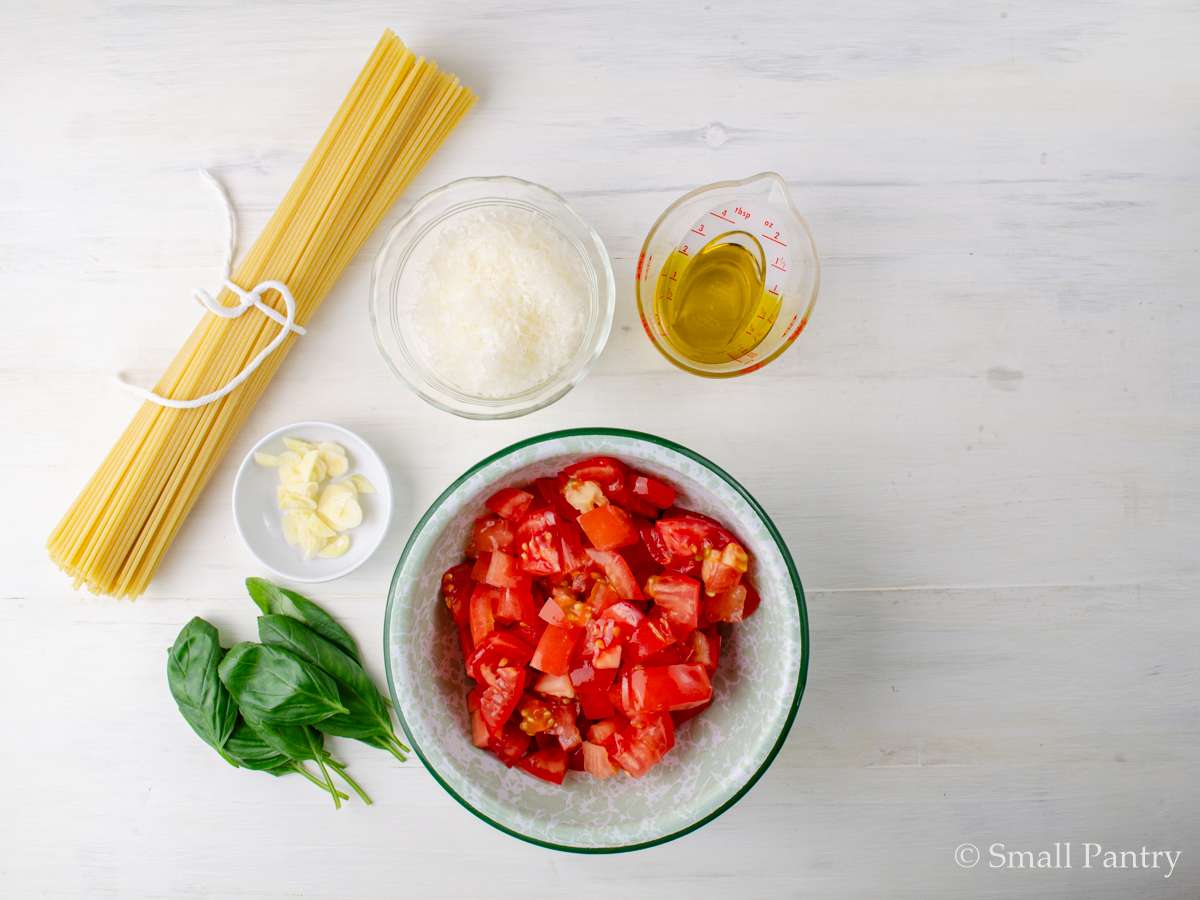
- Pasta
- Long pastas like spaghetti are traditional for such a light sauce. Look for dried pasta that has a powdery looking, slightly textured surface. When it comes to big name brands available in the US, I usually reach for DeCecco. It's fairly good for "cheap" pastas!
- Fresh Tomatoes
- Fresh, in-season tomatoes are the best for this sauce. They're juicy and slightly tangy, and perfectly ripe tomatoes also have a specific sweetness and umami that winter tomatoes lack. If gorgeous heirloom tomatoes aren't in season, try chopping up some cherry tomatoes instead. They almost always taste delicious!
- Garlic
- Fresh garlic is key here. Thinly sliced cloves won't brown as quickly as finely minced garlic, so you'll be better able to avoid over-browning. Over-browned garlic will quickly overpower the light, bright flavors of the fresh tomatoes.
- Parmesan Cheese
- Parmesan has such a wonderful nutty, savory, salty flavor. It's savoriness acts as an anchor for the bright, vibrant flavors of the fresh tomatoes and fresh basil.
- Fresh Basil
- One of nature's classic pairings, tomato and basil go hand in hand. Dried is not a good substitute.
- Extra Virgin Olive Oil
- The grassy fruity notes of extra virgin olive oil round out all the other flavors. I like to use a cheaper oil for the cooking, and then serve with a finishing drizzle of my precious fancy oil at the table.
(See recipe card for quantities.)
Basic Method
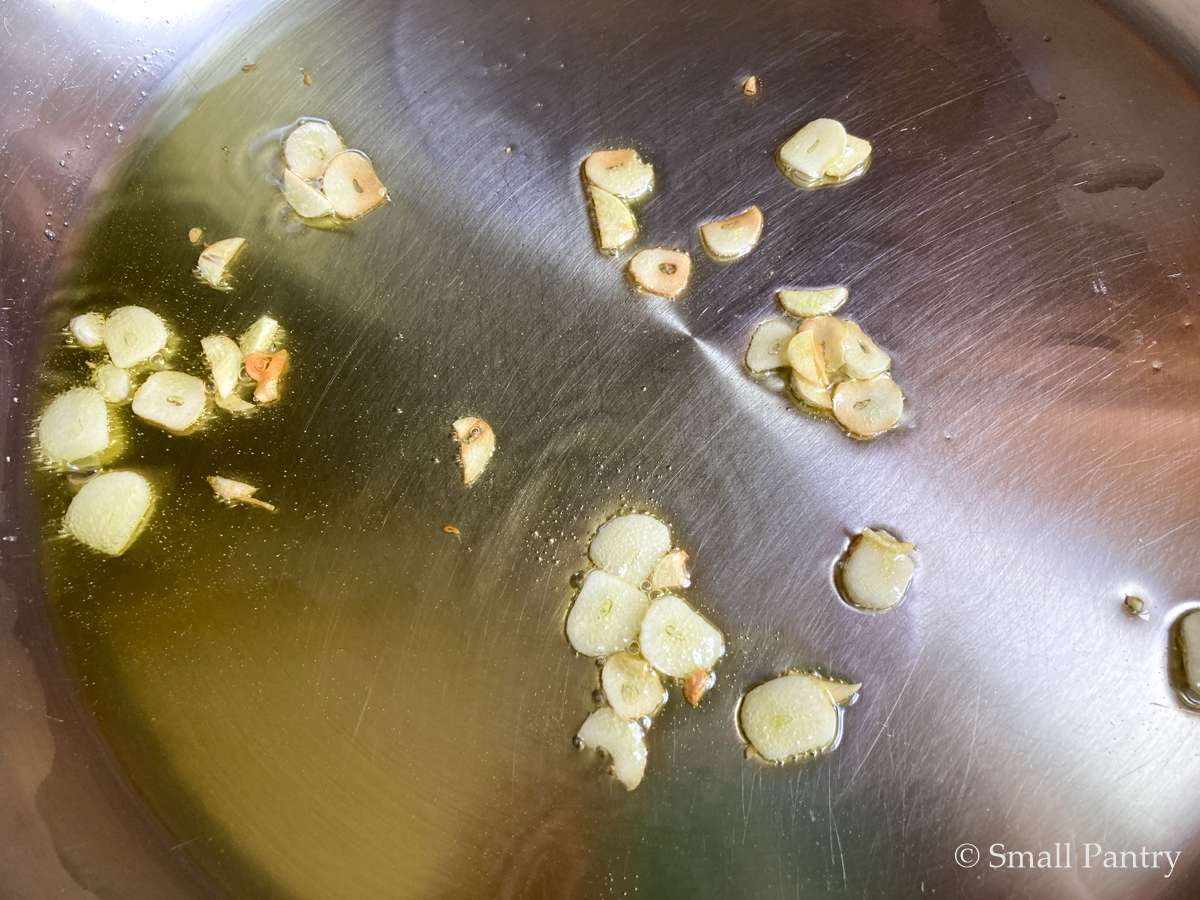
Cook your garlic until lightly golden. (The garlic above is actually a bit too brown!)
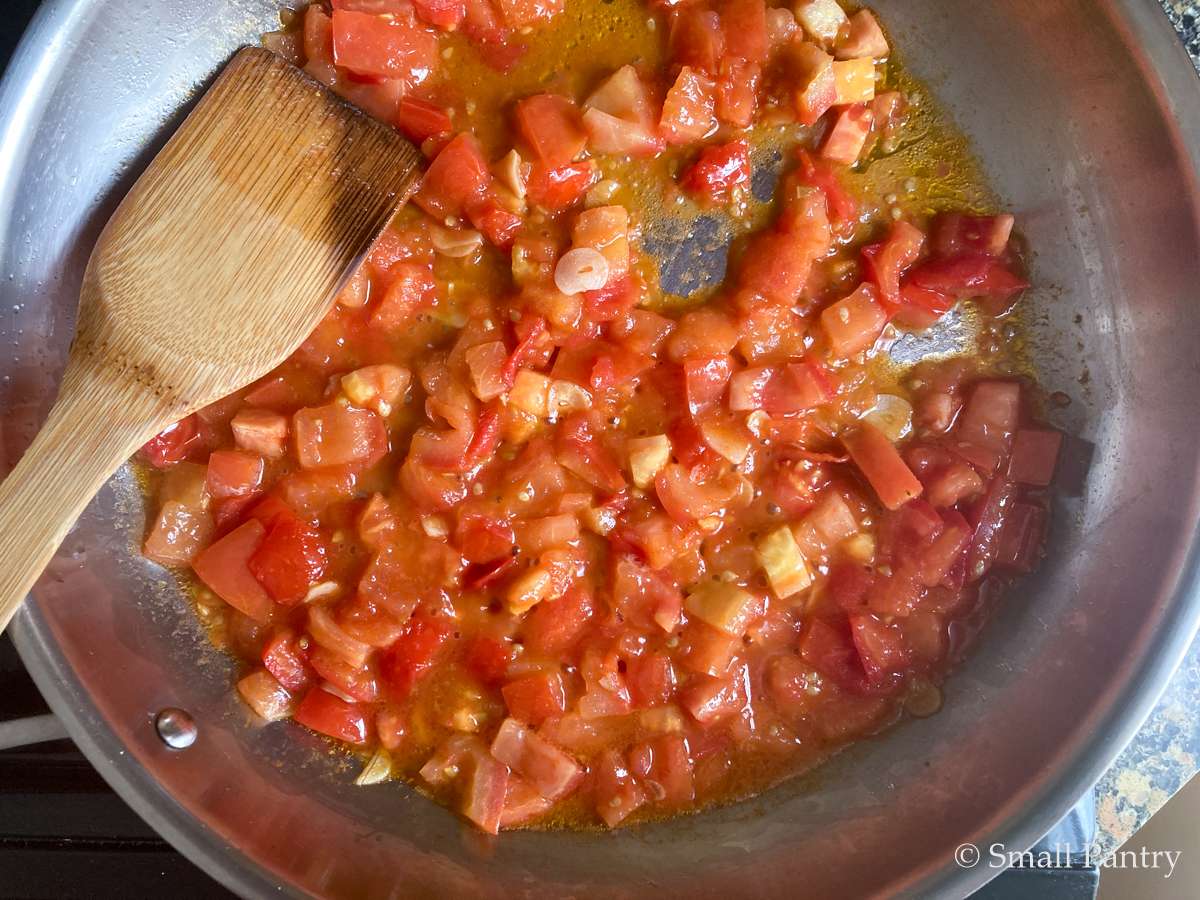
Add the tomatoes and cook, stirring often, until the tomatoes begin to break down and create a sauce.
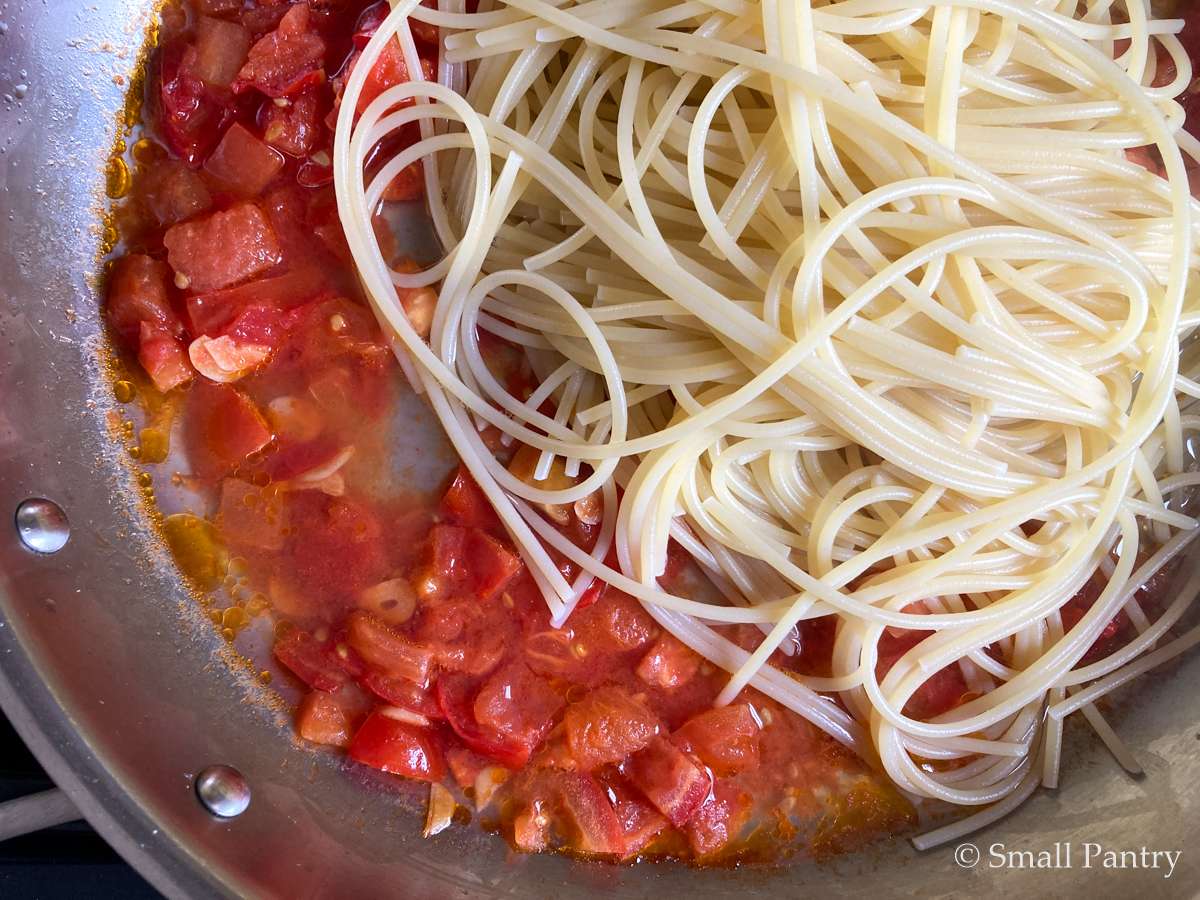
Add the drained pasta and some of the pasta water to the skillet with the tomatoes.
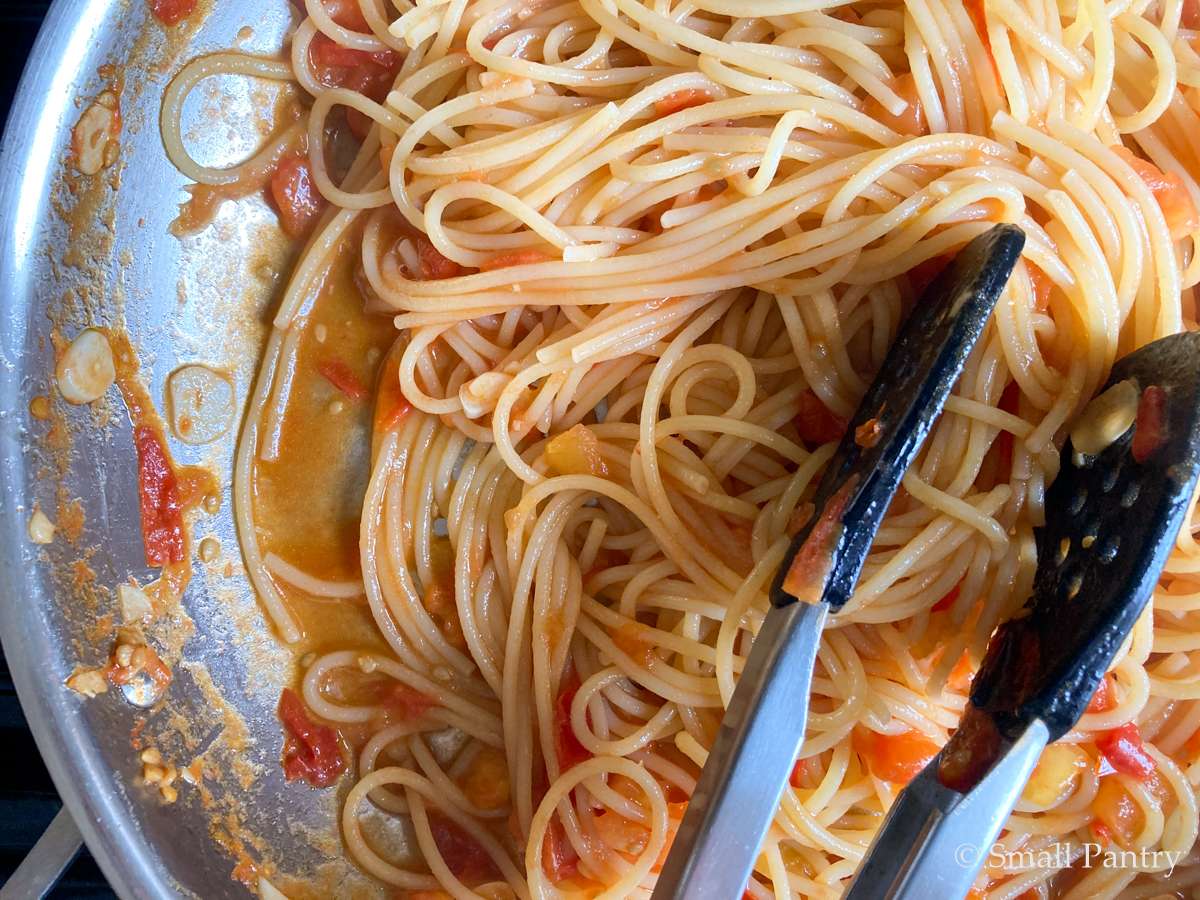
Finish cooking the pasta in the skillet, adding more pasta water as needed. Remove from heat before stirring in the cheese.
Hint: if you try to stir in the cheese while still on the heat it will seize up and clump instead of melting smoothly into the sauce.
Substitutions
Like many super-simple recipes, there aren't many substitutions that can be made here without dramatically altering the character of the dish. That being said, below are a handful of small swaps that can be made to maximize what you might already have on hand.
- Pasta shape - even though long pasta shapes like spaghetti or linguini are more traditional for light sauces like pomodoro fresco, you can use any shape you like. You can even use fresh pasta! Regardless of shape, the key is to finish cooking in the tomato sauce, so the noodles absorb the flavors of the sauce.
- Cheese - if you don't have Parmesan on hand, you can use an aged pecorino. Please don't use the pre-grated stuff from a can. You'd be better off using dust.
- Herbs - fresh basil can be swapped for other fresh herbs. Oregano or marjoram are my favorite alternatives, but tarragon or mint can also be delicious.
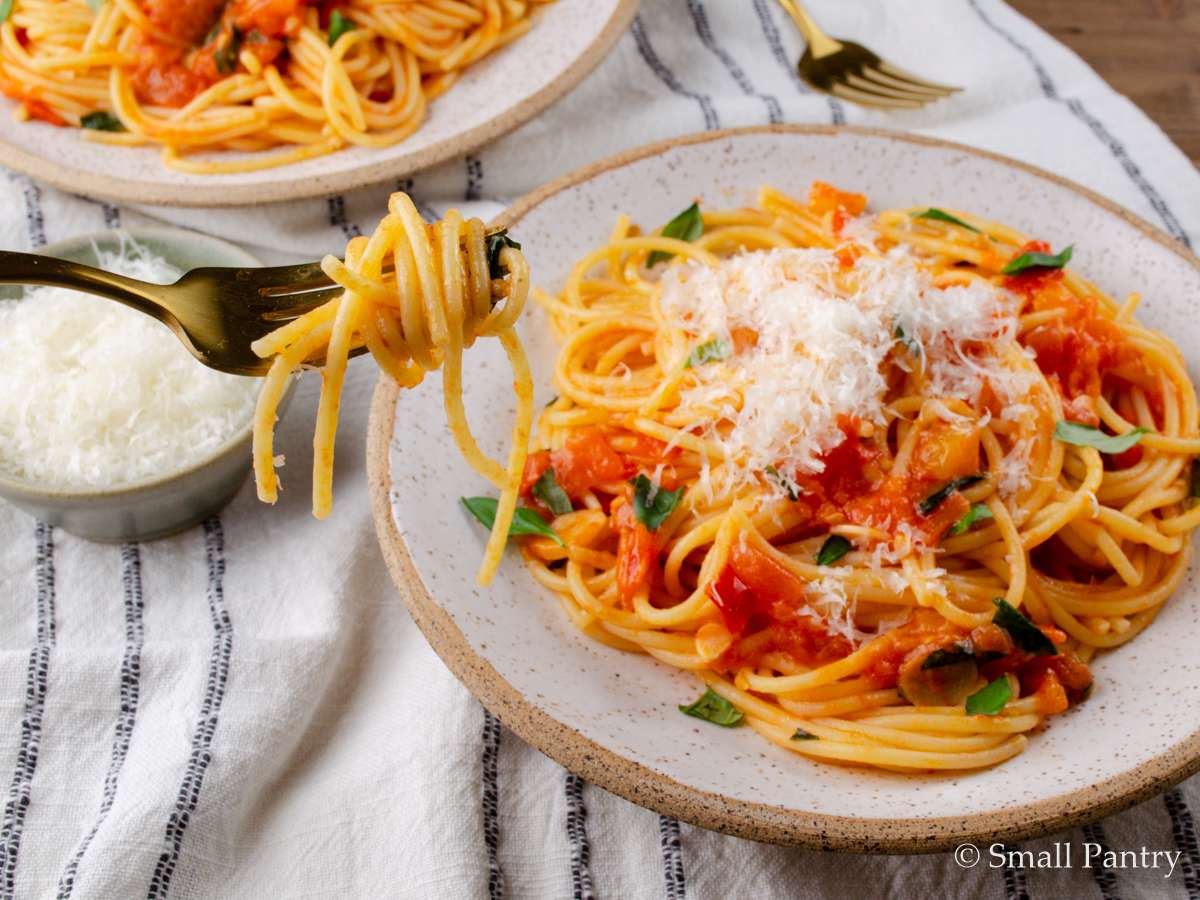
Equipment
The only equipment needed to make this pasta al pomodoro fresco recipe is a large pot for boiling pasta and a large skillet for cooking the tomatoes. Ideally your skillet should be big enough to toss the cooked pasta together with the sauce.
If your skillet is too small, you can cook the sauce as instructed then drain the pasta and return it to the pot. Add the cooked tomato mixture to the pot with the cooked pasta and continue to finish the recipe as-written.
Storage
Pasta al pomodoro fresco doesn't reheat very well. Leftovers can be stored in an airtight container in the refrigerator for about 5 to 7 days before spoiling, but the texture will dry out and the pasta will turn pasty.
Expert tips & tricks
Cooking your pasta in rapidly boiling water helps to make sure your noodles cook evenly and don't stick together. However, you don't have to use as much water as many recipes claim! If you use less water you'll end up with water that has a higher starch concentration, which helps emulsify your sauce. An emulsified sauce is a silky sauce! Give your pasta a few good stirs right when you add it to the pot and you shouldn't have much issue with clumping.
Flat, long pastas like linguini and fettuccine are particularly prone to sticking together. Make sure you spread them out a bit as you add them to the boiling water, and give them a good stir right away.
FAQ
Pomodoro fresco sauce is not the same as marinara. While both styles of sauce can start with fresh tomatoes, a marinara sauce is cooked longer and has more ingredients like onions, garlic, and spices. Pomodoro fresco is a fresh tomato sauce that is very lightly cooked and has a simpler ingredients list, often only garlic and some herbs.
Pomodoro style pasta is made of tomatoes, herbs, garlic, and olive oil. Spaghetti is the type of pasta, but other pasta shapes can always be used for a pomodoro sauce (bucatini al pomodoro, linguini al pomodoro, etc).
To make a good spaghetti with fresh tomatoes instead of jarred sauce, start by chopping your tomatoes and cooking them in a pan with garlic and oil. The tomatoes will begin to break down as they cook, creating a bright and lively fresh tomato sauce. For full instructions and an ingredients list, use this spaghetti with fresh tomato sauce recipe.
Related Recipes
Looking for other recipes that make the most of tomato season? Try these:


More Pasta Suggestions
If you're looking for more simple and delicious pasta recipes, try these:

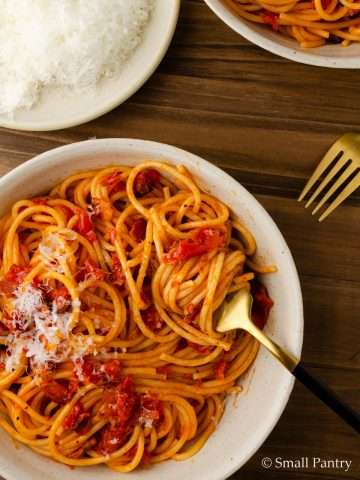

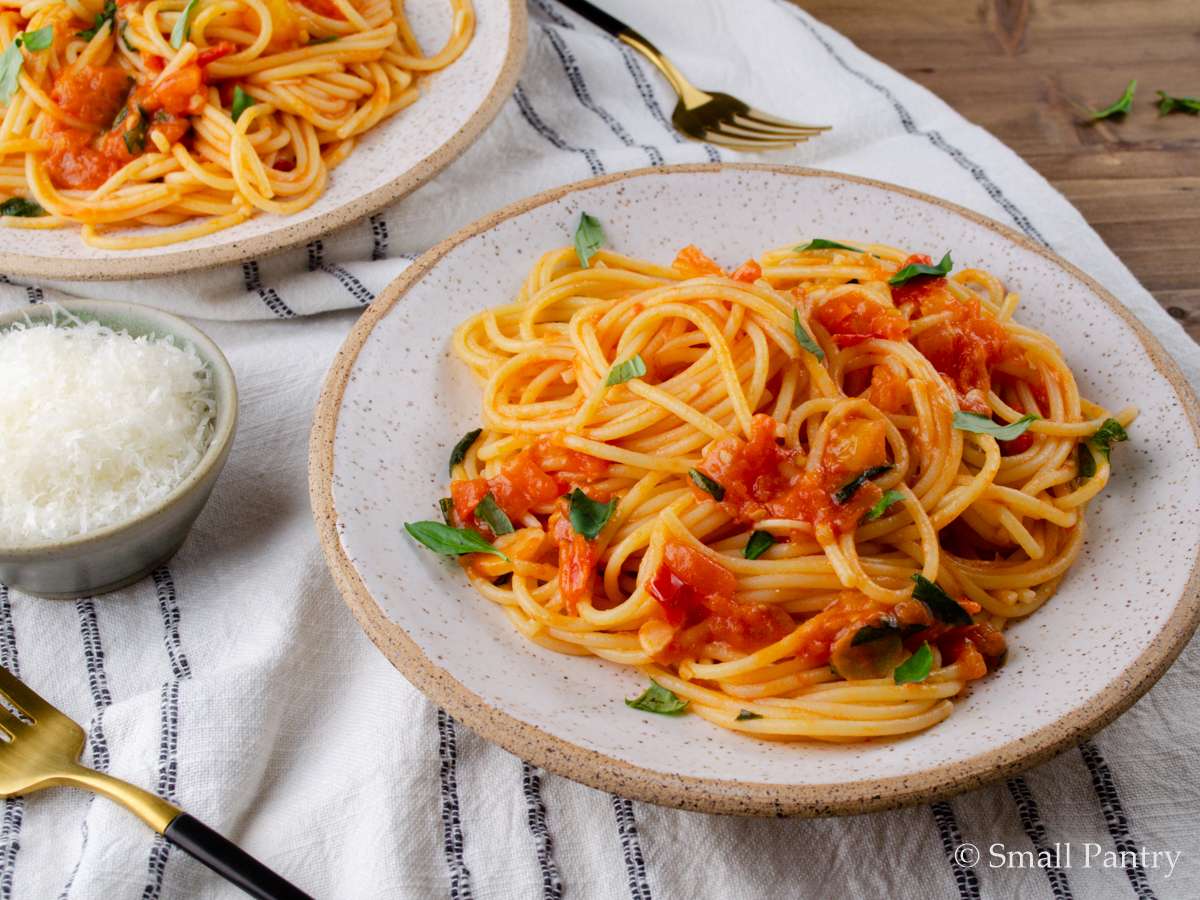
Recipe: Pasta al Pomodoro Fresco
Ingredients
- 2 tablespoons extra virgin olive oil
- 2 medium garlic cloves, peeled and thinly sliced
- 1½ cups chopped fresh tomatoes, with their juices
- 8 ounces dried pasta
- 10 medium fresh basil, torn or chopped (¼ cup)
- ¼ cup finely grated Parmesan
- Kosher salt and black pepper
Preparation
- Step 1Bring a large pot of well-salted water to a boil.While water comes to a boil: Add the oil and garlic to a large skillet or saute pan and set over medium heat. Cook, stirring, until lightly golden, 2 to 3 minutes. Add the tomatoes with a generous pinch of salt and cook, stirring often, until the tomatoes begin to break down and create a sauce, 3 to 5 minutes. Remove pan from heat.
- Step 2Cook your pasta until slightly firmer than al dente, about 2 minutes less than indicated on the package. Reserve 1 cup of pasta water then drain and add the pasta to the pan with the tomatoes. Add about ⅔ of a cup of the pasta water to the skillet. Set pan over high heat, and cook, stirring, to finish cooking the pasta in the tomato sauce, about 2 minutes. When the pasta has reached your desired texture, remove from heat and stir in cheese and basil. Adjust salt to taste and serve immediately.
Leave a Reply