
Green Pea Pasta Sauce (Vegan!)

This post may contain affiliate links.
One of the easiest and most delicious ways to dress cooked pasta is with a quick pesto. This springy recipe is one of my particular favorites. Rather than using dark leafy greens like spinach or kale, this is a springy, pastel green pea pasta sauce. The cheerful flavor of fresh peas is given some extra oomph with vibrant basil, lemon, and garlic. The peas give this pesto a slightly creamy texture without needing any dairy. It's so tasty you, too, might find yourself smearing any leftover sauce on toast or crackers! Give it a try when peas start appearing at your local farmer's market, or use frozen peas when craving some vibrancy in the depths of winter.

This post may contain affiliate links. There is no cost to you, but if you buy something from these links I may earn a small commission, which helps keep my stove hot and small pantry stocked–thank you!
If you've ever brought home a big bag of snap peas that turned out to be woody and tough, or if you subscribe to a CSA and have ever found yourself swimming in more peas than you know what to do with, this is the recipe for you. Making pestos is a great way to make use of an over-abundance of veggies. Start with blanched peas, then whiz them together in a food processor with some tasty aromatics and ta da! A super simple and delicious green pea pasta sauce! You can use it the same way you would a classic pesto genovese, or you can treat it like a dip. For the pasta recipe, read on! For uses beyond pasta, hop over to this recipe page here.
Core Ingredients
Snap Peas
You can technically use any fresh peas here. The slightly starchier texture of snap peas and English shelling peas is ideal for making a fresh pasta sauce. When mixed with hot pasta water, the texture becomes slightly creamy and clings beautifully to the pasta! If your peas are sweet and juicy enough to eat raw, feel free to skip the blanching step.
Fresh Basil Leaves
One of life’s greatest pleasures is the smell of fresh basil. While it’s not the star of this pesto, as it is in pesto genovese, I do love the aromatic springtime energy that it contributes to the fresh pea flavor. I think it adds a liveliness and depth to the overall “greenness."
Good Quality Extra Virgin Olive Oil
This is the place to break out your good oil. Pick a lighter, grassier oil instead of a heavy, overly fruity oil. Heavy oils are more likely to weigh down the freshness of the peas, while a grassy oil amplifies the flavors. Regardless, choose an oil that you like enough to lick off your fingers. There’s no hiding bitter or cheap oils here! You will taste it, so make sure it tastes good to you.
Pine Nuts and Lemon
The slight toasty richness of pine nuts lends an almost buttery-savory quality to any pesto. It’s an important grounding flavor to balance all the verdant, lively characteristics of the peas and basil.
Lemon adds a touch of acidity that wakes everything up. It doesn’t turn this pea pesto tangy in any way. Rather, it makes each ingredient taste more like itself. If you decide that you do want to taste a distinct lemon flavor, mix in some freshly grated zest.
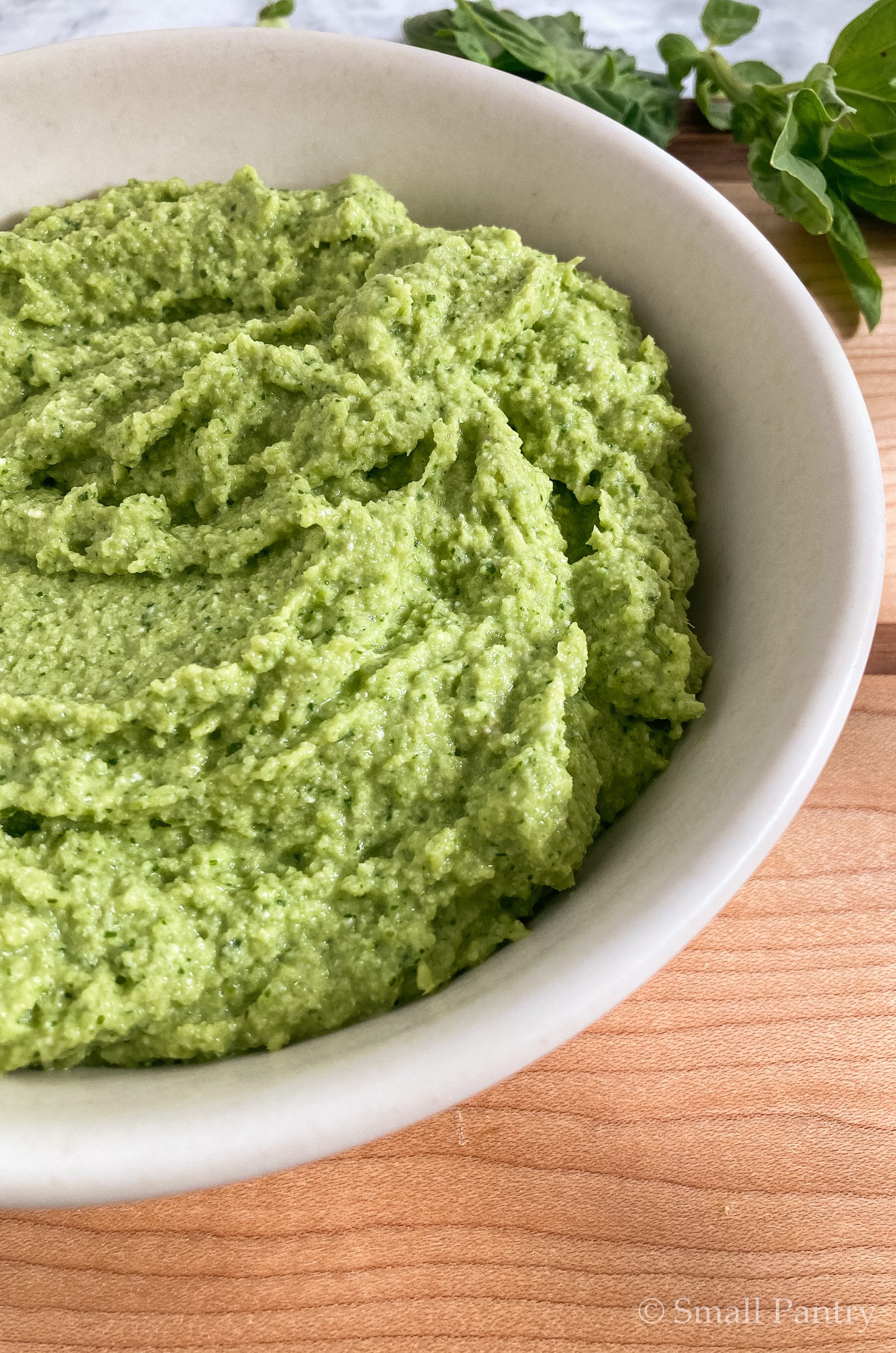
Basic Method
Blanching Peas
The blanching step is responsible for the majority of your prep time, but once your water is boiling it’s a very quick process. Blanching lightly cooks and tenderizes your peas, and also gives them a chance to absorb some of the salt from the water. A pre-seasoning step, if you will.
Make sure to salt your water generously, the same as you would for a pot of pasta. Have an ice bath ready, so that you can quickly stop the cooking and preserve the fresh flavor. To check their doneness, eat one! If they are tender-crisp, scoop them out of the pot right away and plop them directly into the ice bath. TIP: Re-use your blanching water to cook your pasta! Not only does that conserve water, but the already-hot blanching water will take less time to bring to a boil.
Process in a Food Processor or Blender
Once your peas are cooled, transfer everything into a food processor or blender. This recipe makes about 2 cups, so you might want to use the smaller jar insert for a full-sized processor, or use a mini food processor. (I adore my mini processor for quick meal prep. I currently have a Cuisinart 4-cup mini chopper and I love it!) If you want a smoother texture, use a high-speed blender.
Adjusting Seasoning
After you have whizzed everything up in your machine of choice, taste and adjust the salt and lemon levels to your liking. If everything tastes a bit bland, add salt. If it’s pleasantly savory but a tastes a bit flat, add lemon. You can also adjust the amounts of freshly ground black pepper for a bit of extra depth.
Basic Method: Video
Just in case you're a visual learner like me, here's a video that includes this quick, fresh, green pea pasta sauce . Below the video you'll find timestamps for the video. Just click "Spring Pea Pesto" and it will jump to the beginning of the recipe in the video.
- 0:00 Intro
- 0:33 Tools
- 1:10 Creamy Asparagus Pesto
- 2:28 Artichoke Pesto
- 3:47 Spring Pea Pesto
- 5:17 Blistered Tomato Pesto with Almonds
- 6:46 How to Sauce your Pasta
- 7:11 Suggested Garnishes: Tomato Pesto
- 7:33 Suggested Garnishes: Asparagus Pesto
- 7:58 Suggested Garnishes: Artichoke Pesto
- 8:31 Suggested Garnishes: Spring Pea Pesto
Expert Tips and Tricks
Ingredient Swaps
- Pine Nuts: The fattiness of pine nuts is the key here. If you’re looking for a sub, my first recommendation is roasted cashews. Walnuts are another good option, but they have a slight bitterness that can make them more assertive in simple recipes. That’s not a bad thing, just something to keep in mind when shopping.
- Snap Peas: You can use any in-season green peas. Snow peas and shelled English peas are very good options. When using shelling peas, make sure you buy enough to yield 4 ounces after discarding the pods. If you’re in the dead of winter and all the peas you can find taste bland and pathetic, opt for 4 ounces frozen peas instead.
What to Avoid
- Cheap olive oil: I know I said it already above, but make sure the oil you use tastes good! Generally speaking, the cheaper the oil the less likely it’s produced with taste in mind. But! We all like different things, and your preference is what matters here, not cost. Take a little taste of your oil first, and if you like it, use it! If you don’t like it, try another brand.
- Out of season peas: Simply put, out of season peas don't really taste like much. They're just tough and bland. Given that this is a pea pasta sauce, you want the star ingredient to taste like itself! If all the fresh peas available are pathetic, use thawed frozen instead.
Why this Recipe Works
- Flavors: While the peas are the main attraction in this pesto recipe, it's the supporting ingredients that keep it elegant. Aromatic basil and lemon add a surge of vitality, while rich and savory toasted nuts and olive oil keep it grounded. Each element retains its character, but nothing sticks out or becomes overpowering. They are all harmonious and complementary.
- Textures: Peas create a thick, creamy pesto. When loosened up with a splash of hot, starchy pasta water, you get a thick, creamy green pea pasta sauce! It's able to loosen up without becoming watery or oily. It clings perfectly to noodles of all shapes.
FAQs
Bring a large pot of salted water to a rolling boil. Add your peas and cook until bright green and tender-crisp. To check the texture, pluck one out of the water and give it a taste. When cooked to your liking, drain the peas and transfer them immediately to a large bowl filled with ice water. This quickly stops the cooking. Once cool, drain and pat dry.
Yes, this recipe works great using frozen peas. Make sure you thaw and drain them before using, otherwise the pesto could taste watery.
This pea pesto can be refrigerated in airtight container for up to a week, however it starts to lose some of its character after about 3 days.
Looking for more pasta recipes as easy as this green pea pasta sauce?


Recipe: Green Pea Pasta Sauce
Ingredients
- 4 ounces fresh snap peas
- Kosher salt and freshly ground black pepper
- 1 small garlic clove, chopped
- 1 tablespoon lemon juice, plus more to taste
- ¼ cup fresh basil, lightly packed
- 1 tablespoon pine nuts
- 3 tablespoons extra-virgin olive oil, use your Good Stuff
- ¼ teaspoon white sugar, optional
- 1 pound dried pasta, or 4 servings fresh pasta
Garnishes
- Fresh pea tendrils or pea sprouts
- Radish, thinly sliced
- Parmesan cheese, Freshly grated
- Crème fraîche
- Lemon zest
Preparation
- Step 1Blanch your peas: Fill a large bowl with ice water and bring a large pot of well-salted water to a boil. Add your peas to the pot and cook until tender crisp, about 3 minutes. Scoop out with a slotted spoon or spider and transfer to the bowl of ice water. Once fully chilled, drain.Note: You can save your blanching water to boil your pasta in step 3!
- Optional:For a mellower garlic flavor, mix together the chopped garlic and lemon juice in a small bowl. Set aside for at least 10 minutes before adding to the other pesto ingredients.
- Step 2In the small bowl of a food processor or in a mini food processor, process the peas until finely chopped. Add the basil, garlic, lemon juice, pine nuts, and ½ teaspoon salt. Process until finely chopped, scraping the sides of the bowl as needed. Add the oil and continue processing until the mixture is mostly smooth. Taste and adjust seasoning with salt and lemon juice. If your peas are out of season, add the white sugar to bring out their flavor.
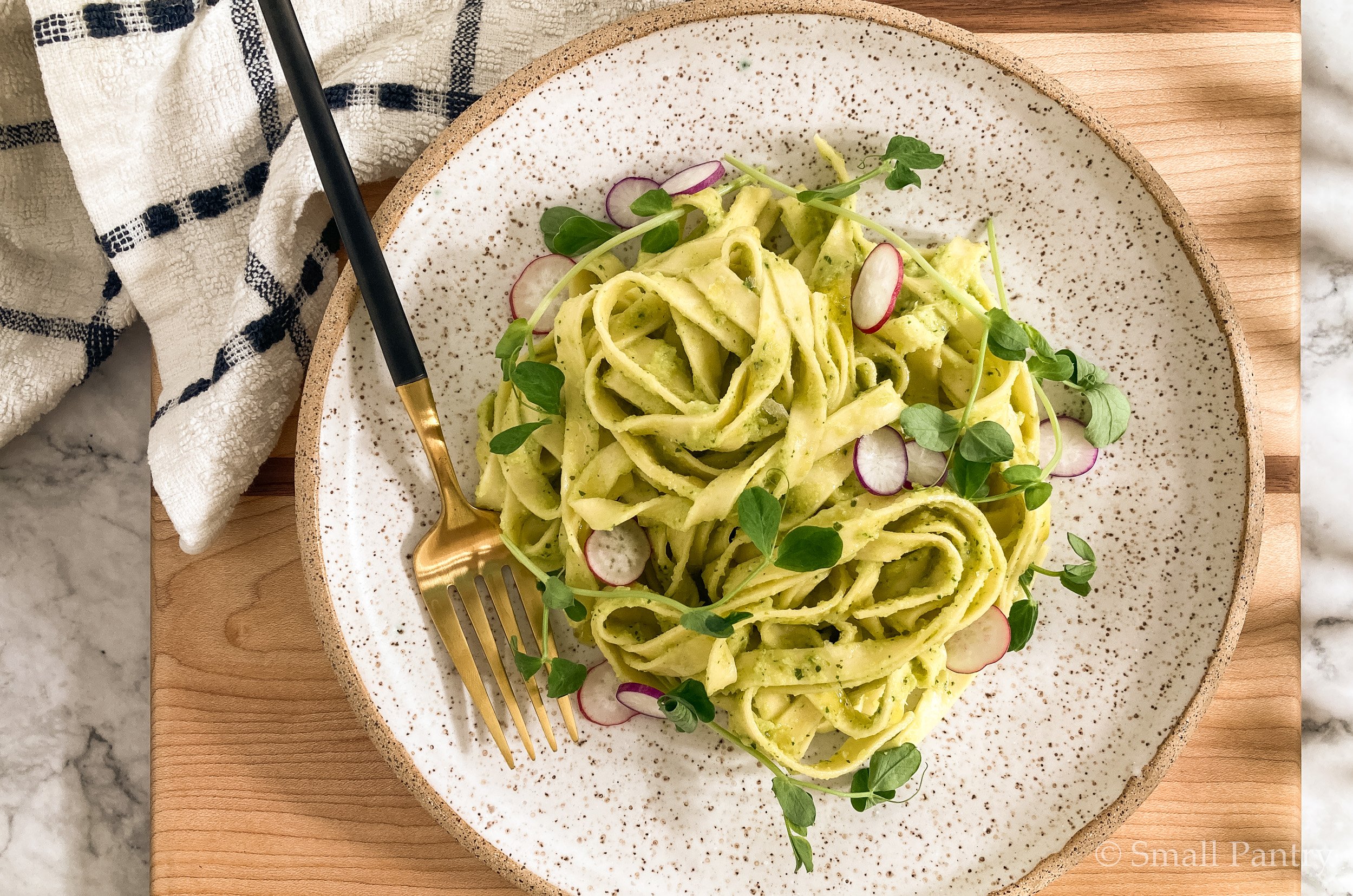
- Step 3Boil your pasta: Bring a large pot of generously salted water to a boil. Cook your pasta to al dente, keeping in mind that a proper al dente is often as much as 2 minutes less than indicated on the package. When the pasta is finished cooking, reserve 1 cup of pasta water, drain, and transfer your pasta to a large bowl. Add the pesto and 4 tablespoons of reserved pasta water. Toss to coat evenly, adjusting the texture with additional splashes of pasta water as needed. Taste and adjust seasoning with salt and pepper.Serve garnished with green pea tendrils, thinly sliced radish, Parmesan cheese or a dollop of crème fraîche, and lemon zest.
This post may contain affiliate links. There is no cost to you, but if you buy something from these links I may earn a small commission, which helps keep my stove hot and small pantry stocked–thank you!


Leave a Reply