
Simple Poached Salmon

This post may contain affiliate links.
Grilled and baked salmon recipes get a lot of attention, but I think that a beautifully poached piece of salmon is one of the most elegant forms of the fish. My poached salmon recipe really leans into the buttery richness that sets it apart from other fishy staples like cod or halibut. It's rich and delicate, seasoned enough to stand on its own but refined enough to be incorporated into other recipes. This easy salmon recipe is at home on the brunch table, served for dinner with a chilly glass of white wine, or as part of a festive party buffet. Did I mention it's practically foolproof?
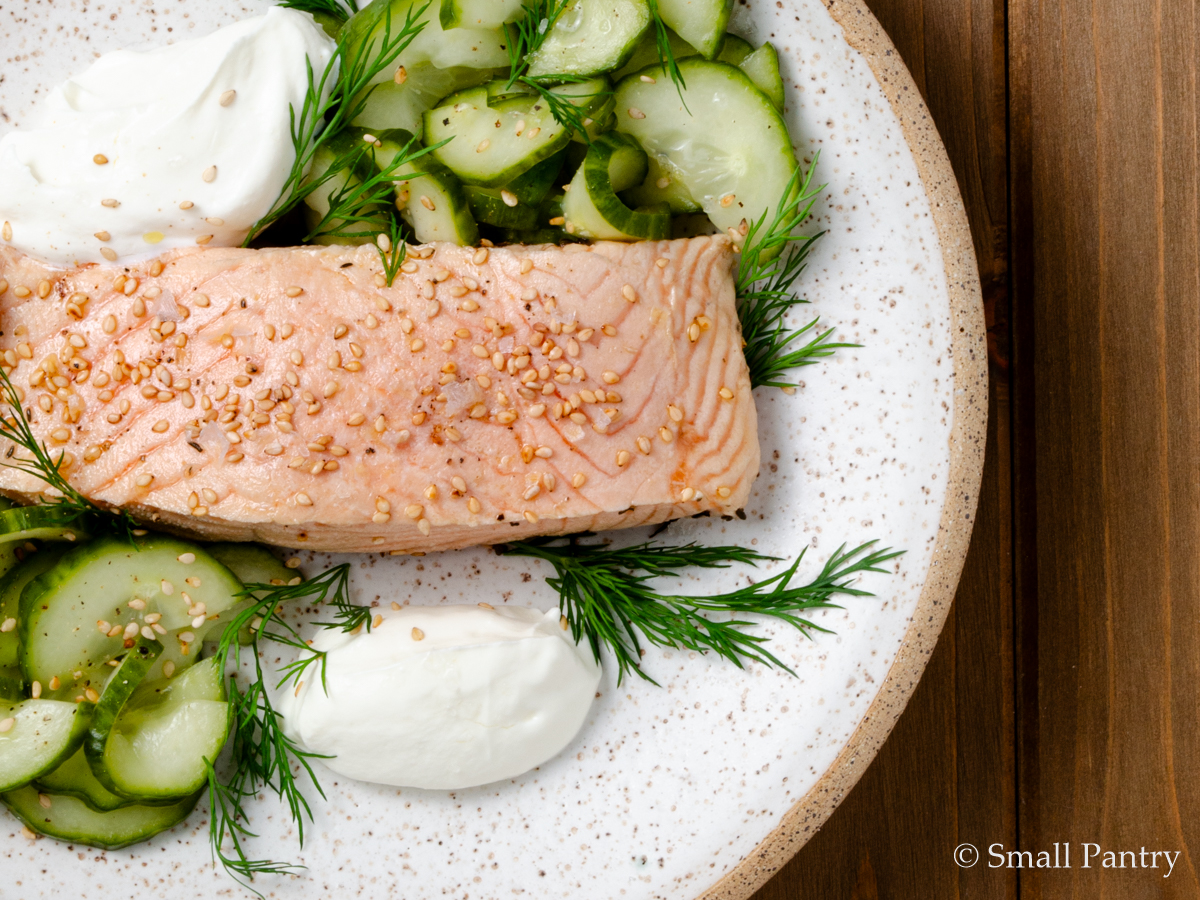
I adapted this poached salmon recipe from one of my favorite cookbooks, Kitchen of Light: New Scandinavian Cooking by Andreas Viestad. I don't remember how the book wandered into my collection, but I'm pretty sure I've had it since high school or early college. The original salmon recipe stuck with me because of its utter simplicity, no monitoring temps or special ingredients. The original, however, is for a whole huge piece of salmon. I've adapted it to work with the small, pre-portioned fillets sold in my grocery store's freezer section.
I love serving this with my simple cucumber salad. The gentle acidity is a wonderful companion to the fatty, tender salmon!
Table of Contents
Ingredients
The ingredients for this poached salmon are quite simple, and with good reason. The poaching liquid infuses flavors into the fish, and I like how the final result is flavored enough to be tasty but delicate enough that the salmon can be used as an ingredient in other recipes (like homemade dilly salmon spread!).
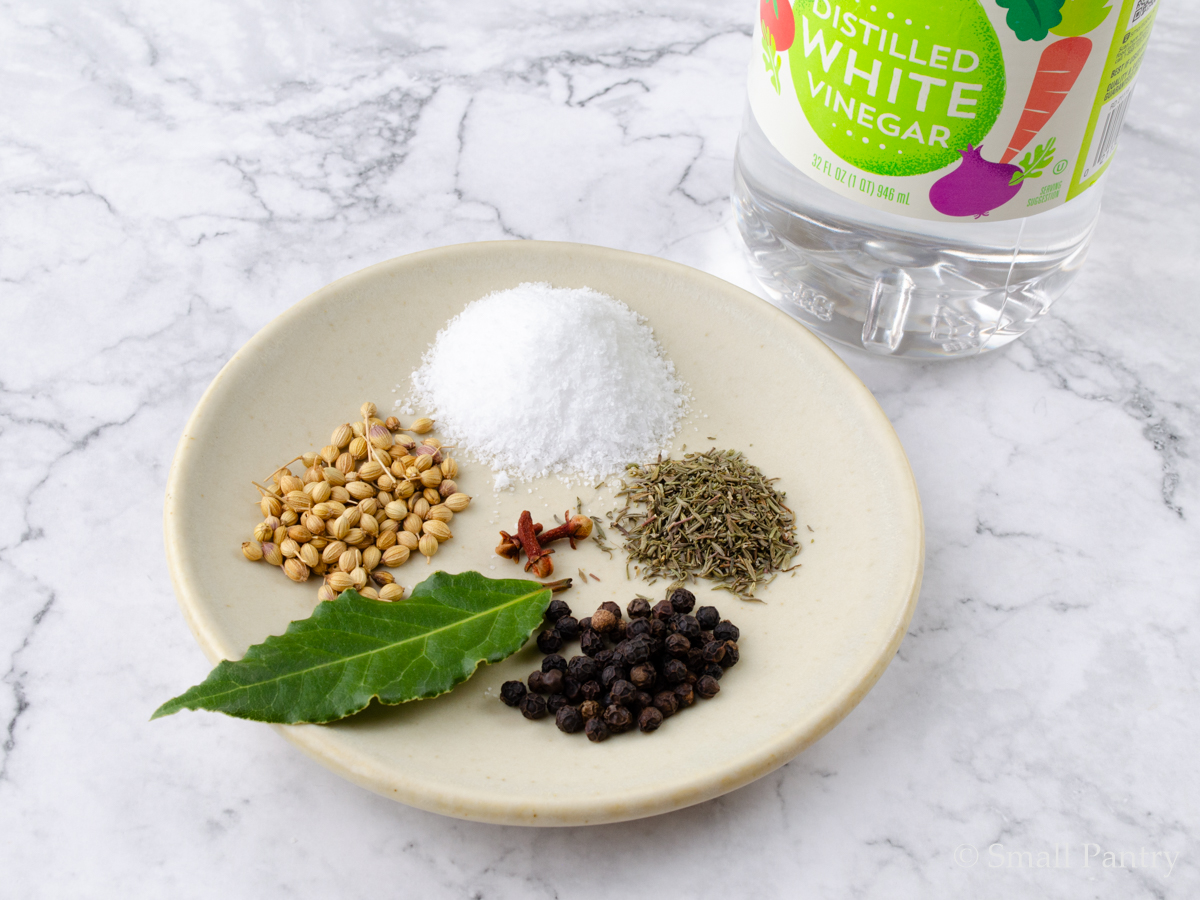
Salt — Salting the poaching liquid means your are seasoning your salmon as it poaches. I use Diamond Crystal kosher salt. If you are using table salt, use about half of what the recipe calls for. I have found that other brands of kosher salt or sea salt don't have a huge difference in this recipe.
Black pepper, coriander seed, cloves — Keeping the spices simple yields salmon fillets that are delicate and subtle. This trio of spices whispers at pickling brine, but they keep a back seat to the natural fatty flavors of the fish.
Bay leaves, dried thyme — A bit of bay and thyme gives the poaching liquid some depth without overpowering your salmon.
White vinegar — A bit of acidity seasons the fish in the same way as salt. Using white vinegar adds that essential acidity without adding extra aromas and messing with the overall flavor.
Salmon — For such a simple recipe, it's best to use the nicest salmon you can afford. That being said, even the most basic frozen grocery store salmon works! Skin on makes it easier to lift the salmon out once cooked, but skinless works just fine.
(See recipe card for quantities.)
How to poach salmon: Basic method (with photos)
This recipe for poached salmon is almost painfully easy. It's incredible how delicate and sophisticated the salmon turns out with so little effort!
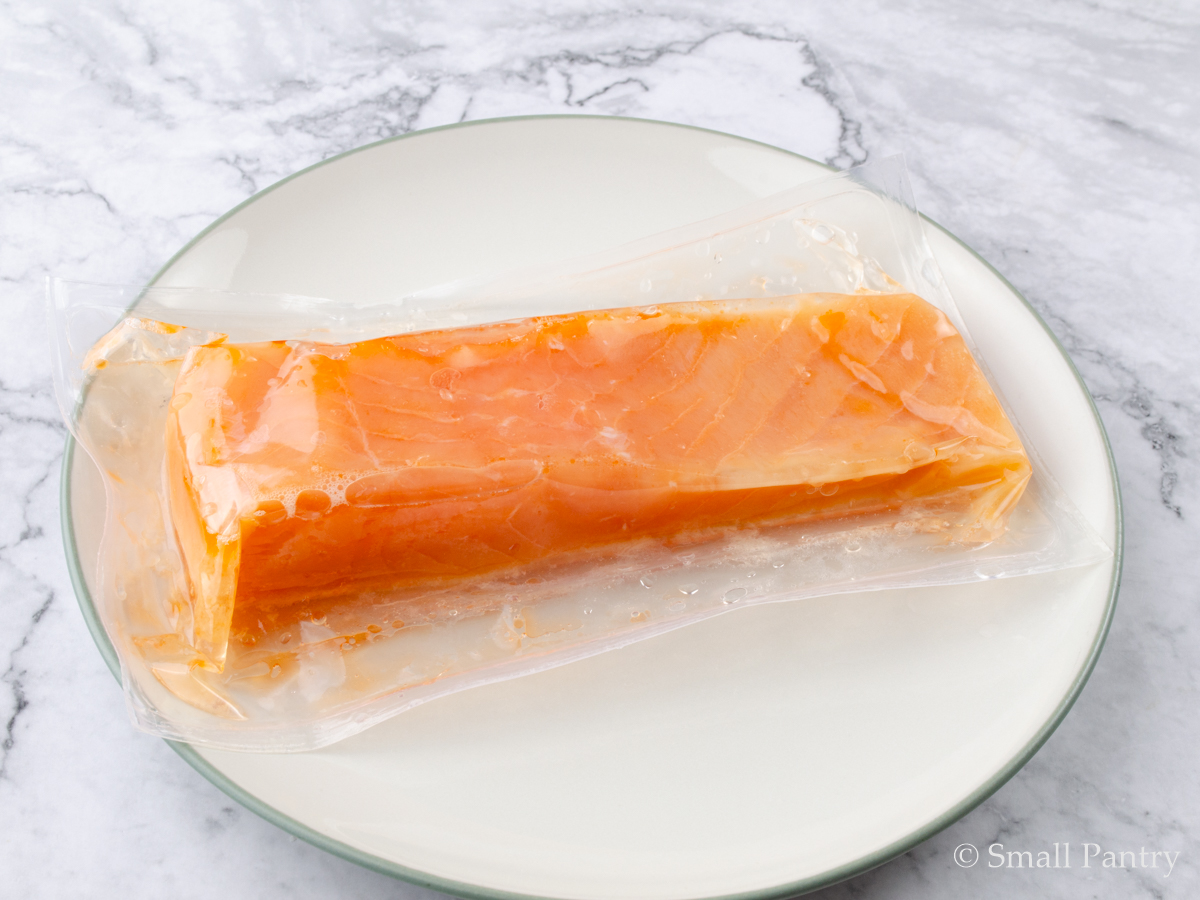
If using frozen salmon, thaw completely in the refrigerator and remove all packaging.
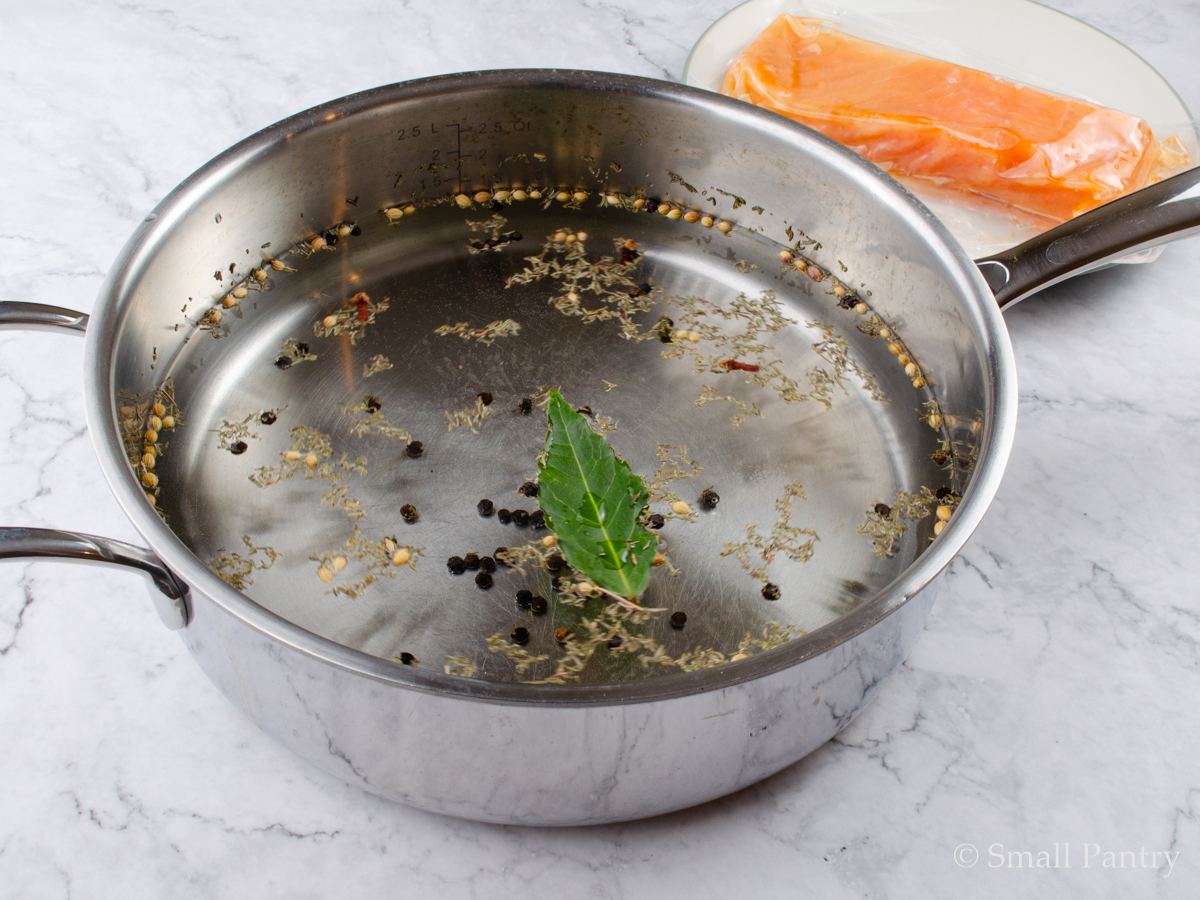
Add aromatics to the water, and bring to a boil. Add the fish, let the water return to a boil, then remove from heat. Let the salmon gently poach until it has reached the desired doneness.
(See recipe card for full details.)
Hint: If you want to make less salmon than the recipe calls for, don't use less of all the other ingredients. The amount of poaching liquid is important for maintaining heat after you turn the stove off.
Substitutions/Variations
There are so many ways to adjust and adapt this recipe, from switching out the aromatics to increasing the intensity of the ingredients. Below are some of my suggestions to get your creativity flowing.
- Herbs — instead of thyme and bay, consider dried mint or oregano for a more Mediterranean flavor. You can also increase the dried herbs or use fresh herbs for a more herb-forward final flavor.
- Spices — try doubling or tripling the amount of spices for a punchier effect. You can also lightly toast the spices over medium heat directly in the pot before adding the water, which will activate the flavorful oils and yield a more potent aroma. Similarly, you might wish to freshly grind or crush your spices for a stronger effect. Freshly ground black pepper, for example, will result in a more prominent pepper flavor because of the increased surface area.
- Vinegar — white vinegar adds acidity without additional flavor. Try using an aromatic vinegar like a wine vinegar or cider vinegar for a more distinct vinegar presence. You can also increase the vinegar, which will make your poached salmon taste more like tinned or cured fish. Or you can use citrus! Try lemon juice or lime juice instead of vinegar.
Feel free to go wild and use this same poaching method but with a really potent poaching liquid. Maybe something like the broth from my recipe for steamed mussels in a spicy coconut curry broth!
How to use poached salmon
Once your poached salmon has chilled you can either eat it as-is or incorporate it into another recipe. Here are some suggestions for ways to use your poached salmon:
- Instead of canned tuna in your favorite tuna salad recipe
- Pureed with butter, capers, and mustard for a quick salmon spread
- In a salmon salade niçoise
- Folded into oven baked polenta and topped with runny eggs for brunch (see my recipe for baked goat cheese polenta with smoked trout and nested eggs; sub in poached salmon!)
- In a quick pasta dish, with shaved fennel, tarragon, and crème fraîche (use my pasta with trout and fennel recipe as inspiration)
- In salmon croquettes for a quick party snack

Equipment
Ideally you want a pan large enough to lay your fillets in a single layer. If you don't have a pan with a large enough surface you can gently layer your salmon fillets in a narrower pot. If your salmon is peeking out of the poaching liquid that means you need more liquid! Remember to increase your salt and aromatics as you increase the total water amount.
I always prefer using my high-sided saute pan, very similar to this pan by Cuisinart. It has a wider bottom than my stock pot, but it's deep enough to accommodate plenty of water!
Storage
Leftovers can be stored in the refrigerator for up to a week. Make sure your container has a good seal to prevent the fish from drying out and to keep the salmon aromas from sneaking into the rest of your fridge!

FAQ
Yes, you can poach salmon. Salmon is a firm enough fish that it will not fall apart when poached. Plus, the natural fattiness of salmon makes it a great candidate for poaching, since the fat keeps the salmon tender and succulent.
Poached salmon is very healthy. It is a no-fat way of cooking salmon, which means that the only fats are the super-powered omega-3 fats naturally found in salmon.
Yes, poached salmon is fully cooked when cooked long enough. Just like with all other methods of cooking salmon, you can choose how cooked you would like your salmon to be. For medium-rare, poach your salmon for less time. For well-done, cook it for longer.
More Fish/Seafood Recipes
Looking for more easy fish and seafood recipes? Try these:
- Cilantro Lime Oven Shrimp Skewers
- Oven Charred Coconut Corn and Shrimp Salad
- Shrimp in Jalapeño Dressing
- Crab Spinach Artichoke Dip


Recipe: Simple Poached Salmon
Ingredients
- 6 cups water
- 1 tablespoon kosher salt
- 2 tablespoons white vinegar
- 1 teaspoon black peppercorns
- 1 teaspoon whole coriander seed
- 1 bay leaf
- 3 whole cloves
- 1 teaspoon dried thyme
- 1 to 2 pounds salmon fillet, pin-bones removed (Or 2 1lb fillets, if a whole 2 lb fillet won't fit in your pot)
Preparation
- In a large pot, combine the water, salt, vinegar, peppercorns, bay, coriander, cloves, and thyme. Cover and bring to a boil. Once boiling, gently lower the salmon into the water, return to a boil, then remove from heat. Let poach gently (uncovered) until cooked through, about 5 to 10 minutes depending on your preference.


Leave a Reply