
Risotto Milanese

This post may contain affiliate links.
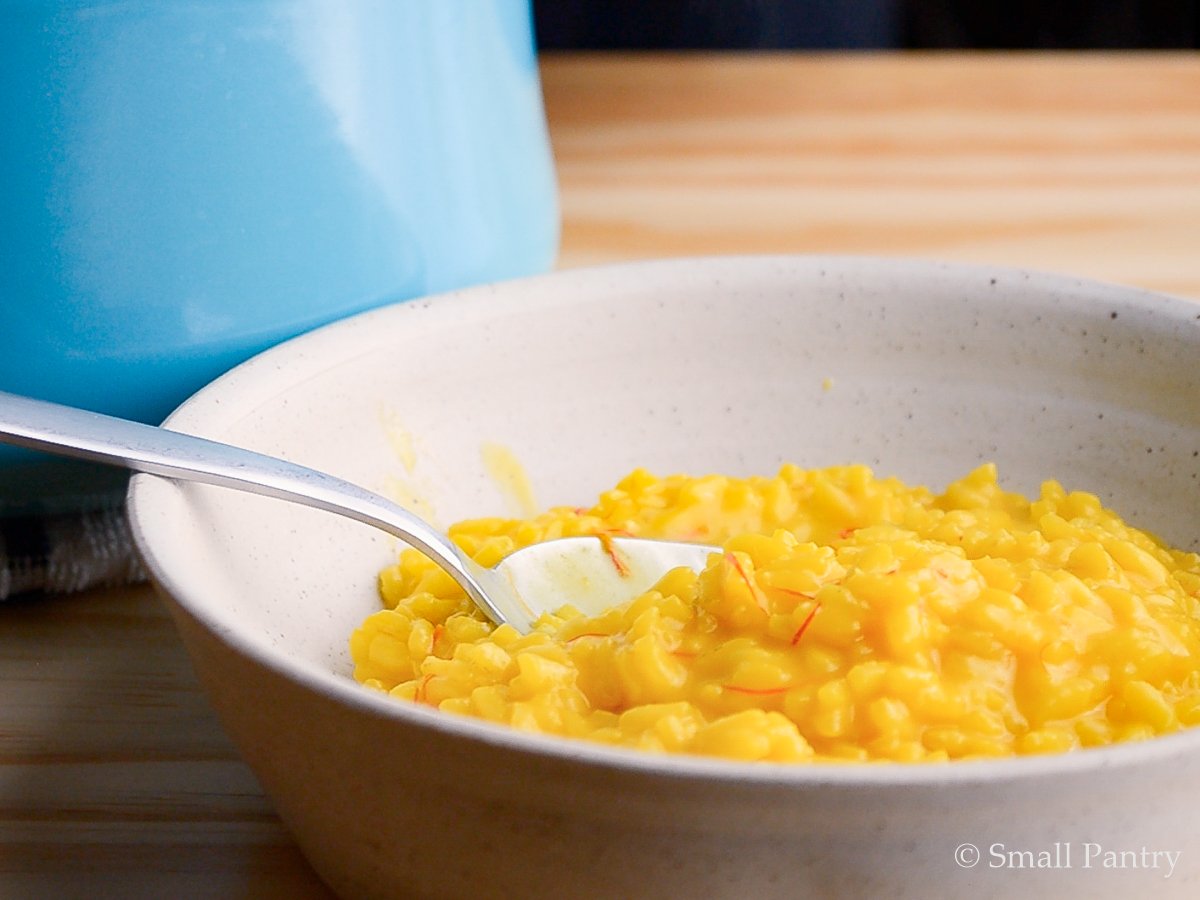
Silky, aromatic, and decadent, risotto alla milanese might be one of Italy's most iconic dishes. A pinch of saffron is all you need to achieve the luxurious flavor and aroma, not to mention the vibrant gold color. This simple and classic risotto alla milanese recipe uses my base technique for weeknight-friendly risotto. It's quick and beginner-friendly, yielding a luxurious risotto that doesn't sacrifice flavor or texture.

Risotto alla milanese, sometimes called risotto allo zafferano, is an iconic northern Italian risotto recipe. It's perfumed with heady saffron, which also turns it the most beautiful shade of yellow. I find saffron to be a unique herbal aroma, slightly floral but not quite flowery. The cheese and butter blend perfectly with the distinct aroma of saffron, and with the addition of tangy-complex white balsamic the flavors create one of the most luxurious dishes imaginable.
This recipe is based on my classic base risotto recipe. It pairs well with this lemony arugula and parsley salad, or a simple piece of baked salmon. It's also one of my favorite types of risotto to turn into arancini (recipe to come!).
Table of Contents
Ingredients
This is a very simple recipe for saffron risotto, and for good reason. Saffron, the star ingredient, is expensive! While you can easily adapt the recipe to include extras like sauteed onion or white wine, I personally prefer not to over-clutter the flavors and instead choose to make the most of a pricey ingredient.
- Saffron
- I call for a range in this recipe, both because saffron is expensive and because grocery store saffron is often stale. Use at least ½ teaspoon. If you can, use a full teaspoon, especially if it's been hanging out in your spice drawer for a while.
- Vegetable Broth
- I highly recommend homemade broth because boxed broths tend to be overly carroty and cloying. As a result, they completely overpower the delicate flavors of the risotto. If you're using boxed broth, see Substitutions for my suggestions on how to adjust it.
- I prefer a light vegetable broth over chicken or beef stock. Chicken and beef tend to overshadow the saffron.
- Carnaroli or Arborio Rice
- These are both medium grain rice. Carnaroli is my preference--after the hundreds of batches I've made in test kitchens (and at home!) I find that it retains its texture better than Arborio, which is more prone to turning mushy. If it's your first time making risotto, it's nice to have Carnaroli as a helpful safety net.
- Parmesan Cheese
- Nutty Parmesan, when finely grated, melts into the brothy rice to help turn it creamy and silky. Use freshly grated, good quality cheese--it will have a significant impact on the final flavor, so using the cheap stuff will be noticeable.
- White Balsamic Vinegar
- When white balsamic is aged, it becomes slightly less acidic than regular white wine vinegar, and naturally gains a touch of sweetness. Adding a splash at the end of cooking wakes up the whole pot and balances the richness beautifully. Don't be afraid of it! It's one of the key elements that makes this recipe sing.
(See recipe card for quantities.)
Basic Method: Photos
Once you add your first dump of broth you're only 15 minutes away from eating--a far cry from the tedious ladle-by-ladle method. If you'd like to learn more about why this quick and easy method works, I encourage you to give my newsletter a read and scan through the notes above my base simple classic risotto recipe post.
This risotto milanese uses the exact same technique, with an added step for the saffron.
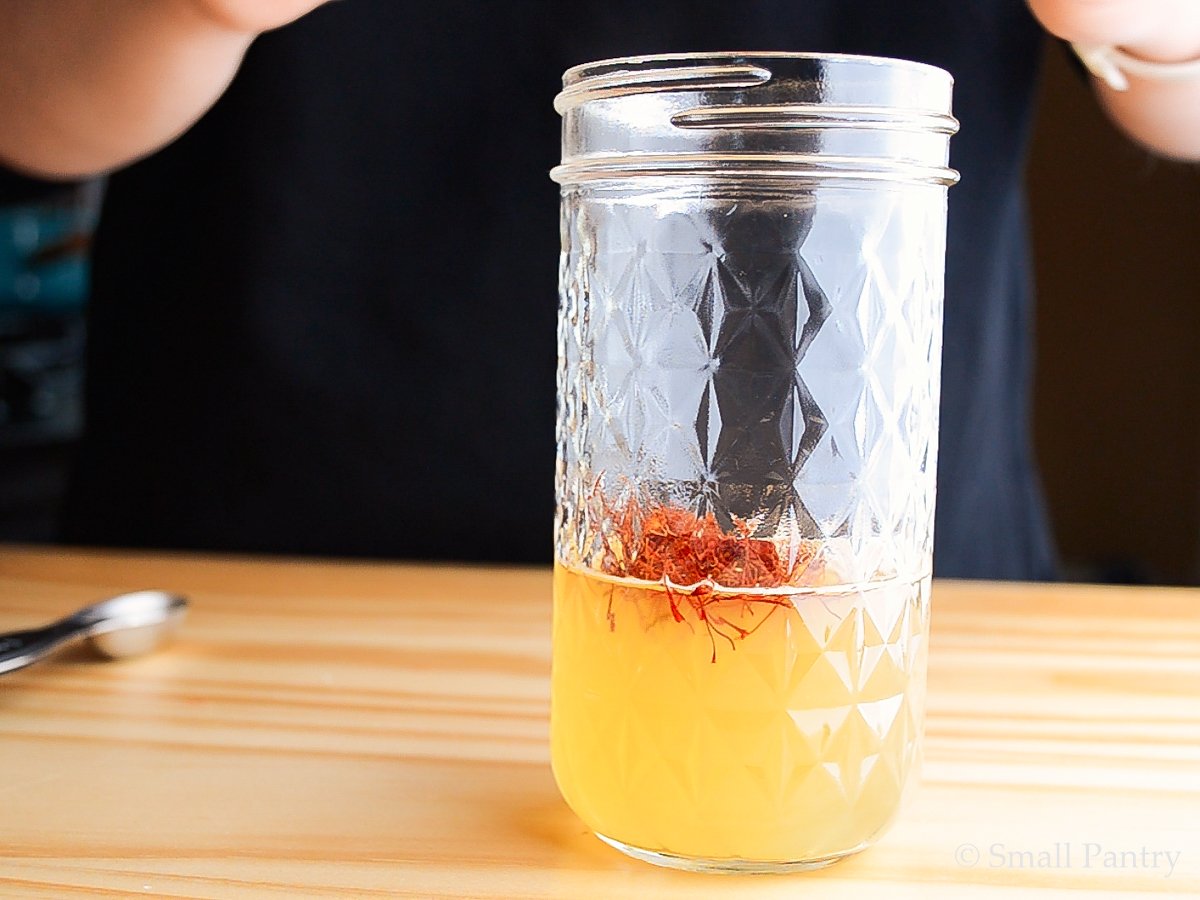
Once your broth is warm, measure out ½ cup and stir in the saffron. Set this aside to steep. Adding this steeping step helps the flavor and color fully incorporate into the whole pot of risotto.
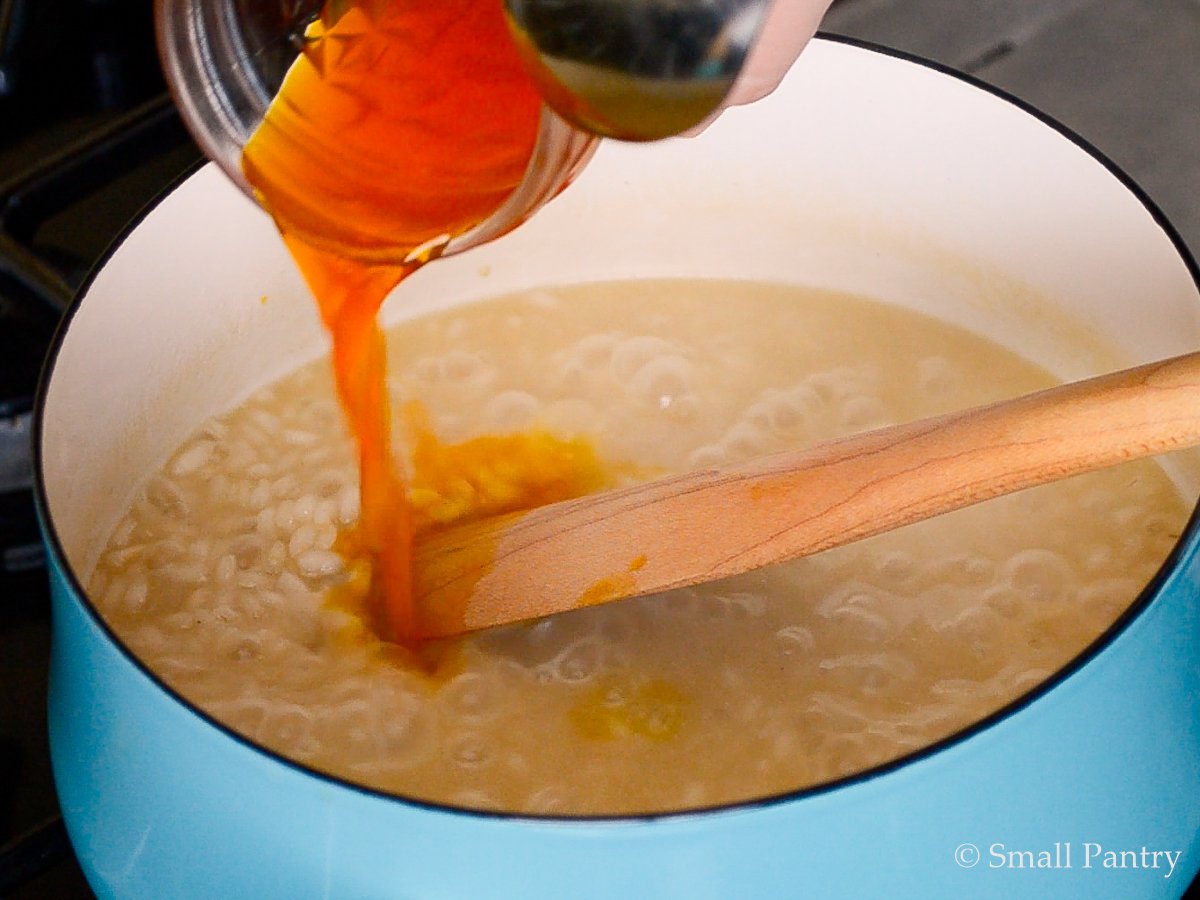
After your rice has simmered 7 to 10 minutes, add the saffron broth.
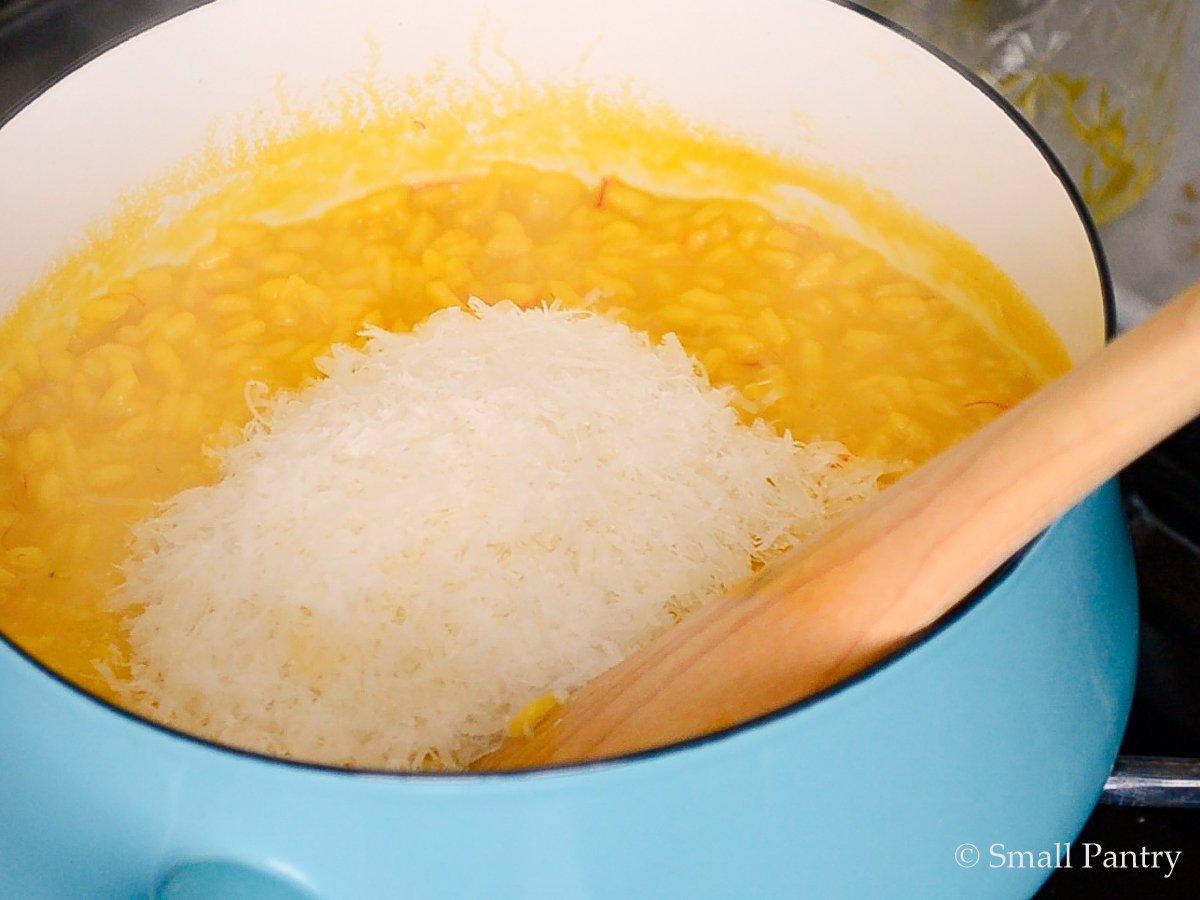
When the risotto is just shy of the perfect texture, remove from heat. Add the butter and cheese, stirring vigorously until completely melted into the risotto.
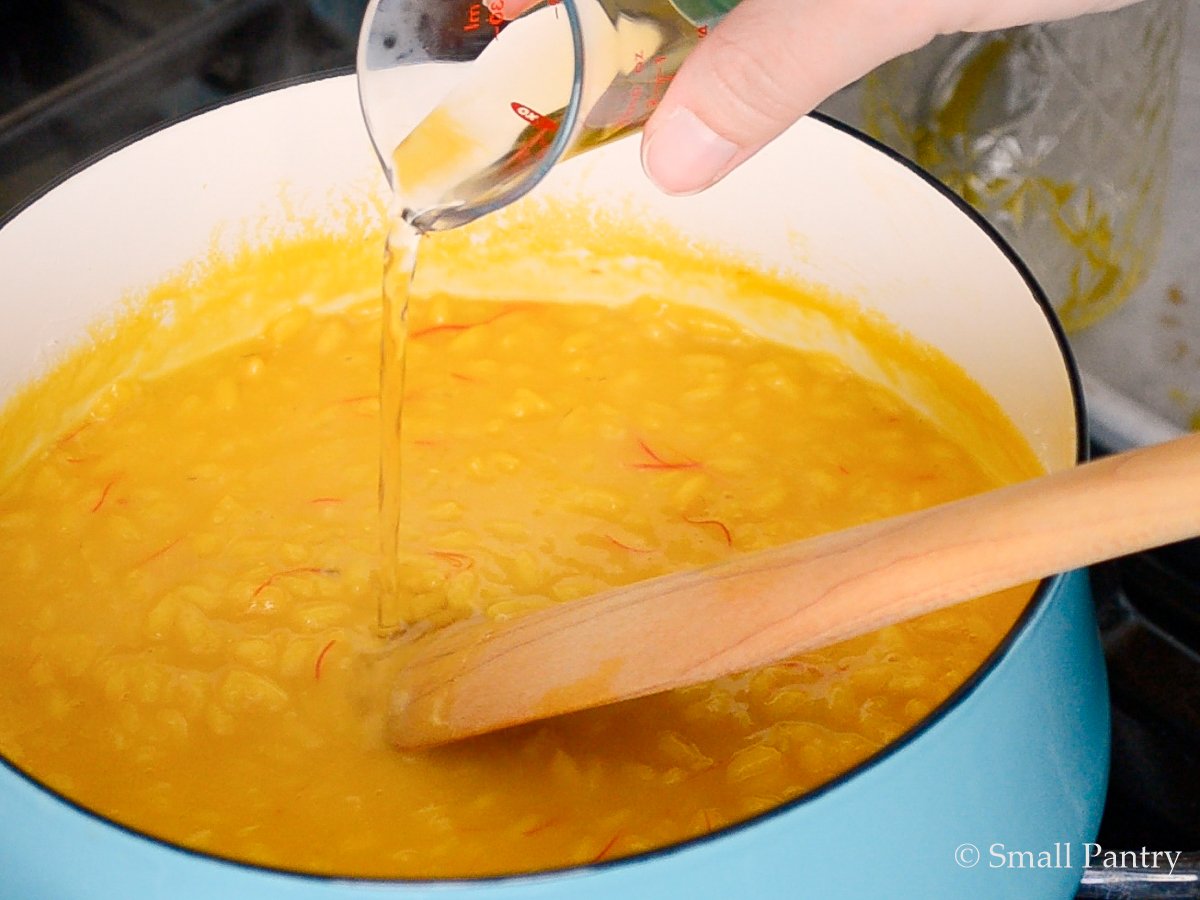
Add the vinegar, then taste and adjust seasoning with salt.
Hint: Don't forget to take the pot off the heat before adding your freshly grated parmigiano and butter! The residual heat of the rice will quickly and gently melt both ingredients, but if left over medium heat you risk having your cheese clump or your butter split.
Substitutions/Pantry Swaps
There isn't much to say in terms of substitutions--once you start to change the basic ingredients it's no longer a true risotto alla milanese recipe! However I do have some suggestions for simple variations and pantry swaps. If you'd like more information about how to customize the textures of your risotto, hop over to the "Customizing Texture" section on my basic risotto technique post.
- Italian "Risotto Rice" - you can use any medium grain or short grain white rice as risotto rice. It does not need to be Italian. Each variety and size absorbs liquid slightly differently, but this can be accommodated by adding a bit more broth or adjusting the cook time.
- Homemade Broth - a homemade broth will produce a lighter, more sophisticated final risotto. If you prefer to use store-bought, I highly recommend diluting it with water. Because most store-bought broths are much more concentrated than homemade, they end up overpowering the rest of the ingredients. I find this to be especially true for vegetable broths, but also for chicken stock or beef stock.
- To use store-bought for this recipe start with roughly 3 cups broth diluted with 1 cup water. If using a salty bouillon paste, dilute it even further. I have liked the Better than Bouillon Roasted Vegetable paste reconstituted with 1 teaspoon paste to 4 cups water--that's a mere 25% of the label's recommendation.
- White Balsamic Vinegar - Do not sub regular balsamic! If you can't find white balsamic, or don't want to buy it just for this recipe, use unseasoned rice vinegar or a good quality white wine vinegar. Keep in mind, both of these lack the natural sweetness of balsamic, which softens and balances the acidity. Because of this, you should start with a bit less and then add more to taste.
- Butter - You can swap in extra virgin olive oil for toasting your rice, but don't try to use it in place of the butter in step 4.
Equipment
Equipment can have a big impact on how a recipe turns out. Your stove will cook differently, even if it is the exact same model as mine. Differences in pan size and material will also affect things like cooking time, temperature, and moisture loss.
- I developed this recipe using a 2-quart saucepan. My 2-quart saucepan is enameled steel.
- If your pan is smaller than 2 quarts, you risk splatters and spills that can burn you (and make a mess).
- If your pan is larger and wider, the broth will evaporate faster due to increased surface area. You will likely need to add more broth in step 3 to get the correct balance of creaminess and rice tenderness.
- If your pan is larger and taller, the broth may evaporate more slowly. This is because the higher sides of a taller pan trap more moisture, slowing overall evaporation. You may not need to adjust liquid amounts, or you may need to let your risotto thicken a minute or so longer.
- I recommend using a flat-edged wooden spoon. The flat edge of the spoon helps to make sure there are no rogue grains of rice sticking to the bottom of your pot.
Make-Ahead and Storage
Make Ahead - You can prep and measure all ingredients several hours in advance. Keep perishable ingredients covered and in the refrigerator. For the tastiest plate of risotto, aim to start cooking about 30 to 40 minutes before you would like to eat.
To make risotto far in advance for a crowd, see my restaurant-style make ahead instructions.
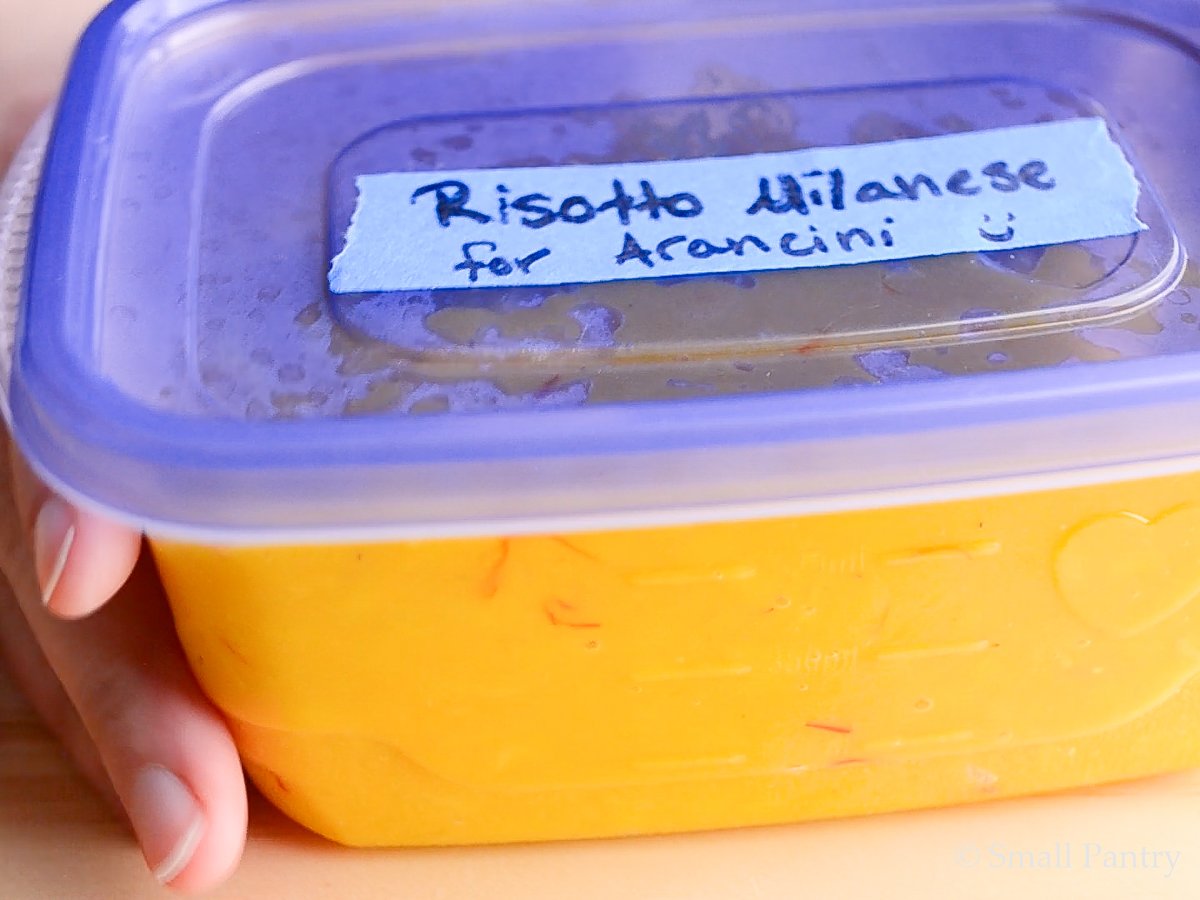
Storage - Risotto does not reheat well. If warming gently on the stove, add a splash of water or broth to loosen. You can creep close to its original silkiness, but it will be a shadow of its former self. If you have leftover risotto, I recommend you make it into arancini! (Recipe to come!)
Expert Tips & Tricks
Keep your risotto bubbling at a rapid simmer or low boil. You don't want it to look foamy like a full boil because that will cause the broth to evaporate too fast and might result in it boiling over. However, you do want constant bubbling across the whole surface of the pot.
You should stir frequently and briskly to help the starches work their magic, but you don't need to be glued to the stove. Stirring several times each minute and keeping an eye on how hard it is simmering still leaves you breathing room to float back and forth between washing your cutting board, emptying the dishwasher, or pouring yourself a glass of wine.
If planning to save leftovers for arancini, I recommend increasing the cheese from a scant cup freshly grated cheese to roughly 1¼ cups (or more). The extra cheese adds natural salt and umami, and helps the cooled risotto keep its shape when forming the arancini. (You can, of course, add more cheese regardless of whether or not you plan to make arancini.)
FAQ
While it depends on what you are serving with the risotto, I generally recommend about 1 to 1 ½ cups per person. This recipe makes about 3 cups. If serving with a small side salad, I would say this serves 2. If serving with a heartier protein or a large dinner salad, I would say this serves 3 to 4.
Risotto can be eaten as both an entree and a side dish. As a main dish, it pairs well with fresh salads or roasted vegetables. As a side, it can be the anchor for a collection of smaller plates or as a base for braised meat (in the colder months) or grilled proteins (in the warmer months).
The core ingredients for risotto alla milanese (or risotto allo zafferano) are medium grain rice, broth, saffron, and cheese. Many recipes also include sauteed onion, white wine, or minced parsley. It is the saffron, however, that is the hallmark of a proper risotto alla milanese.
Medium grain rice will take 15 to 20 minutes to cook on the stove. Unfortunately, factors such as burner size and temperature, broth temperature, pan size and shape, as well as pan material will all affect the cooking time. This is true for all cooking--there is no such thing as a one-size-fits-all, magic, or foolproof recipe or technique.
Restaurants often par-cook risotto. If you'd like to learn this technique, head over to the "make ahead" technique outlined in my risotto base recipe. Essentially, you cook the rice part of the way, then cool it down fast to stop the cooking.
Related Recipes
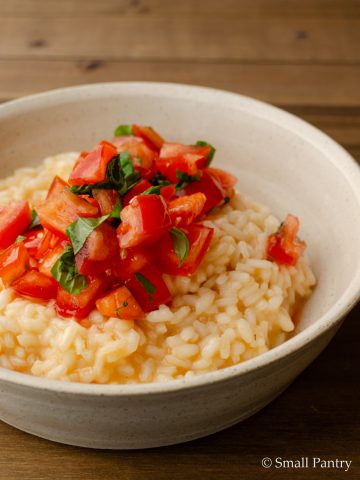
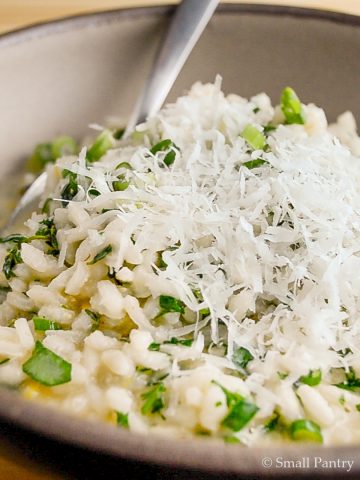
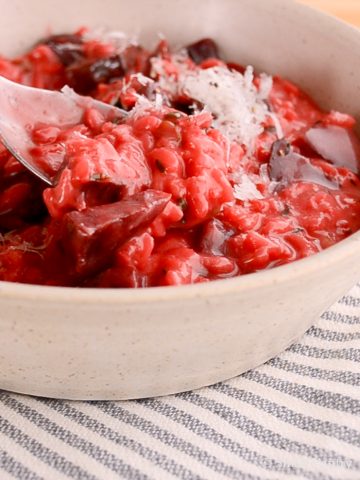
Looking for other risotto recipes like mushroom risotto or bright beet risotto? Try these:


Pairing Suggestions
I love to serve a bright salad alongside risotto alla milanese. Just add a glass of wine!



Recipe: Risotto alla Milanese
Ingredients
- 4 cups vegetable broth, See Notes
- ½ to 1 teaspoon saffron threads, (See Notes, below)
- 6 tablespoons butter, cut into 1-tablespoon pieces, divided
- 1 cup carnaroli or arborio rice
- 1 ounce Parmesan, finely grated on a microplane (scant 1 cup)
- kosher salt
- 2 to 4 teaspoons white balsamic vinegar, or other light vinegar (See Notes, below)
Preparation
Step 1: Warm the broth and make a saffron infusion
- In a small covered saucepan over medium, bring the broth to a simmer. Reduce to low and keep warm. In a small bowl or measuring cup, combine ½ cup of the hot broth and the saffron. Set aside to let steep.
Step 2: The main cook
- In a large saucepan or high-sided skillet over medium-high, melt 2 tablespoons of butter. Add the rice and cook, stirring constantly, until translucent at the edges, 1 to 2 minutes. Add 2½ cups of the warm broth and bring to a boil. Reduce to medium heat and cook, stirring frequently and briskly, until the rice grains are noticeably more tender but still have quite a firm core, 7 to 10 minutes. The risotto will still look quite loose and soupy. Adjust the heat as-needed to maintain a vigorous simmer.
- Step 3Add the ½ cup of saffron broth and continue cooking, stirring frequently and briskly, until the rice is just shy of perfect al dente, 3 to 5 minutes. It should still be quite soupy and loose. Remove from heat. The grains of rice will continue to soften in the next step and the texture will stiffen up, so you want the rice just shy of al dente and the overall texture just a bit loose.
- If the rice is still very crunchy but the risotto is already looking thick and sticky, add ¼ cup more of the broth and continue simmering and stirring. Repeat, as needed, adding broth ¼ cup at a time, until the rice is just shy of perfectly cooked.
Step 4: Add cheese and butter
- Off heat, stir in the Parmesan, ½ teaspoon salt, and the remaining 4 tablespoons butter, 1 piece at a time. Stir in 2 teaspoons vinegar, then taste and adjust seasoning with salt and vinegar. Serve immediately.



Leave a Reply